Algeria
 Egypt
 Libya
 Morocco
 Sudan
 Tunisia
 Benin
 Burkina Faso
 Cabo Verde
 Côte d'Ivoire
 Ghana
 Guinea
 Guinea-Bissau
 Liberia
 Mali
 Mauritania
 Niger
 Nigeria
 Senegal
 Sierra Leone
 The Gambia
 Cameroon
 Central African Republic
 Chad
 DR Congo
 Equatorial Guinea
 Gabon
 Republic of the Congo
 São Tomé and Príncipe
 Burundi
 Comoros
 Djibouti
 Eritrea
 Ethiopia
 Kenya
 Madagascar
 Malawi
 Mauritius
 Mozambique
 Rwanda
 Seychelles
 Somalia
 South Sudan
 Tanzania
 Uganda
 Angola
 Botswana
 Eswatini
 Lesotho
 Namibia
 South Africa
 Zambia
 Zimbabwe
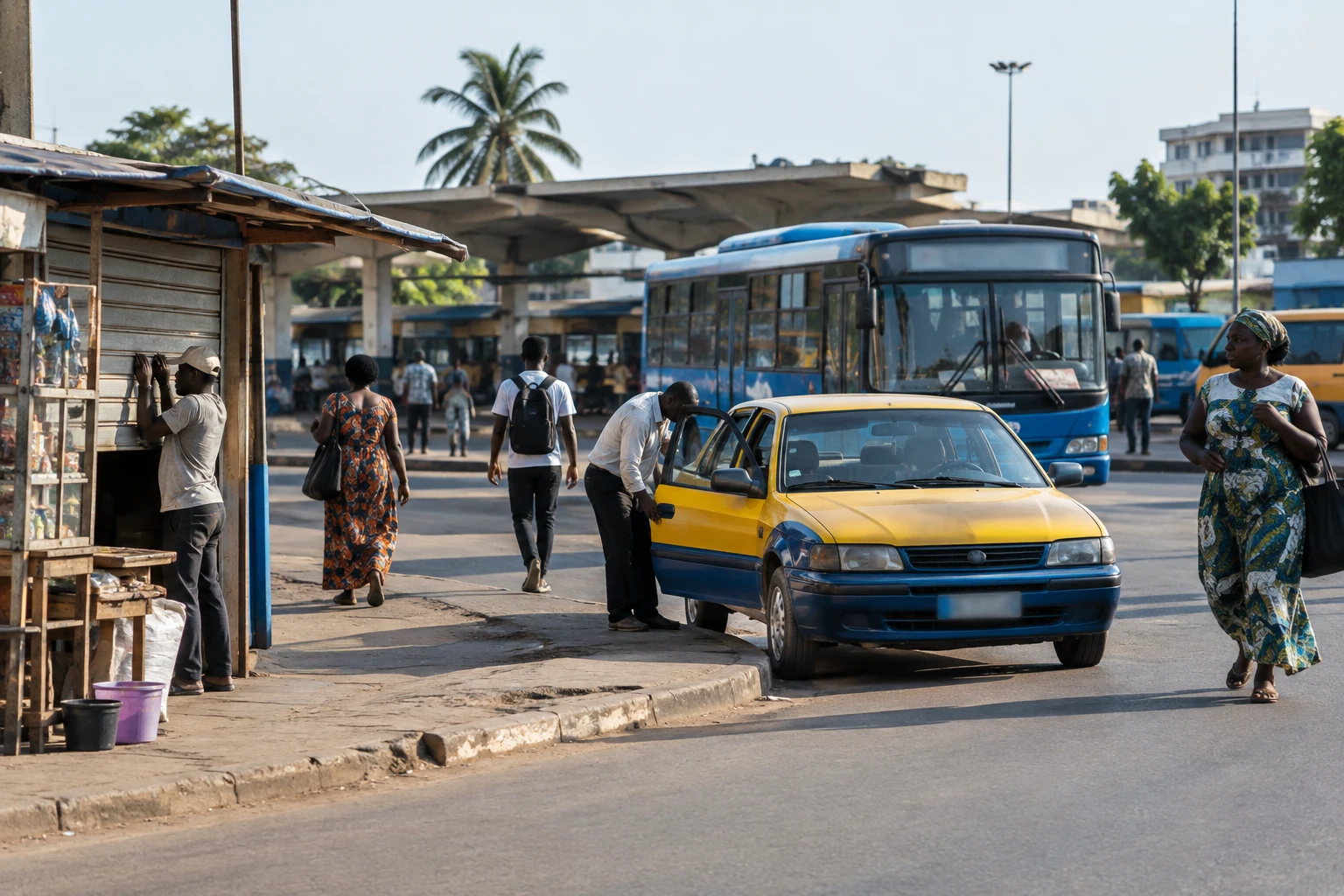
For a trader set up beside a road in Lomé, a day without activity is not just a political gesture: it can also mean a day without income. This tension between protest and making ends meet gives weight to the call issued in Togo for 20 November 2026.
The “Manifeste Génération Togo”, a coalition of political parties and citizens’ movements, is asking Togolese people to suspend their activities for a day. The organisers present the action as a warning to the authorities. Its real scale remains to be seen: the call has not yet translated into an actual mobilisation.
A day of action amid political tensions
The announcement comes amid continuing disagreements over institutions and the channels for political dialogue. Since the 2024 constitutional reform, the debate has focused in particular on the organisation of state powers and the country’s political trajectory. Opposition parties are challenging the reform and calling for institutional changes.
In October, several opposition groupings rejected a government invitation to take part in the Permanent Framework for Dialogue. They notably called for regional court rulings concerning Togo to be taken into account. Their position reflects their distrust of a dialogue whose terms they dispute, but does not mean that all political forces share the same strategy.
ECOWAS, the Economic Community of West African States, is involved in the debate because of the role of its Court of Justice. The signatory organisations cite a ruling issued on 29 January 2026 concerning the constitutional reform. This reference is made by the groupings themselves; the 20 November call alone cannot establish the legal scope or implementation of that ruling.
On 20 November, a halt to activities rather than a march
The announced call is for a day-long cessation of activities, not a street demonstration. The organisers are urging workers, traders, craftspeople, students and other occupational groups to take part. Their aim is to make their opposition visible by slowing everyday activity.
The coalition includes the Dynamique pour la majorité du peuple, the Dynamique Monseigneur Kpodzro-Originale, Lumière pour le développement dans la paix and the Touche pas à ma Constitution movement. At a press conference in Lomé, its representatives linked the call to social and political concerns. They cited the cost of living, access to water and electricity, incomes, employment and public services.
The coalition has also referred to women traders whose goods or stalls were allegedly affected by operations carried out since 2 November. This point requires an important distinction. The Autonomous District of Greater Lomé announced an operation, running from 2 to 20 November, to clear public spaces occupied without authorisation. The authorities say it is intended to improve traffic flow and pedestrian safety. Those affected, however, may lose their pitch and part of their income. The sources consulted do not allow independent confirmation of the scale of the destruction alleged by the opposition.
Different costs for households and sectors
A day-long suspension does not affect everyone in the same way. A salaried employee may experience it differently from a woman trader who depends on that day’s sales, or a craftsperson whose workshop is the household’s main source of income. Markets, transport, small shops and local services are particularly exposed to an interruption in activity.
For the organisers, this temporary loss is intended to demonstrate the extent of public discontent. But participation will also depend on the organisers’ ability to persuade people beyond their supporters, and on how the authorities respond to the call. In Lomé, where institutions and much of the commercial activity are concentrated, the impact could be more visible. In secondary cities and rural areas, the conditions for mobilisation and the economic costs may differ.
The dispute over evictions highlights a practical urban-governance issue. The authorities are seeking to enforce rules on the use of public roads; traders and craftspeople need locations accessible to their customers. A lasting response therefore requires consideration of both safety and traffic flow, as well as relocation solutions or available market spaces. The information gathered does not show what support measures are being offered to all those affected.
An initial test ahead of January 2027
The organisers place 20 November within a longer sequence and present January 2027 as an important political milestone. They are calling for a transition and national consultations. These are their demands; they do not represent a decision by Togo’s institutions or a timetable accepted by the authorities.
The announced day will therefore be a test on several fronts: the coalition’s ability to bring together different groups, the support of workers and small businesses, and the authorities’ response. The number of closed shops or any slowdown in transport will not, by themselves, be enough to gauge the views of the entire Togolese population.
At regional level, the issue also concerns the role of ECOWAS and its Court in resolving institutional disputes between member states. Togo remains part of this West African community, where the credibility of political dialogue and respect for community decisions are regularly debated. In the run-up to 20 November, the points to watch are clear: the organisers’ instructions, any official responses, the conditions of the urban operation in Lomé and actual participation across the regions.