Algeria
 Egypt
 Libya
 Morocco
 Sudan
 Tunisia
 Benin
 Burkina Faso
 Cabo Verde
 Côte d'Ivoire
 Ghana
 Guinea
 Guinea-Bissau
 Liberia
 Mali
 Mauritania
 Niger
 Nigeria
 Senegal
 Sierra Leone
 Togo
 Cameroon
 Central African Republic
 Chad
 DR Congo
 Equatorial Guinea
 Gabon
 Republic of the Congo
 São Tomé and Príncipe
 Burundi
 Comoros
 Djibouti
 Eritrea
 Ethiopia
 Kenya
 Madagascar
 Malawi
 Mauritius
 Mozambique
 Rwanda
 Seychelles
 Somalia
 South Sudan
 Tanzania
 Uganda
 Angola
 Botswana
 Eswatini
 Lesotho
 Namibia
 South Africa
 Zambia
 Zimbabwe
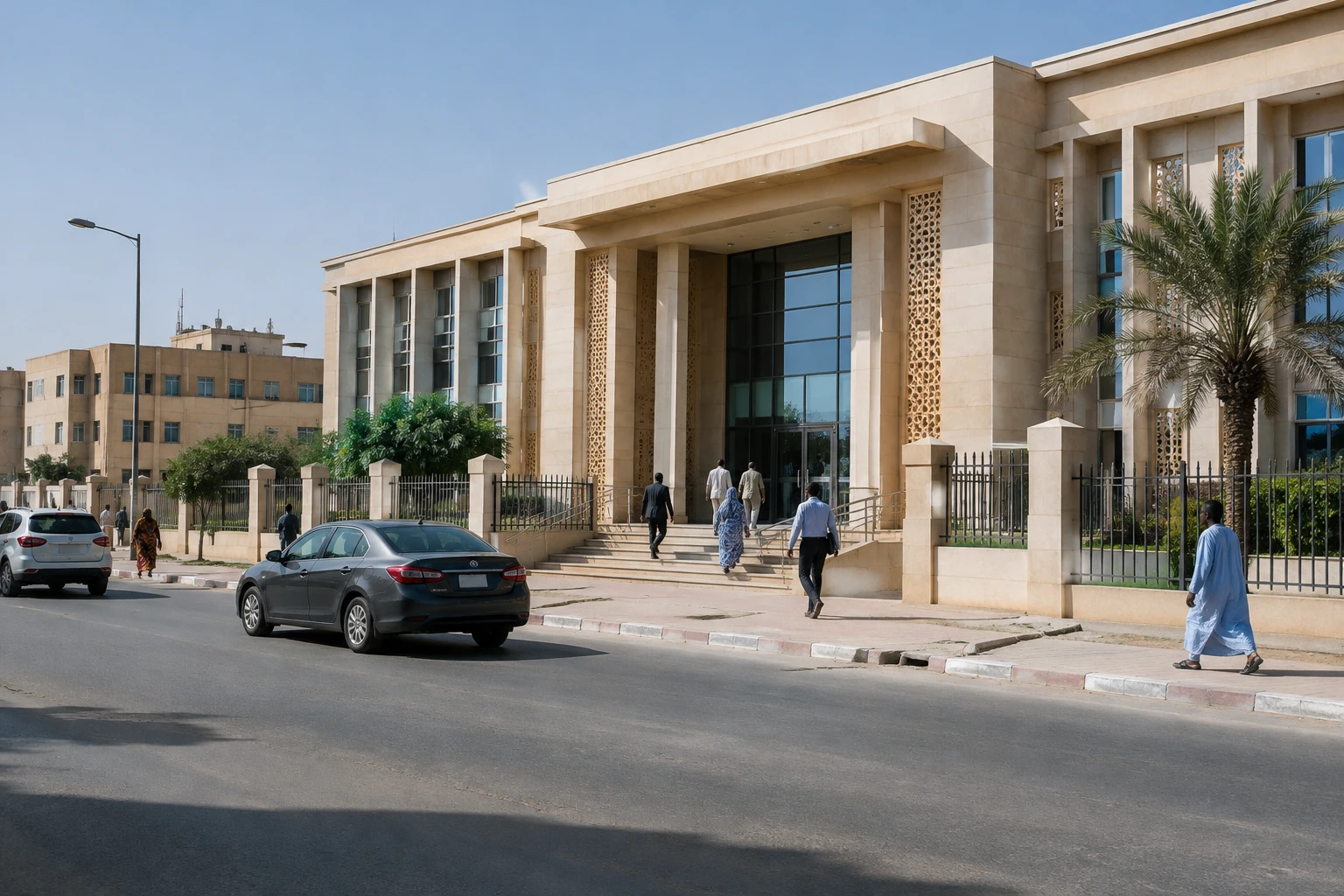
When departures shift south, the decline in boats leaving Mauritania does not mean the Atlantic route has closed. Instead, it raises a practical question for Nouakchott: how can it cooperate with Spain without reducing the partnership to border controls?
A route shifting along the Atlantic
Mauritania occupies an important position on the sea route to the Canary Islands, Spanish territory off the coast of West Africa. But departure points are changing. This shift can lengthen crossings and complicate rescue operations, even when fewer boats leave Mauritanian shores.
Migration cooperation between Nouakchott and its European partners is part of a broader framework. On 7 March 2024, Mauritania and the European Union signed a joint declaration on migration. It provides, in particular, for dialogue on regular pathways, youth training, refugee protection and stronger sea-rescue capacity. The text specifies that it does not, by itself, create legally binding rights. The Mauritanian News Agency reported on its signing in Nouakchott.
For Nouakchott, the stakes go beyond relations with Madrid. Mauritania is a Sahelian and West African country, neighbouring areas affected by insecurity and population displacement. It also hosts refugees, particularly Malians. This reality puts public services and local communities under strain, especially in regions far from the capital.
Spanish visit puts cooperation back on the agenda
On 3 November 2026, Spain’s interior minister, Fernando Grande-Marlaska Gómez, visited Nouakchott. He met his Mauritanian counterpart and officials from the defence and fisheries sectors before being received by President Mohamed Ould Cheikh El Ghazouani. The official Mauritanian news agency reports that discussions covered security, irregular migration and cross-border crime. The Mauritanian account of the meeting said there was a desire to strengthen bilateral cooperation.
The Spanish minister praised Mauritania’s role and called for closer co-ordination. Madrid also wants to place this cooperation within a broader European approach. For Spain, the Canary Islands remain a major arrival point on the Atlantic route. For Mauritania, the fight against smuggling networks is added to coastal surveillance and the management of migration movements through the country.
The figures cited around the visit should be treated with caution. Mauritanian coverage reports that 52 boats arrived in the Canaries in October: 39 are said to have set sail from Senegal or The Gambia, 11 from Morocco and one from Mauritania. This count alone does not establish the origin of every person on board or measure departures that did not result in an arrival. It should therefore not be confused with a full account of movements along the route. The Mauritanian media outlet Cridem reports these figures and attributes them to officials present.
Controlling departures is not the whole partnership
A fall in recorded departures from a country may reflect action by the authorities. It may also indicate that routes are being reorganised. Departures from more distant shores expose passengers to longer crossings. The United Nations High Commissioner for Refugees says the Atlantic route remains dangerous, while human rights organisations document risks associated with control operations and expulsions. Human Rights Watch published a 2025 investigation into alleged abuses in the context of migration controls in Mauritania. These findings call for a distinction between combating trafficking and protecting people on the move.
This distinction matters for residents as well as travellers. Fishermen and coastal communities may be affected by restrictions and operations at sea. Mauritanian services must devote resources to checks, but also to rescue and reception. In Spain, arrivals are concentrated in the archipelago, where local authorities must organise accommodation and support for people, including minors. A policy measured only by the number of departures prevented overlooks these realities.
The 2024 EU-Mauritania declaration links migration management to broader objectives, including vocational training, regular pathways and support for refugees and the communities hosting them. The European Union had announced a total package of €210 million for Mauritania, covering several areas, including migration, security and development. This amount should not be presented as being devoted exclusively to border control. The European Commission sets out the migration partnership, while the European External Action Service describes other areas of co-operation.
A test for Nouakchott, Madrid and Europe
The 3 November visit confirms that Mauritania remains a sought-after partner for Spain on the Atlantic coast. But the shift in departures towards Senegal and The Gambia shows the limits of an approach designed country by country. West African states are linked by routes crossing several territories; regional co-ordination matters as much as bilateral exchanges with Madrid or Brussels.
What happens next will be judged by verifiable results: the ability to rescue boats in distress, respect for the rights of people intercepted, access to regular pathways and the tangible benefits of announced funding. For Mauritanians, the challenge is to ensure that cooperation also strengthens public services and employment opportunities in the country. For neighbouring countries and the Canaries, it is to prevent the shift in departure points from turning a local fall in arrivals into longer and riskier crossings.