Algeria
 Egypt
 Libya
 Morocco
 Sudan
 Tunisia
 Burkina Faso
 Cabo Verde
 Côte d'Ivoire
 Ghana
 Guinea
 Guinea-Bissau
 Liberia
 Mali
 Mauritania
 Niger
 Nigeria
 Senegal
 Sierra Leone
 The Gambia
 Togo
 Cameroon
 Central African Republic
 Chad
 DR Congo
 Equatorial Guinea
 Gabon
 Republic of the Congo
 São Tomé and Príncipe
 Burundi
 Comoros
 Djibouti
 Eritrea
 Ethiopia
 Kenya
 Madagascar
 Malawi
 Mauritius
 Mozambique
 Rwanda
 Seychelles
 Somalia
 South Sudan
 Tanzania
 Uganda
 Angola
 Botswana
 Eswatini
 Lesotho
 Namibia
 South Africa
 Zambia
 Zimbabwe
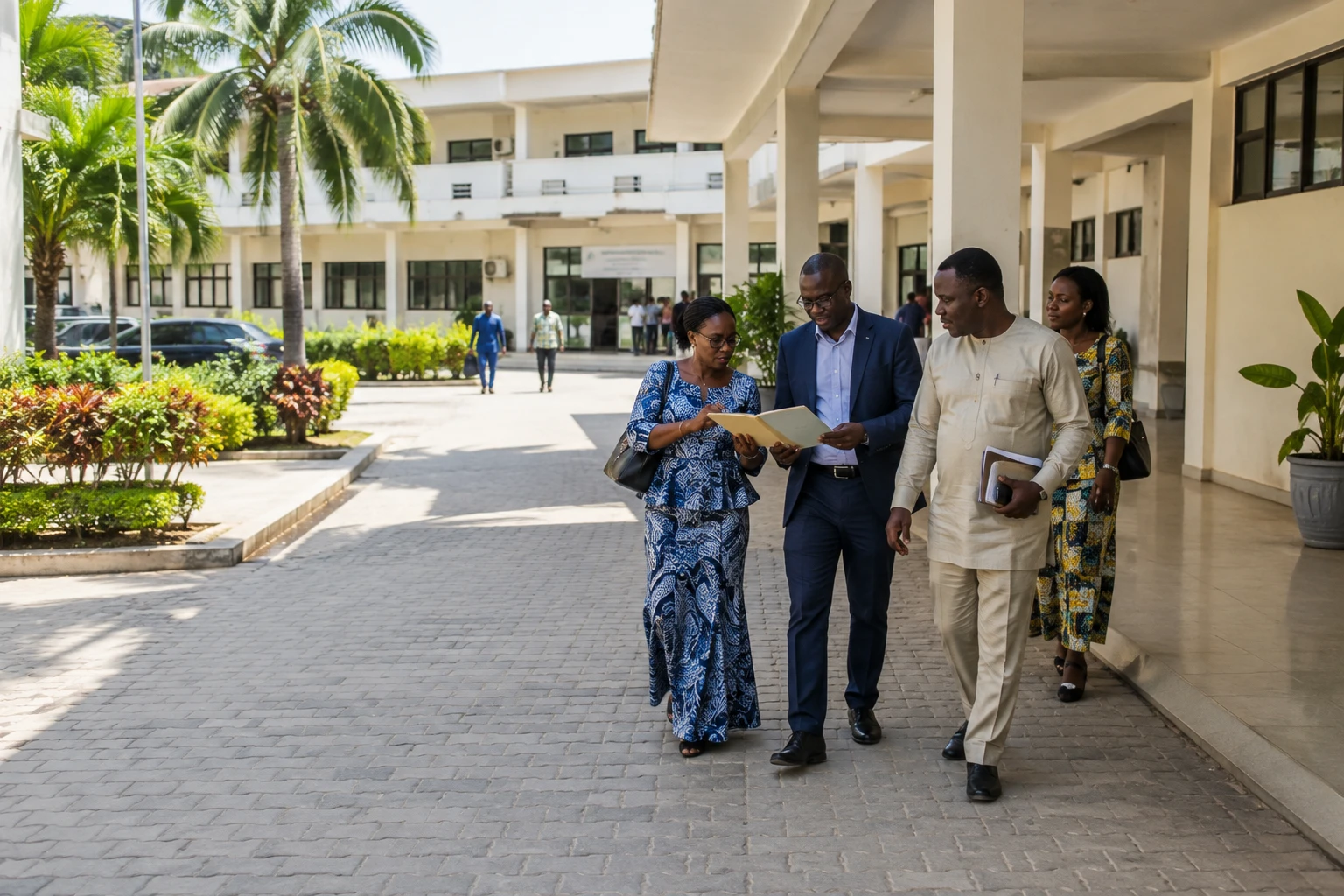
A new economic division does not, by itself, create jobs or public services. In Benin, the establishment of six territorial hubs must still translate into projects, funding and clearly allocated responsibilities. Damien Mama’s appointment to head the permanent secretariat responsible for coordinating the scheme is part of this undertaking.
A territorial reform to make tangible
Presented on 23 September 2026 by President Romuald Wadagni, the reform aims to bring public action closer to local realities. It divides the 77 communes into six groupings: North-East, North-West, Centre, South-East, South-West and Greater Nokoué. The executive wants to organise these territories around their activities and resources, rather than applying the same priorities everywhere. The official presentation of Benin’s territorial reform refers in particular to monitoring local needs and creating wealth at grassroots level.
Benin already has communes and decentralisation mechanisms. The hubs add a level of coordination between the state, local authorities and economic stakeholders. The difference between a new administrative division and a genuine development tool will therefore depend on its ability to generate projects, then fund and monitor them.
The reform is part of a drive to modernise public action that has been under way in recent years. It also comes amid a West African context in which the creation of local economic activity, the movement of goods and access to infrastructure influence trade between neighbouring countries. Benin is a member of ECOWAS, the Economic Community of West African States, which aims, among other things, to promote regional economic integration. ECOWAS and its member states therefore provide a relevant regional framework for Benin’s value chains and trade corridors.
Damien Mama: experience in development and coordination
At a meeting on Wednesday 4 November, the Council of Ministers appointed Damien Mama minister and permanent secretary of the National Steering Committee for Territorial Development Hubs, according to information released about the decision. The committee is chaired by the head of state. The permanent secretariat is responsible for monitoring and coordinating its work.
The Beninese official has more than 25 years’ experience in development, humanitarian action and peace operations. He served as United Nations resident coordinator in Togo and then Burundi. Since March 2023, he had represented the United Nations Development Programme in the Democratic Republic of the Congo. In July 2026, he took on the duties of deputy special representative of the UN secretary-general at MONUSCO on an interim basis, as well as those of resident and humanitarian coordinator. MONUSCO’s profile of Damien Mama confirms these career milestones and his training in spatial planning and development management.
His experience in the DRC also includes monitoring territorial programmes. In April 2026, he co-chaired a meeting on the Local Development Programme for the country’s 145 territories. Discussions covered schools, health centres, improved access to isolated areas and agricultural value chains. This experience could inform the work in Benin, but the two schemes operate in distinct institutional contexts.
In 2018, when taking up his post in Togo, Mama advocated an approach focused on employment and basic services. “Economic growth is not an end in itself,” he told Togo First. The quotation, reported at the time by the Beninese press, sums up a key question for the hubs: how can investments also benefit residents and small businesses?
The test will be implementation
As permanent secretary, Mama is at the heart of coordination, but the role does not give him control over all the levers. Local authorities, ministries, businesses and local stakeholders will have to define their respective roles. One challenge will be to link choices about value chains with infrastructure, training, land and available funding.
The effects could vary considerably from one hub to another. In rural areas, access to roads, agricultural markets and basic facilities will weigh on the ability to develop economic activity. Urban centres may have different needs in transport, employment and services. Small businesses and workers in the informal economy will depend on their access to markets, training and support schemes.
The announced timetable first provides for the establishment of governance bodies and a study of the territories, from October to December 2026. The next phases are to define priority value chains and road maps. The first projects are scheduled to be rolled out from July to December 2027. The Beninese daily La Nation sets out the stages for implementing the six hubs.
For Beninese people, the measure of success will not simply be the number of bodies set up. It will be necessary to assess the projects actually launched, the services delivered and the jobs created, while distinguishing between the needs of cities and rural communes. Across West Africa, the hubs’ success will also depend on their ability to strengthen links between producers, domestic markets and regional trade. The next milestone is therefore operational: turning the 2027 timetable into visible investment without leaving the least connected territories behind.