Algeria
 Egypt
 Libya
 Morocco
 Sudan
 Tunisia
 Benin
 Burkina Faso
 Cabo Verde
 Côte d'Ivoire
 Ghana
 Guinea
 Guinea-Bissau
 Liberia
 Mali
 Mauritania
 Niger
 Nigeria
 Senegal
 Sierra Leone
 The Gambia
 Togo
 Cameroon
 Central African Republic
 Chad
 DR Congo
 Equatorial Guinea
 Gabon
 Republic of the Congo
 São Tomé and Príncipe
 Burundi
 Comoros
 Djibouti
 Eritrea
 Ethiopia
 Madagascar
 Malawi
 Mauritius
 Mozambique
 Rwanda
 Seychelles
 Somalia
 South Sudan
 Tanzania
 Uganda
 Angola
 Botswana
 Eswatini
 Lesotho
 Namibia
 South Africa
 Zambia
 Zimbabwe
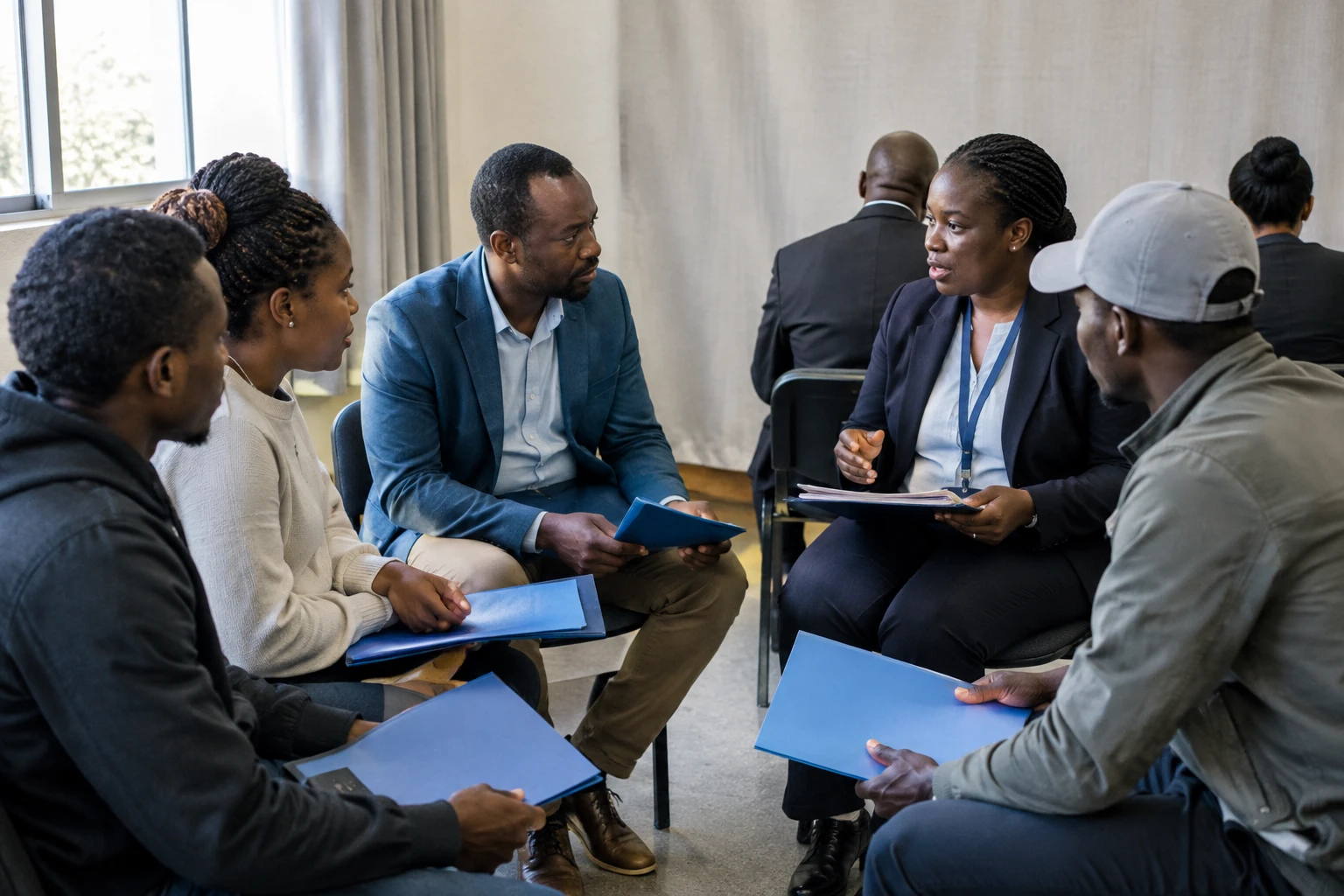
They had secured a job, obtained a valid visa and yet could not enter the country where they were due to work: for more than 300 Kenyans, the journey to Saudi Arabia ended with a return to Nairobi. Beyond the airport incident, the suspension of entries highlights the vulnerability of workers whose plans depend on a health decision taken thousands of kilometres away.
Health measure also blocks workers from departing
On 30 October 2026, Saudi Arabia announced the suspension of travel to Kenya by its nationals, an end to the issuing of visas to people arriving from the country, and a ban on entry for travellers who had stayed in Kenya — or another affected country — in the previous 21 days. The measure also applies to people who have transited through a third country. Riyadh says it is a precaution against Ebola.
On the same day, more than 300 Kenyan workers holding valid work visas left Kenya for the kingdom. Turned back on arrival, they were sent back to Nairobi on Monday 2 November, after waiting at Riyadh airport. The Kenyan daily The Standard reports that they were stranded for two days. Accounts relayed by passengers describe difficult conditions; these reports have not been independently confirmed.
The imminent departure schedule is also worrying recruitment agencies. Monika Mwema, secretary-general of their Kenyan association, said some recruits were due to travel in the following days without knowing whether they should go to the airport. For workers, the uncertainty concerns their jobs, expenses already incurred and the validity of their documents. Available information does not specify who will cover these costs or whether employers will keep the offers open.
Nairobi argues the restrictions are disproportionate
The decision comes as Kenya manages an Ebola outbreak linked to an imported case. Africa CDC, the African Union’s public health agency, says Kenya’s first case was confirmed on 6 October 2026. As of 3 November, it reported nine confirmed cases and two deaths, all epidemiologically linked to the same introduction of the virus. It said no new cases had been reported since 19 October and that no sustained community transmission had been documented.
Tallies can change as investigations proceed and data cut-off dates vary. The European Centre for Disease Prevention and Control, for its part, reported nine cases and one death as of 23 October. It assessed the risk of infection as low for people living in or travelling to the affected areas who follow health precautions, and did not recommend travel restrictions to or from Kenya. These assessments do not replace guidance from the Kenyan authorities.
Kenya’s health minister described the Saudi restrictions as excessive, according to statements reported in Nairobi. On 3 November, Africa CDC backed Kenya’s request for a review. The organisation recognises every state’s right to protect its population, but says broad restrictions should be based on scientific evidence and remain proportionate to the observed risk. It warns that they can disrupt incomes and trade, and discourage the prompt reporting of future outbreaks.
Important employment ties for Kenyan households
Kenya is one of the main countries of origin for migrant workers in East Africa. According to Kenyan authorities cited in available reports, nearly 350,000 Kenyans live in Saudi Arabia, their leading destination. Although this figure has not been independently confirmed here by a second source, it nonetheless conveys the scale of the human and economic ties at stake.
The restrictions first affect people who were preparing to take up jobs, but their impact could extend beyond this group. When a departure is delayed, the income families were expecting is postponed. Recruitment agencies have to revise schedules, while Saudi employers may need to fill vacancies or defer contracts. The precise consequences will depend on how long the measure lasts and on arrangements reached between workers, recruiters and employers.
The crisis also tests consular protection and recruitment regulation. Valid visas were not enough to guarantee entry, as health rules changed after they were issued. Nairobi will need to clarify return procedures, possible avenues of appeal and the status of contracts. For workers, the immediate priority is to get verifiable answers before spending more money or setting off again.
Health response also depends on regional coordination
Kenya belongs to the East African Community (EAC), a regional bloc that facilitates trade and co-operation between neighbouring states. The movement of people and transport networks linking Kenya with Uganda and the Democratic Republic of the Congo make health co-ordination particularly important. Detection and contact tracing, rather than border closures alone, are central to this co-operation.
Africa CDC is urging Riyadh and Nairobi to engage with the World Health Organization to review the restrictions. The African agency says targeted screening, contact tracing and the isolation of cases help control an outbreak, while blanket bans can penalise people with no known exposure. The debate therefore goes beyond the Kenya-Saudi Arabia corridor: it concerns how states respond to health alerts without making travellers and workers bear the cost of precaution indiscriminately.
The next step will be any change to Saudi guidance and Nairobi’s response to workers already turned back. The central question remains practical: will contracts be kept open, and can departures resume once health authorities consider the risk under control? For the hundreds affected, the answer will determine whether their interrupted journey was merely a delay or the loss of a job.