Algeria
 Egypt
 Libya
 Morocco
 Sudan
 Tunisia
 Benin
 Burkina Faso
 Cabo Verde
 Côte d'Ivoire
 Ghana
 Guinea
 Guinea-Bissau
 Liberia
 Mali
 Mauritania
 Niger
 Nigeria
 Senegal
 Sierra Leone
 The Gambia
 Togo
 Cameroon
 Central African Republic
 Chad
 DR Congo
 Equatorial Guinea
 Gabon
 Republic of the Congo
 São Tomé and Príncipe
 Burundi
 Comoros
 Djibouti
 Eritrea
 Ethiopia
 Kenya
 Madagascar
 Malawi
 Mauritius
 Mozambique
 Rwanda
 Seychelles
 Somalia
 South Sudan
 Tanzania
 Uganda
 Angola
 Botswana
 Eswatini
 Lesotho
 Namibia
 Zambia
 Zimbabwe
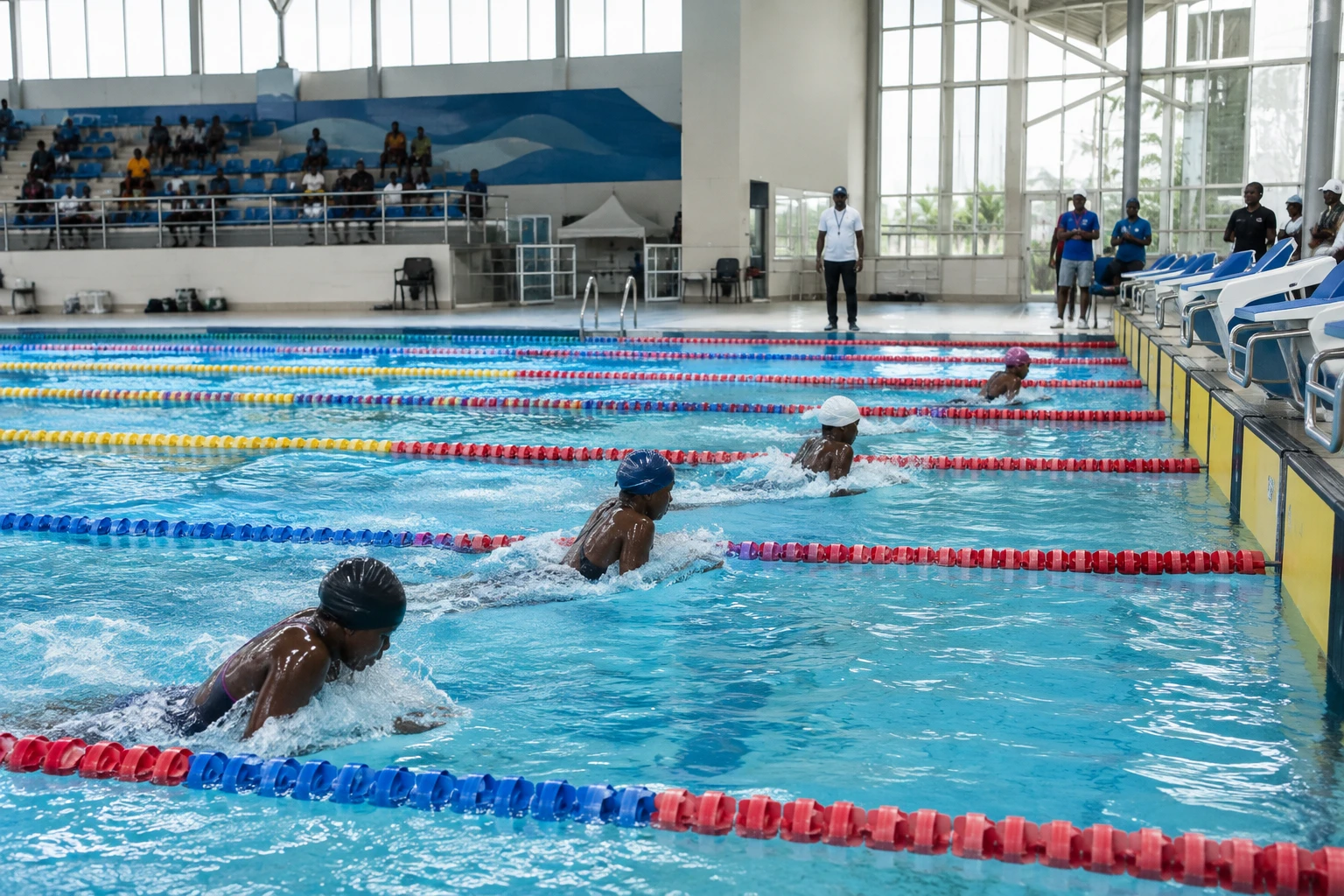
The Youth Olympic Games in Dakar are also providing a stage for African swimmers. On 2 November 2026, three of them finished among the top six in the 200m breaststroke. South Africa’s Chanel Veldsman took a place on the podium, while Algeria’s Rahma Benmahammed and Tunisia’s Ilef Omri completed the African presence.
Three African journeys in a closely contested final
Seventeen-year-old Chanel Veldsman won bronze in 2 min 30.87 sec. The South African swimmer had already recorded the third-fastest qualifying time. She then improved her mark by almost two and a half seconds in the final, according to Africa Aquatics, the continental swimming body.
Rahma Benmahammed took fifth place after qualifying eighth. Sixteen-year-old Ilef Omri finished sixth. These results are reported by Africa Aquatics and also appear in the competition’s results pages consulted after the events. They confirm that the final was not just about South Africa’s medal: three delegations from the continent placed a swimmer in the top six.
Veldsman’s bronze is also the first African swimming bronze medal at these Games, Africa Aquatics says. South Africa had already won silver in the 400m freestyle through Leah Markgraaff. These performances provide concrete markers of the presence of the continent’s swimmers at an international youth competition, without presuming what their future careers may hold.
Dakar, the first African city to host the Youth Olympics
The Youth Olympic Games are being held from 31 October to 13 November 2026. Dakar, Diamniadio and Saly are hosting around 2,700 athletes across 25 sports. It is the first Olympic sporting event to be held on African soil. Senegal is therefore welcoming delegations from several regions of the world, while its own young athletes compete at home.
Holding events in several cities sets these Games apart from a gathering concentrated in the capital alone. Dakar remains the main hub, but Diamniadio and Saly are also hosting competitions. For Senegal, the challenge goes beyond the ceremonies: the event is testing sports venues, transport and the capacity to keep facilities in use beyond the Olympic fortnight.
The event is also part of a continental trajectory in which several African countries are seeking to host major sporting events. But the benefits are not automatic. Use of the facilities after the Games, their maintenance and local clubs’ access to pools will matter as much as the day’s results. For swimmers, a useful legacy depends in particular on continuity in training and competitions.
What the 200m breaststroke shows
The final brought together athletes who had come through the heats before competing again. Benmahammed’s progress from eighth place in qualifying to fifth illustrates how much the morning rankings can differ from the decisive race. Veldsman, meanwhile, turned her qualifying position into a medal. They are two different trajectories within the same event.
The three swimmers represented South Africa, Algeria and Tunisia. This national diversity matters: the results did not come from a single delegation, but from countries in different parts of the continent. It does not, however, by itself measure the overall standard of African swimming. That would require comparing times, finals and medals across all events.
The Youth Olympics context also matters. The competition brings together young athletes and combines sport with education and cultural activities. A medal can draw attention to a discipline that receives less coverage than athletics or football. But progress is also built away from the podium: regular access to facilities, coaching, travel to competitions and support for young female athletes.
A regional signal, not yet a continental picture
For Senegalese people, hosting the Games gives particular visibility to sports practised in pools, while swimming often receives less attention than the most popular disciplines. The presence of African delegations in the final may fuel local interest. It does not, however, guarantee a lasting increase in resources or more accessible participation across all regions of the country.
At the West African level, the final is a reminder that youth competitions are also a meeting place for national sports systems. Senegal is the host, but the three swimmers who won medals or finished in the top six came from different countries. Their performance is therefore a shared African result, not a sign of dominance by one country or region.
The remaining events will show whether this presence is repeated in other races and sports. For now, the established fact is precise: on 2 November, a South African won bronze in the 200m breaststroke at the Dakar Youth Olympics, and two other African swimmers finished fifth and sixth. It is a notable performance at a competition that is historic for Senegal and the continent, but it is not, on its own, an assessment of the Games’ sporting legacy.
The results and details of the final are reported by Africa Aquatics, and cross-checked against coverage by Sport News Africa and the 2 November swimming results. The schedule and framework for the Games are set out in the official Dakar 2026 press dossier.