Algeria
 Egypt
 Libya
 Morocco
 Sudan
 Tunisia
 Benin
 Burkina Faso
 Cabo Verde
 Côte d'Ivoire
 Ghana
 Guinea
 Guinea-Bissau
 Liberia
 Mali
 Mauritania
 Niger
 Nigeria
 Senegal
 Sierra Leone
 The Gambia
 Togo
 Cameroon
 Central African Republic
 Chad
 DR Congo
 Equatorial Guinea
 Gabon
 Republic of the Congo
 São Tomé and Príncipe
 Burundi
 Comoros
 Djibouti
 Eritrea
 Ethiopia
 Kenya
 Madagascar
 Malawi
 Mauritius
 Mozambique
 Rwanda
 Seychelles
 South Sudan
 Tanzania
 Uganda
 Angola
 Botswana
 Eswatini
 Lesotho
 Namibia
 South Africa
 Zambia
 Zimbabwe
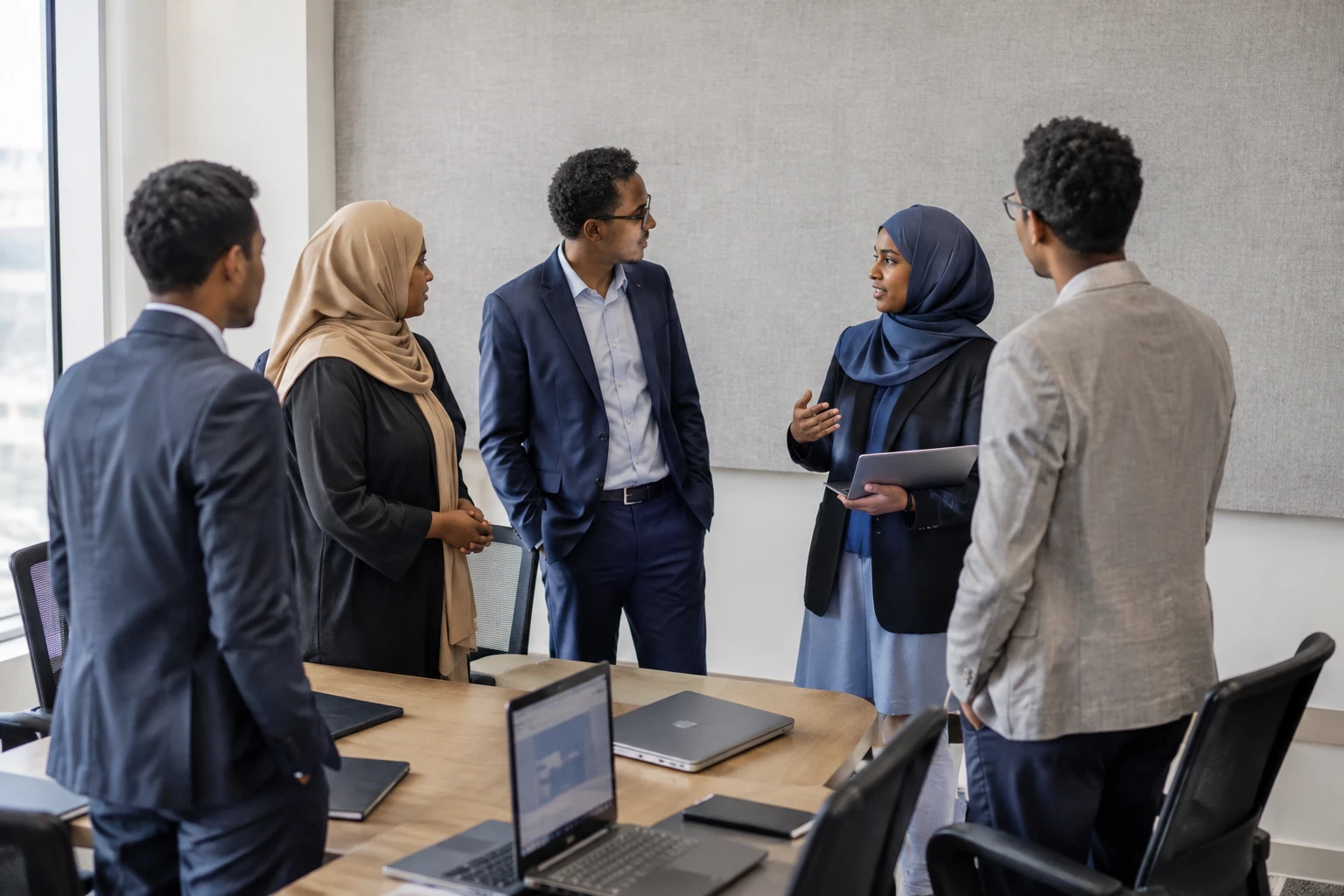
In Mogadishu, training artificial intelligence specialists is not enough: they also need the chance to work on real projects and find a place in the economy. A partnership between the public university and a technology company aims to bridge these two steps.
Linking courses to the needs of the technology sector
On 1 November 2026, the Somali National Artificial Intelligence Centre (SNAIC), affiliated with Somali National University, and Tabaarak ICT Solutions signed a cooperation agreement. The agreement provides for the creation of an AI Academy, continuing education and events led by professionals from both institutions.
The partners also announced knowledge sharing, research and more internship opportunities. The aim is to ease the transition from study to employment in the technology sector. However, no opening date, intake capacity or detailed course offering has been announced. These details will help gauge the project’s real scope.
The partnership was signed at an event held at Somali National University in Mogadishu. Students presented ten AI-related projects there. The demonstration offers an initial sign of local activity, but does not yet shed light on their funding, continuity or use by businesses or public services.
Established within the university, SNAIC describes itself as a centre for research, training and innovation. It aims to develop solutions addressing Somalia’s priorities. Working with a company can help test university research against real-world constraints: available data, customer needs, deployment costs and maintenance.
National foundations still need strengthening
Somalia is building its digital ecosystem in a context where skills, infrastructure and public rules remain closely interconnected challenges. Oxford Insights’ Government AI Readiness Index 2025 assesses governments’ capacity to harness artificial intelligence. It ranks Somalia 164th out of 195 countries, with a score of 21.82 out of 100. The index measures several dimensions, including institutions, infrastructure and skills; it does not, on its own, describe initiatives led by students, businesses or universities.
In May 2026, Somalia’s Ministry of Communications and Technology said it was working with UNESCO on a national AI readiness assessment. The review is due to examine institutional capacity, data governance, regulatory issues and skills. It could inform the development of a national framework, but available information does not yet specify when it will be published or what its final recommendations will be.
This effort reflects a broader challenge: training talent produces lasting results only if graduates have access to equipment, suitable data, specialist teachers and career opportunities. The announced internships could provide initial work experience. However, their number, pay and participating companies are not known. Without these details, students in Mogadishu and other regions cannot yet assess how accessible the programme will be in practice.
For businesses, the partnership offers a chance to identify talent and develop projects with the university community. For the university, it could help courses evolve in response to professional practice. But balance matters: research should not be reduced to the immediate needs of an employer. It should also contribute to tools that serve the country and to the responsible adoption of technology.
An issue extending beyond campuses
Regionally, Somalia is a member of the Intergovernmental Authority on Development (IGAD), a cooperation organisation in the Horn of Africa. In September 2026, IGAD called on its member states to develop a regional framework for AI. Discussions include potential uses in agriculture, health and climate risk forecasting, as well as data control and system accountability.
This regional dimension matters for Somalia: training, standards and research projects can have greater reach if institutions work together across borders. But effective cooperation also requires that local priorities — languages, public services, economic activities and the realities of different regions — are not set aside in favour of solutions designed elsewhere.
The debate also connects with the African Union, which encourages states to develop responsible AI policies tailored to their societies. For Mogadishu, the next steps will be practical: set out when the Academy will launch, publish the arrangements for training and internships, and then link these activities to the ongoing national assessment. These results will determine whether the agreement turns an announcement into a lasting skills pipeline.
The Somali National Artificial Intelligence Centre at Somali National University outlines its research and training activities. Oxford Insights provides details of its 2025 Government AI Readiness Index. IGAD has also set out its priorities in a regional consultation on a cooperation framework for artificial intelligence.