
 Algeria
 Egypt
 Libya
 Morocco
 Sudan
 Tunisia
 Benin
 Burkina Faso
 Cabo Verde
 Côte d'Ivoire
 Ghana
 Guinea
 Guinea-Bissau
 Liberia
 Mali
 Mauritania
 Niger
 Nigeria
 Senegal
 Sierra Leone
 The Gambia
 Togo
 Central African Republic
 Chad
 DR Congo
 Equatorial Guinea
 Gabon
 Republic of the Congo
 São Tomé and Príncipe
 Burundi
 Comoros
 Djibouti
 Eritrea
 Ethiopia
 Kenya
 Madagascar
 Malawi
 Mauritius
 Mozambique
 Rwanda
 Seychelles
 Somalia
 South Sudan
 Tanzania
 Uganda
 Angola
 Botswana
 Eswatini
 Lesotho
 Namibia
 South Africa
 Zambia
 Zimbabwe
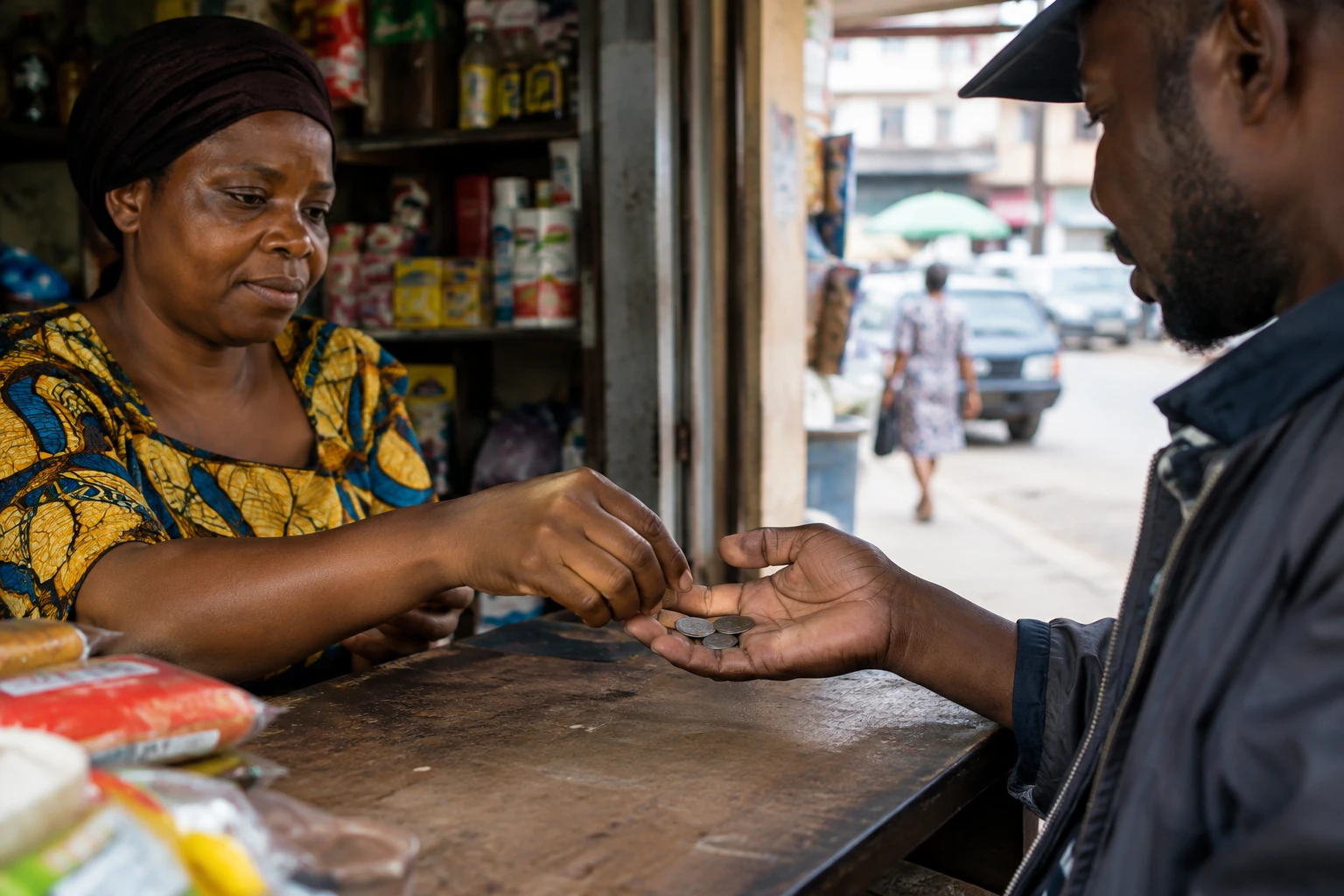
In the markets, shops and taxis of Yaoundé, a few old coins can now be refused where, until recently, they were used to pay for a purchase or give change. For households that have put them aside, the issue is tangible: exchange them before the deadline, without selling them off cheaply or throwing them away.
A shared currency, a transition to manage
Cameroon shares its currency with five other Central African countries. The Bank of Central African States (BEAC) issues the CFA franc used in the six states of the Economic and Monetary Community of Central Africa (CEMAC): Cameroon, the Central African Republic, the Republic of the Congo, Gabon, Equatorial Guinea and Chad. A monetary decision taken for this region therefore also affects traders and residents in these neighbouring countries.
The withdrawal covers five old coin series, minted in 1958, 1959, 1971, 1976 and 1985. It is part of the renewal of cash in circulation, while newer coins from the 2006 and 2024 series remain in use. The BEAC has published a notice setting out the timetable for the operation.
Exchange, don’t throw away
Since 1st November 2026, holders have been able to exchange the coins concerned free of charge at counters run by the BEAC, banks and microfinance institutions. This first phase runs until 31 July 2027. From 1st August to 31 October 2027, exchanges are to continue only at the central bank’s counters. After that period, the coins will no longer be exchangeable. The timetable is set out in the BEAC information notice on demonetised coins and was reported by Cameroon Tribune.
Collection also relies on the everyday network of shops and transport services. In Yaoundé, a saver quoted in accounts gathered on the ground opened her cash box to retrieve the coins she had accumulated. She says some customers are already refusing to accept them. By contrast, one trader says he can take them because his supplier deposits them at the bank. These situations illustrate a difficulty in managing the transition: a coin’s value also depends on the trust of the people handling it.
The BEAC has called on economic operators, particularly traders, taxis and motorcycle taxis, to take part in collecting the coins rather than rejecting them outright. Its deputy national director in Cameroon, Emmanuel Asafor Cho, stressed that the withdrawal period is gradual. Practical arrangements reported in Yaoundé provide for exchanges free of charge and state that access to the counter must not be conditional on opening an account.
The risk of a premature exit
For households, the timetable leaves several months to convert the coins into usable money. But this option depends on the information available and effective access to counters. People who keep small sums at home, particularly those who make little use of banking services, may find it harder to keep track of the deadlines. Traders and transport operators are on the front line: they receive cash every day and need to know where to deposit it.
Refusing the coins ahead of time can therefore undermine trust, even before the exchange period ends. It can also disproportionately affect small-value payments, which are common in local shops and on public transport. Conversely, collection organised through banks, microfinance institutions and retail outlets can reduce the need to travel and prevent coins from being forgotten in household cash boxes.
Demonetisation refers to the withdrawal of a currency’s legal tender status. However, published information about the transition does not describe its everyday use in the same way across the board. Details issued by the BEAC and reported by the Cameroonian press indicate that old coins can still be used in transactions during the withdrawal period, while other reports present 1st November as the date on which their legal tender status ends. The monetary authorities should clarify this distinction to prevent traders and customers from making contradictory decisions.
A test of trust for the whole CEMAC
Beyond Cameroon, the operation is testing monetary coordination across CEMAC. A common rule has the same effect everywhere only if residents know the deadlines and can access exchange points. Banking networks, the presence of microfinance institutions and payment habits vary from one country and region to another. Capital cities therefore do not represent the experience of secondary towns or rural areas.
The coming months will show whether collection reaches small shops and users far from counters. Another milestone is already approaching: from 1st August 2027, only BEAC counters are to handle exchanges, before the announced end date of 31 October. For holders and businesses alike, the operation’s success will depend less on the announcement of the withdrawal than on consistent instructions, accessible exchange points and clear information across all six countries concerned.



