Algeria
 Egypt
 Libya
 Morocco
 Sudan
 Tunisia
 Benin
 Burkina Faso
 Cabo Verde
 Côte d'Ivoire
 Ghana
 Guinea
 Guinea-Bissau
 Liberia
 Mali
 Mauritania
 Niger
 Nigeria
 Senegal
 Sierra Leone
 The Gambia
 Togo
 Cameroon
 Central African Republic
 Chad
 DR Congo
 Equatorial Guinea
 Gabon
 Republic of the Congo
 São Tomé and Príncipe
 Burundi
 Comoros
 Djibouti
 Eritrea
 Kenya
 Madagascar
 Malawi
 Mauritius
 Mozambique
 Rwanda
 Seychelles
 Somalia
 South Sudan
 Tanzania
 Uganda
 Angola
 Botswana
 Eswatini
 Lesotho
 Namibia
 South Africa
 Zambia
 Zimbabwe
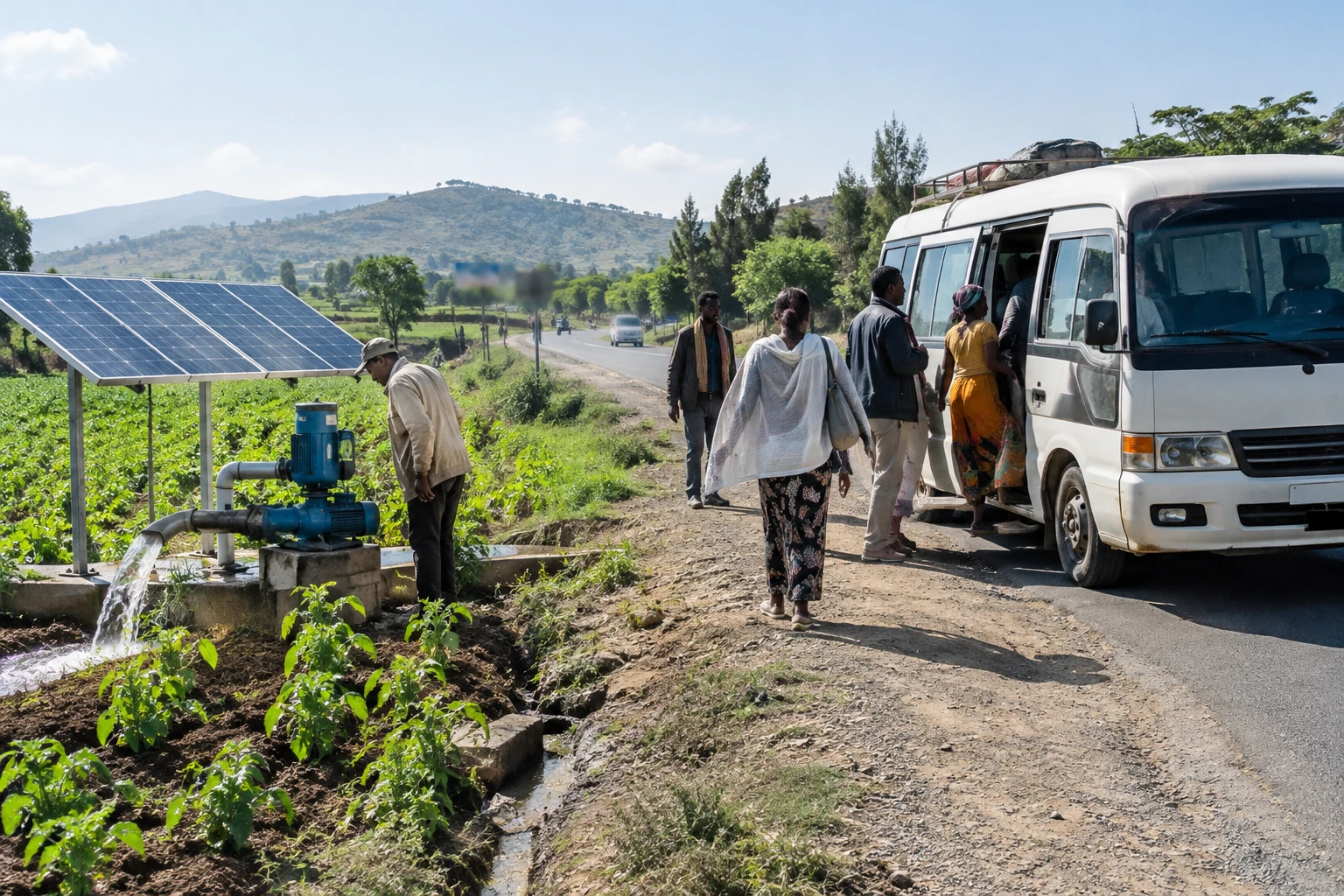
In Ethiopia, the impact of climate investment is also measured by what it changes far from Addis Ababa: a water point that lasts through the dry season, irrigation less dependent on diesel, or soil better able to retain rainfall. A new national programme aims to act on these fronts in communities exposed to drought and erratic rainfall.
Equipment planned for 15 communities
The board of the Green Climate Fund (GCF), an international mechanism that finances climate-related projects, approved a programme on 27 October 2026 to strengthen the resilience of vulnerable households in Ethiopia. Its total announced budget is $30m. The funding includes nearly $25m in GCF grants and $5m in government co-financing, mainly in kind.
Ethiopia’s Ministry of Finance is leading the project, which is due to cover 15 kebeles — local administrative units — across seven woredas, or districts. The plan includes 21 drinking water supply systems and 150 solar-powered irrigation pumps. It also includes the restoration of degraded watersheds, to better conserve soil and water resources.
According to the project document, about 556,000 people are expected to benefit from increased resilience. This figure describes an expected outcome, not a result already achieved: implementation has yet to begin. The programme is planned to run for four years. Its approval is therefore a funding milestone, not proof that the equipment has already been installed or that assistance is reaching households.
A difficult rainy season in the Horn of Africa
The timing gives the project immediate significance. The kiremt season, the main rainy period across much of the country, generally runs from June to September. In 2026, a rainfall deficit and delayed rains weakened crops and pastures in several regions. The International Federation of Red Cross and Red Crescent Societies reports delays of up to four weeks in the north, east and south-east of the country.
FEWS NET, a food security analysis network, also reported significant rainfall deficits and threatened harvests in the worst-affected regions. These findings shed light on the risks, but do not justify extrapolating a human or agricultural toll across the entire country. The effects vary by area and livelihood: a family farming rain-fed land, a lowland pastoralist and an urban household do not face the same impacts.
The challenge is not unique to Ethiopia. In May, the IGAD Climate Prediction and Applications Centre, the regional climate centre of the Intergovernmental Authority on Development (IGAD), forecast below-average rainfall across a large part of the region for the June-to-September season. This outlook is a reminder that managing water, pastures and early warnings goes beyond national borders.
Adapting infrastructure to local needs
For farmers, access to irrigation can reduce dependence on a single rainy season. The planned solar pumps could also limit the use of diesel. But their usefulness will depend on very practical factors: the availability of groundwater, equipment maintenance, repair costs and how access is shared between communities.
Drinking water systems address a daily need as well as an agricultural one. When water points dry up or are far from homes, the burden of collecting water falls particularly heavily on women and girls. The GCF also identifies women and children as among the groups most exposed, because of their role in water collection, agricultural work and household food security.
Restoring watersheds complements this infrastructure. The aim is to improve the land’s capacity to retain water and slow its degradation. However, these benefits take time. They do not replace early warning systems, emergency assistance during a climate shock, or agricultural policies that support producers between harvests.
The World Bank has also highlighted the value of investing in resilient infrastructure and better sharing decision-making and resources. In Ethiopia, where agriculture in many rural areas still depends heavily on rainfall, local delivery of programmes will be crucial. Regional authorities and communities will need to be able to monitor the work and report problems, while the most vulnerable households will need genuine access to the facilities.
Funding is the first step in a longer project
The programme forms part of Ethiopia’s Climate Resilient Green Economy strategy and IGAD’s regional efforts to combat drought. For the African Union, it also illustrates a central question: how can climate finance commitments be turned into sustainable services accessible to people directly affected by climate hazards?
The next milestones will be the project’s effective launch, the selection of sites, and then the commissioning and maintenance of the facilities. It will also be necessary to check that the planned grant and co-financing are mobilised as announced. At this stage, approval provides an anticipated resource; its impact will depend on implementation, transparency and the capacity of local authorities to maintain the equipment beyond the initial funding.