
 Algeria
 Egypt
 Libya
 Morocco
 Sudan
 Tunisia
 Benin
 Burkina Faso
 Cabo Verde
 Côte d'Ivoire
 Ghana
 Guinea
 Guinea-Bissau
 Liberia
 Mali
 Mauritania
 Niger
 Nigeria
 Senegal
 Sierra Leone
 The Gambia
 Togo
 Central African Republic
 Chad
 DR Congo
 Equatorial Guinea
 Gabon
 Republic of the Congo
 São Tomé and Príncipe
 Burundi
 Comoros
 Djibouti
 Eritrea
 Ethiopia
 Kenya
 Madagascar
 Malawi
 Mauritius
 Mozambique
 Rwanda
 Seychelles
 Somalia
 South Sudan
 Tanzania
 Uganda
 Angola
 Botswana
 Eswatini
 Lesotho
 Namibia
 South Africa
 Zambia
 Zimbabwe
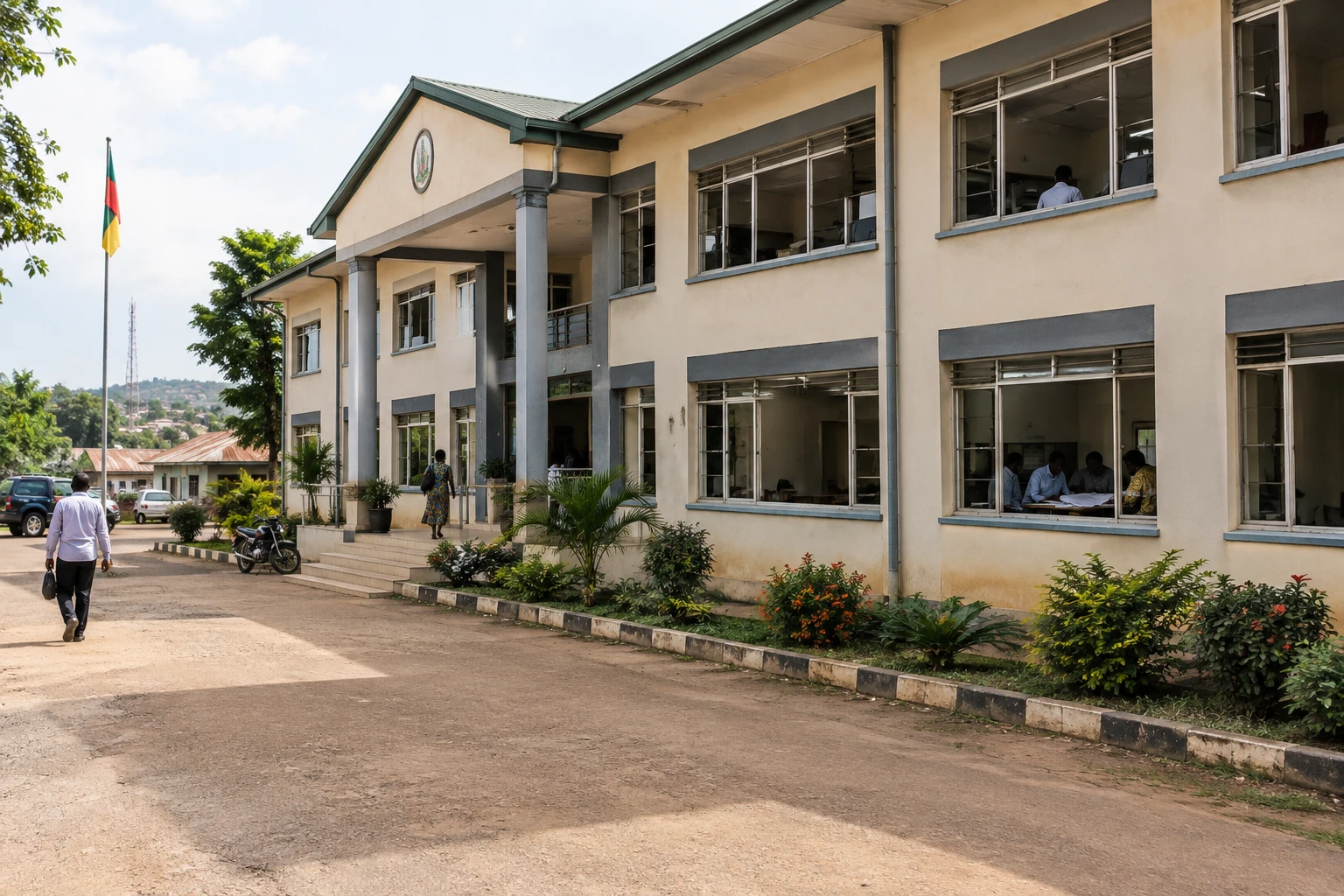
In Batouri, in eastern Cameroon, the announcement of a new sugar complex raises a very practical question: how can investment promises be turned into sustainable production, local jobs and agricultural income? For now, the Chinese project is an idea to be studied, not a factory under construction.
A project still at the study stage
State-owned Nanning Agricultural Development Group is considering a sugar and rice cultivation and processing programme in the East Region. A notice published on 27 October 2026 seeks a provider to assess its feasibility. The timeline places the project at a preliminary stage: studies must still define its technical, financial, land and administrative requirements.
The project envisages around 6,667 hectares of sugar cane and 200 hectares of rice, as well as a sugar mill with a stated annual capacity of 60,000 tonnes. Rice-processing facilities and staff buildings are also included in the programme. The group estimates the overall investment at nearly 88 billion FCFA. This is a proposed budget, not funding that has already been secured.
The tender provides for up to 880,000 yuan, or around 78 million FCFA, to carry out the study. Bids must be submitted by 5 November 2026. The selected provider would have 60 days, including field investigations in Cameroon. These details are set out in the procurement notice published in China and corroborated by an English-language report on the project.
At this stage, there is nothing to confirm that a land lease has been signed, that construction has begun or that funds are available. It is therefore important to distinguish between the announced industrial capacity and actual production: the former is part of the project, while the latter can only be measured after investment decisions have been made and equipment commissioned.
Batouri, a place of announced projects
Caution is also warranted in light of local history. In April 2012, the Cameroonian government signed an agreement with Justin Sugar Mills for a complex estimated at 60 billion FCFA, also with a stated capacity of 60,000 tonnes a year. Disagreements over the handling of the project led the state to terminate the agreement in June 2014. In February 2015, a selection committee chose Morocco’s Cosumar group to take over the project. The stages of this process were reported at the time by Cameroonian business media and a Cameroonian media outlet citing the administrative explanations given at the time.
The project did not follow a straightforward path. Cosumar hesitated to commit, while Justin Sugar Mills disputed its removal and sought compensation from the state. In December 2015, the government announced its withdrawal from the initiative and said it would allow the original promoter to pursue the project. These twists show that selecting an investor is not enough: stable agreements, available land and the ability to finance infrastructure are just as important.
In 2017, Orient’s Sugar and Industry SA, a company bringing together Cameroonian, Brazilian and Italian capital, also showed interest in the sector in the East. It had, among other things, grown maize and soya on about 100 hectares, described as a first step towards a sugar complex. However, the available information does not establish a link between these earlier projects and the current Chinese initiative. The similarity between the announced capacities and the Justin Sugar Mills project does not prove that the earlier project is being taken over.
Land, jobs and local benefits
For Batouri and neighbouring municipalities, the stakes go beyond sugar output. An integrated project could create agricultural markets, jobs in farming, transport and processing, and procurement opportunities for local businesses. But the scale of these benefits will depend on recruitment choices, the contracts offered to producers and the infrastructure actually built.
Land will be a decisive issue. The proposed lease of more than 6,800 hectares in total must be reviewed with the authorities and communities concerned. The announced study will need to clarify the conditions for using the land and the procedures required. It does not replace the conclusion of agreements or consultation with people whose activities or customary rights of use could be affected.
The project combines sugar cane and rice, two crops that require different farming calendars, equipment and marketing channels. Its viability will therefore depend on factors that remain unknown: water availability, road access, energy supply, transport costs and markets. For producers, any potential benefit will also depend on purchase prices and regular payments. For residents, the promised benefits will become tangible only through verifiable commitments.
A stake for Cameroon and Central Africa
Cameroon is seeking to expand local processing and diversify its agriculture. In Yaoundé, the authorities will have to weigh the welcome given to industrial investment against the protection of local land and economic interests. A factory could help supply the domestic market, but no data presented in the project yet make it possible to quantify a reduction in imports or predict its market share.
At regional level, the project falls within the CEMAC area, the economic community that brings together six Central African countries for trade and economic cooperation. Additional production could be of interest to neighbouring markets, subject to costs, standards and the conditions governing the movement of goods. But its regional reach remains hypothetical until the factory, its financing and its markets are established.
The next observable step is the completion of the feasibility study after the tender closes, scheduled for 5 November 2026. It should show whether the announcement can overcome the obstacles that have marked previous projects in Batouri. For now, Nanning Agricultural Development Group’s interest is real at the planning stage; industrial delivery, however, remains to be demonstrated.



