Algeria
 Egypt
 Libya
 Morocco
 Sudan
 Tunisia
 Benin
 Burkina Faso
 Cabo Verde
 Côte d'Ivoire
 Ghana
 Guinea
 Guinea-Bissau
 Liberia
 Mali
 Mauritania
 Niger
 Nigeria
 Senegal
 Sierra Leone
 The Gambia
 Togo
 Cameroon
 Central African Republic
 Chad
 DR Congo
 Equatorial Guinea
 Gabon
 Republic of the Congo
 São Tomé and Príncipe
 Burundi
 Comoros
 Djibouti
 Eritrea
 Ethiopia
 Kenya
 Madagascar
 Malawi
 Mauritius
 Mozambique
 Rwanda
 Seychelles
 South Sudan
 Tanzania
 Uganda
 Angola
 Botswana
 Eswatini
 Lesotho
 Namibia
 South Africa
 Zambia
 Zimbabwe
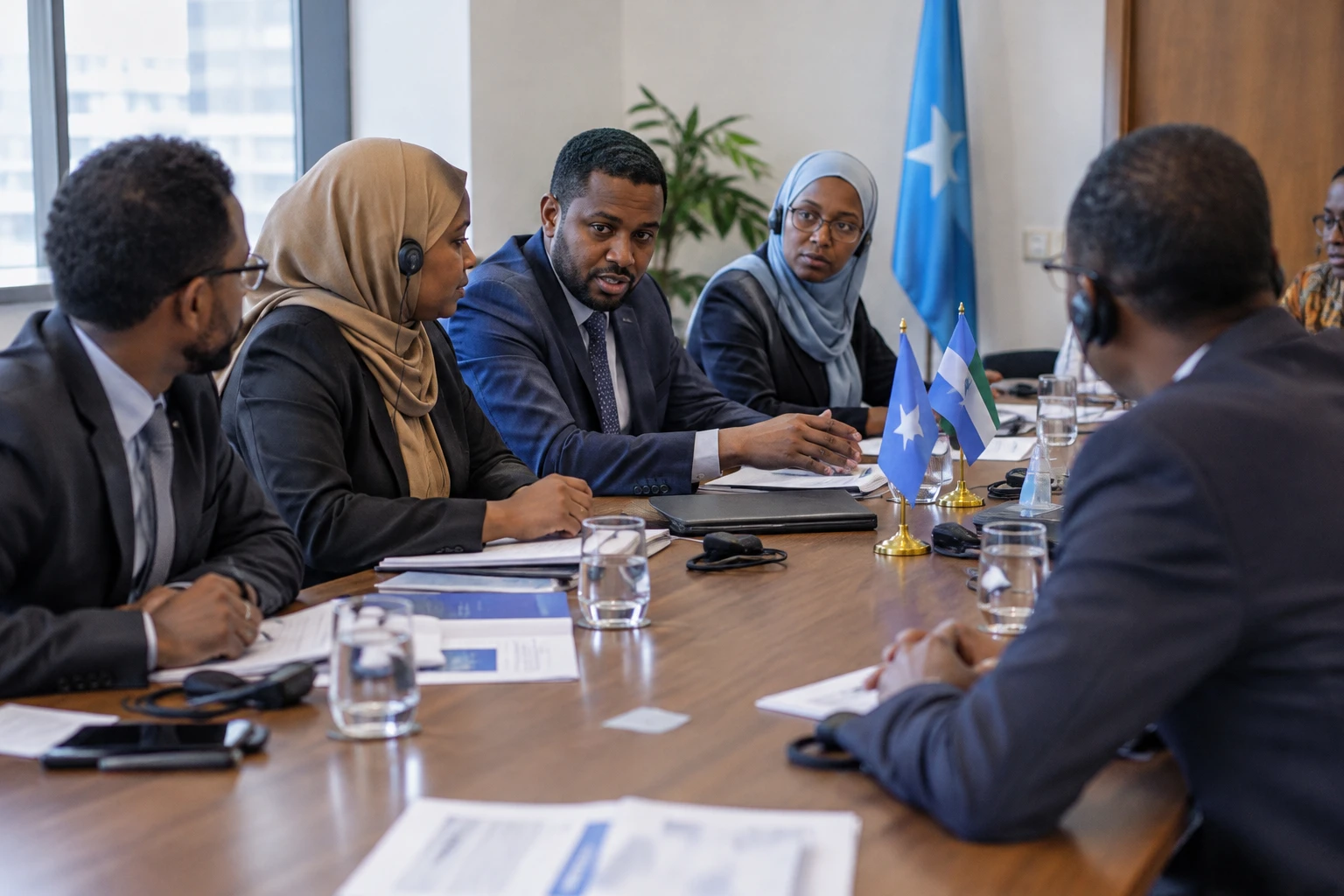
A sweeping vote in Mogadishu marks an important step, but not yet the introduction of new protections. In Somalia, the bill on rape and sexual offences must still clear the remaining legislative stages before it can become law.
A bill after lengthy debate
On 14 October 2026, the House of the People, the lower house of Somalia’s federal parliament, approved the bill on rape and indecency offences. According to the results announced during the session, 132 MPs voted in favour, three against and five abstained. The bill must still complete the parliamentary process before it is promulgated: it should therefore not be presented as a law already in force. The Somali outlet Goobjoog’s report and Mustaqbal Media’s account report the same result.
The vote concerns a reform that has been awaited for years. Somalia’s Penal Code, adopted in 1962, remains the legal basis for many offences. It already provides for penalties for rape and certain forms of sexual violence, but rights groups consider its definitions too narrow and ill-suited to current realities. The 1962 code has not, however, been without any criminal provisions: those involved in the reform are calling for a comprehensive overhaul and sufficiently precise protections. The UNHCR’s legal platform describes Somalia’s Penal Code and its historical provisions.
This distinction matters. In 2026, parliament also began a separate process to revise the Penal Code more broadly. Somalia’s state news agency SONNA reported in January that the government had submitted a draft new code to the House of the People. The bill on sexual violence is therefore part of a wider legislative effort, but is not the same as it. SONNA detailed the launch of this criminal justice reform.
Protections to be clarified in the final text
The reform’s scope will depend less on the number of votes it received than on its definitions and implementation. Earlier versions of the bill drew criticism, particularly over the definition of rape, the role of consent and the precision of so-called “indecency” offences. In 2023, the UN said the version under consideration at the time did not fully meet international standards because it linked rape to the use of force without clearly incorporating the absence of consent. This criticism concerned an earlier version: publicly available information consulted does not establish whether the text voted on in October 2026 resolved these issues. Observations made by the UN mission in Somalia set out these concerns.
This caution is essential for people seeking justice. A legal definition determines which acts can be prosecuted, what investigators must establish and what protections are available to survivors. If terms remain vague or offences are defined too narrowly, the vote may have less impact than its scale suggests. Conversely, clear provisions can give judges and investigative services firmer guidance.
The debate also has a sensitive precedent. In 2020, an alternative proposal concerning crimes related to sexual relations sparked serious concern among rights advocates, particularly about the safeguards afforded to women and children. The bill currently under debate is the result of several years of revisions and consultations. As recently as November 2025, Somalia’s news agency SONNA reported that the bill was undergoing readings and parliamentary discussions. This trajectory explains both the significance of the vote and the need to examine the final version carefully. SONNA’s report on parliamentary proceedings in November 2025 marks a stage in this process.
Between formal justice and local realities
In practice, passing a law is not enough to guarantee access to justice. Victims may hesitate to report violence for fear of reprisals or stigma. In several regions, disputes are also handled through customary mechanisms, sometimes without placing survivors’ needs at the centre. Formal courts, police and support services must therefore be able to receive complaints, protect those concerned and investigate cases. Resources and access to these services can vary between Mogadishu, other urban centres and rural areas.
Needs are not the same for everyone. Someone living in the capital may be closer to a police station or specialist service, without being immune to social or family pressure. In remote areas, distance, the cost of travel and a lack of facilities can make pursuing a legal case more difficult. Somali civil society organisations and legal aid groups therefore have a practical role: providing information on remedies, supporting survivors and highlighting the obstacles they encounter. Legal Action Worldwide documents its legal work in Somalia, including providing information and referrals for people affected by gender-based violence.
Institutions will also need to clarify how investigators, prosecutors, courts and medical or psychosocial services coordinate. Without accessible procedures and appropriate training, a new offence may remain difficult to invoke. The challenge for the authorities is therefore twofold: to adopt a coherent framework and build the capacity needed to implement it. For families and communities, trust in institutions will depend on confidentiality, witness safety and the fair handling of complaints.
A national issue with regional resonance
Somalia is a member of the Intergovernmental Authority on Development (IGAD), a regional organisation in the Horn of Africa. The bill’s progress is therefore also relevant to regional debates on women’s and children’s access to justice and responses to conflict-related violence. It does not, however, in itself point to harmonisation of laws across the region: each state retains its own institutions and legal framework.
The next step to watch is the completion of the parliamentary process and publication of the final text. Its contents will show whether concerns raised about consent, the definition of offences and the protection of minors have been addressed. Then come less visible but decisive questions: investigative rules, judicial training, the coverage of support services and survivors’ ability to obtain redress without facing further pressure.
The 14 October vote thus brings Somalia closer to a renewed legal framework, without closing the debate. The result will be measured both by the provisions ultimately adopted and by whether someone living in Mogadishu or a remote region can make their complaint heard and obtain a judicial response.