Algeria
 Egypt
 Libya
 Morocco
 Sudan
 Tunisia
 Benin
 Burkina Faso
 Cabo Verde
 Côte d'Ivoire
 Ghana
 Guinea
 Guinea-Bissau
 Liberia
 Mali
 Mauritania
 Niger
 Nigeria
 Senegal
 Sierra Leone
 The Gambia
 Togo
 Cameroon
 Central African Republic
 Chad
 DR Congo
 Gabon
 Republic of the Congo
 São Tomé and Príncipe
 Burundi
 Comoros
 Djibouti
 Eritrea
 Ethiopia
 Kenya
 Madagascar
 Malawi
 Mauritius
 Mozambique
 Rwanda
 Seychelles
 Somalia
 South Sudan
 Tanzania
 Uganda
 Angola
 Botswana
 Eswatini
 Lesotho
 Namibia
 South Africa
 Zambia
 Zimbabwe
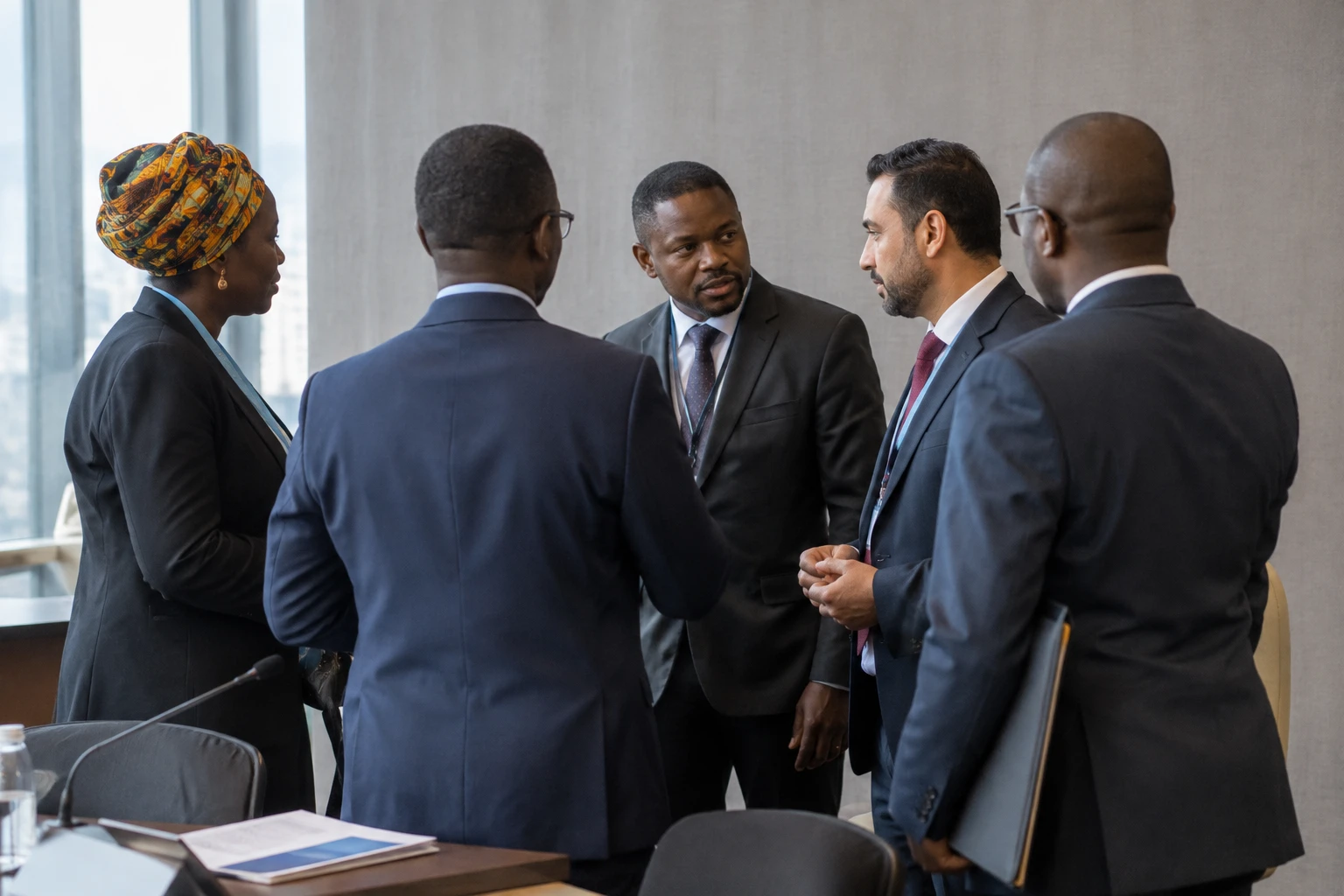
In Moscow, discussions on gas overlap with diplomatic meetings. For Mozambique and Libya, two countries that produce or hold energy resources, the challenge is to turn this proximity to Russia into concrete cooperation, without confusing political announcements with economic results.
Gas sets the scene for diplomatic talks
On 27 October 2026, Mozambican President Daniel Chapo met his Russian counterpart, Vladimir Putin, in the Russian capital. The meeting took place on the sidelines of the eighth summit of the Gas Exporting Countries Forum (GECF), which brings together producer states to discuss their interests in the gas sector. Mozambique is participating as an observer.
The meeting comes just before the third Russia-Africa summit, being held in Moscow on 28 and 29 October. This succession of gatherings allows Russia to combine bilateral diplomacy, energy and discussions with the continent’s institutions. For African governments, it also offers an opportunity to put forward national priorities to several partners at once.
Mohamed al-Menfi, president of Libya’s Presidential Council, also travelled to Moscow for the two meetings. Libya’s official news agency, LANA, had announced his trip and a planned meeting with Putin. The available information confirms that the meeting took place, but does not establish the details of its conclusions. Nor does the information provided specify the terms of a meeting between Putin and a leader of Equatorial Guinea.
Maputo wants energy to drive development
In Moscow, Putin highlighted cooperation between Russia and Mozambique in international forums, particularly the United Nations. He praised Maputo’s position on several Russian initiatives. This account reflects the Kremlin’s view; in itself, it is not a record of the agreements reached or their effects.
Daniel Chapo, for his part, argued that Mozambique’s energy resources should serve the country’s economic and social development. This priority matters in a southern African country with major gas projects, notably in the Rovuma Basin in the north. Large-scale extraction raises a central question: what share of the revenue, jobs and energy will actually benefit Mozambique’s economy?
The Mozambican government also presents its presence in Moscow as a way to broaden its economic relations. But announcements of cooperation must be distinguished from completed investments, signed contracts and observable benefits. For residents, the issue is not measured only in export volumes: it also concerns access to electricity, public revenues and opportunities for local businesses.
The Kremlin points to the historic ties forged with Mozambique during the struggle for independence. This history underpins the political relationship, but does not absolve the two governments of the need to specify current projects, their financing and their beneficiaries. Diversifying partnerships can give Maputo greater room for manoeuvre, provided energy choices also meet domestic needs.
Libya seeks channels for cooperation
For Libya, the meeting takes place in a different institutional context. The country remains marked by political division and difficulties in reunifying its institutions. Mohamed al-Menfi heads the Presidential Council, a body established through the UN-backed political process; he does not govern all of Libya’s centres of power alone.
Putin spoke of resuming the work of the Russian-Libyan joint intergovernmental commission, a meeting of which had been held in Moscow in April, according to his remarks as reported during the exchange. Such a commission helps organise discussions between administrations and monitor bilateral issues. Its revival, however, depends on the two sides’ ability to set a timetable and turn intentions into actionable decisions.
Russia is one of several diplomatic actors in the Libyan file. Any external initiative must take account of competing institutions and efforts conducted under the auspices of the United Nations. Dialogue with Moscow can broaden Tripoli’s contacts; it cannot, on its own, resolve internal disagreements over governance and elections.
Announcements to be judged across the continent
The close timing of the GECF summit and the Russia-Africa summit underlines the strategic importance of energy resources in international relations. For the African states concerned, the priority is to negotiate on their own terms, whether on local processing, energy security, training or access to markets.
This sequence does not mean that African countries share a common position towards Moscow. Their choices vary according to their economies, financing needs and diplomatic relations. At African Union level, the challenge is also to defend shared priorities without erasing national strategies or the realities of each region.
What follows in practice will therefore be more instructive than summit declarations: published agreements, follow-up meetings, committed investment and projects that benefit local economies. For Mozambique, the role given to domestic use of gas will need to be watched. For Libya, the restoration of regular dialogue between administrations will be an early indicator. Both cases are a reminder that a summit meeting opens a door; it does not guarantee what will be built behind it.
Mozambique’s presidency on Daniel Chapo’s participation in the gas summit ; Libyan news agency LANA on Mohamed al-Menfi’s trip to Moscow.