Algeria
 Egypt
 Libya
 Morocco
 Sudan
 Tunisia
 Benin
 Burkina Faso
 Cabo Verde
 Côte d'Ivoire
 Ghana
 Guinea
 Guinea-Bissau
 Liberia
 Mali
 Mauritania
 Niger
 Senegal
 Sierra Leone
 The Gambia
 Togo
 Cameroon
 Central African Republic
 Chad
 DR Congo
 Equatorial Guinea
 Gabon
 Republic of the Congo
 São Tomé and Príncipe
 Burundi
 Comoros
 Djibouti
 Eritrea
 Ethiopia
 Kenya
 Madagascar
 Malawi
 Mauritius
 Mozambique
 Rwanda
 Seychelles
 Somalia
 South Sudan
 Tanzania
 Uganda
 Angola
 Botswana
 Eswatini
 Lesotho
 Namibia
 South Africa
 Zambia
 Zimbabwe
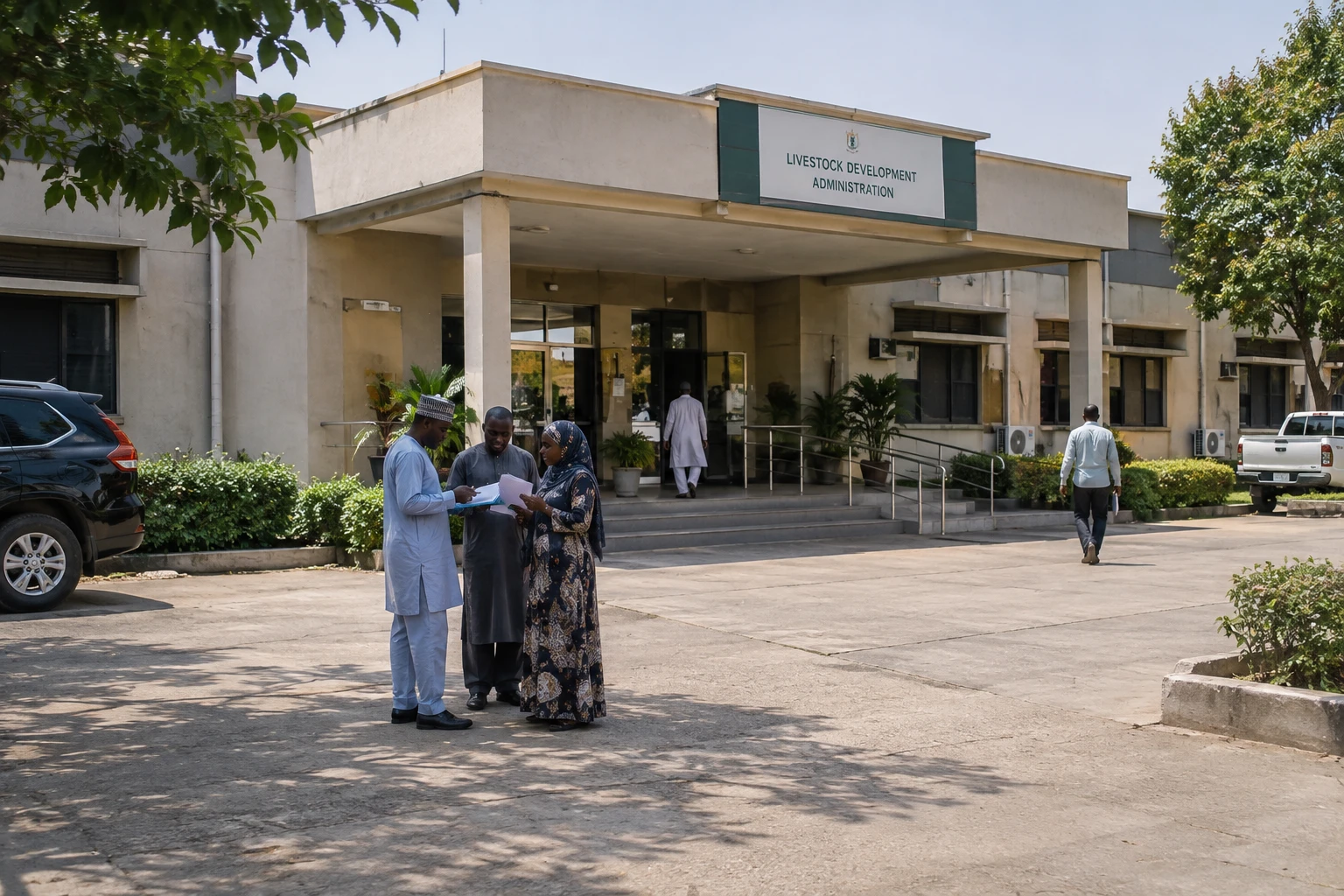
In northern Nigeria, the cost of a chick and the time it takes to receive one can affect a poultry farm’s profitability from the outset. A new project in Jigawa State aims to bring this stage closer to producers. But its impact will depend on whether it is delivered and can supply chicks at affordable prices.
A facility closer to northern farms
The Jigawa government signed a joint venture agreement with Indian company Srinivasa Farms Private Limited on 23 October 2026. The project plans a modern hatchery, a facility where fertilised eggs are incubated until they hatch. Its announced cost is $10 million. Srinivasa Farms would hold 60% of the company and Jigawa State 40%. These details have been reported by several Nigerian media outlets.
No annual capacity, construction start date or commissioning deadline has yet been made public. The agreement therefore marks a partnership milestone, not the delivery of an operational facility. This distinction matters to farmers, who will benefit from additional supply only once the hatchery has been built, equipped and integrated into a reliable distribution chain.
Jigawa’s selection addresses a concrete geographical constraint. Chicks destined for farms in the north of the country may come from production centres in the south. Salim Abdurrahman Lawal, the state commissioner for livestock development, cited journeys of 1,200 to 1,500 kilometres. The distance makes transport more difficult and can affect the condition of chicks on arrival.
A shortage that goes beyond transport
Jigawa’s engagement with Srinivasa Farms began before the signing. State officials travelled to India in 2025. A company delegation subsequently visited Jigawa in April 2026 to explore opportunities for co-operation. Founded in 1965, Srinivasa Farms operates in several segments of the poultry value chain, including breeding, animal feed and processing.
The project plans more than just chick production. The partners have also announced technical support for producers, particularly in farm management, disease monitoring and health practices. The Jigawa government is also considering delivery infrastructure and involving young people in distribution. The practical details of these elements remain to be clarified.
The shortage of day-old chicks, poultry delivered shortly after hatching to start a flock, is already a national concern. In June 2026, the Federal Ministry of Livestock Development said it wanted to strengthen oversight of import quotas for breeding stock. According to the ministry, the under-use of some allocations contributes to supply disruptions and higher costs. The federal response concerns access to inputs and their management, while the Jigawa project is relying on regional production capacity.
Prices illustrate the pressure felt by farmers. Professionals interviewed by Nigerian media outlet AgroNigeria said chicks were selling for between 1,800 and 2,100 naira each on 17 October, compared with 1,300 to 1,500 naira two or three months earlier. These are prices reported by industry players, not a national average. The increase may nevertheless prompt some producers to reduce the number of birds they rear.
The challenge of access and competition
Bringing the hatchery closer to farms in the north could shorten distances and secure some deliveries. The benefits are particularly clear for small producers, who have less room to absorb delays, transport losses or higher purchase prices. Research by the International Livestock Research Institute highlights that the distance from hatcheries also affects small-scale rural farmers, particularly in northern and eastern Nigeria.
Proximity alone, however, does not guarantee cheaper chicks. Prices also depend on the supply of breeding stock, feed and energy costs, animal health and access to inputs. The new hatchery will therefore have to show that it is adding genuine supply to the market, rather than simply shifting production or serving a limited number of customers.
The joint venture’s structure also raises a question of economic governance. Jigawa State is contributing a 40% public stake, while the Indian company would hold a majority and provide its expertise. For the authorities, the partnership could speed up the transfer of know-how and support local activity. For farmers, the decisive factors will be more immediate: regular availability, health quality, price transparency and access to the distribution network.
A growing sector, results still to be measured
Nigerian poultry meat production reached about 342,933 tonnes in 2024, according to FAO data published in its agricultural statistics series. This confirms the scale of a growing domestic market, but is not enough on its own to measure unmet demand or chick requirements. Higher production and supply difficulties can coexist, because the ability to produce meat also depends on access to young birds and other inputs.
At regional level, the issue also concerns trade in West Africa. Nigeria is a member of ECOWAS, a regional economic integration organisation. Strengthening local production could reduce some dependencies and consolidate a national value chain, but the Jigawa project alone is not enough to establish an impact on markets in neighbouring countries. The volume produced, intended outlets and distribution rules will first need to be known.
The next step will therefore be less about the financial announcement than about implementation: the timeline, hatchery capacity, origin of the breeding stock, health standards and terms of sale. The federal ministry is meanwhile monitoring import allocations. These two levers — local production and supply oversight — show that Nigeria’s challenge is not simply a matter of building a facility. It is about making chicks accessible, particularly to producers far from major centres, without undermining the viability of poultry farms.