Algeria
 Egypt
 Libya
 Morocco
 Sudan
 Tunisia
 Benin
 Burkina Faso
 Cabo Verde
 Côte d'Ivoire
 Ghana
 Guinea
 Guinea-Bissau
 Liberia
 Mali
 Mauritania
 Niger
 Nigeria
 Senegal
 Sierra Leone
 The Gambia
 Togo
 Cameroon
 Central African Republic
 Chad
 DR Congo
 Equatorial Guinea
 Gabon
 Republic of the Congo
 São Tomé and Príncipe
 Burundi
 Comoros
 Djibouti
 Eritrea
 Ethiopia
 Kenya
 Madagascar
 Malawi
 Mauritius
 Mozambique
 Rwanda
 Seychelles
 Somalia
 South Sudan
 Tanzania
 Uganda
 Angola
 Botswana
 Eswatini
 Lesotho
 Namibia
 Zambia
 Zimbabwe
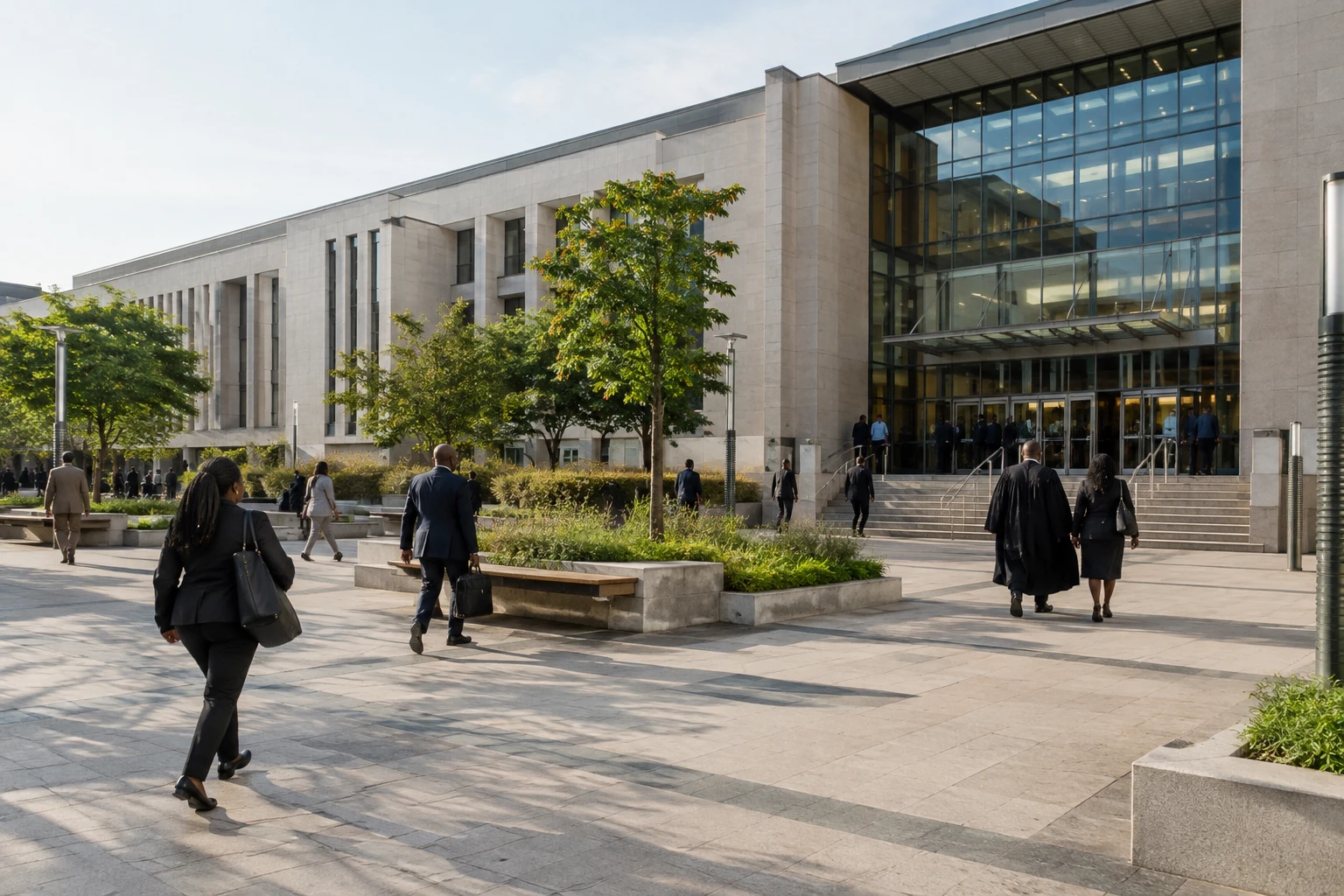
Can South African justice still establish who ordered apartheid-era crimes, as the years pass and witnesses and suspects disappear? On 26 October 2026, Eugene de Kock brought the question back to the centre of hearings into prosecutions that stalled after the end of the segregationist regime.
A commission to examine unresolved cases
In South Africa, the Truth and Reconciliation Commission (TRC), established after the democratic transition, was tasked with documenting human rights violations. It could grant amnesty to perpetrators who made full disclosure of politically motivated crimes. Those who were not granted amnesty, however, remained liable to prosecution. Yet many cases never reached court.
The judicial commission chaired by Judge Sisi Khampepe is examining these delays and possible political interference. It is looking at how the authorities handled cases referred by the TRC. The commission is not trying the people named: it is hearing testimony and is expected to shed light on decisions, obstacles and institutional responsibility.
The inquiry is part of a broader period of reassessment. Victims’ families have for years called for crimes not covered by amnesty to be investigated. Other proceedings, including new hearings into the Cradock Four, have revived questions about what the democratic state did — or failed to do — with the information available. South Africa is a member of SADC, the Southern African Development Community, but this inquiry primarily concerns its national institutions and their ability to account for their actions.
Testimony from a man at the heart of the covert apparatus
Eugene de Kock, a former commander of the Vlakplaas police unit, appeared in Johannesburg on 26 October. The secret security police unit took part in operations against opponents of apartheid. Militants captured and known in this context as “askaris” were sometimes forced to work with the police against their former comrades.
De Kock argued that prosecutors had not questioned him sufficiently about those who allegedly gave orders or facilitated operations. He singled out former prosecutor Anton Ackermann and said more senior officials should have been prosecuted. These are his allegations; at this stage, they are not findings by the commission.
In his testimony, he also named former political and police officials and said he was willing to provide information about the chain of command. He disputed the suggestion that it had been impossible to obtain his evidence. The commission will have to compare these statements with the archives, earlier testimony and responses from those accused. Testimony from a former member of a criminal apparatus can provide leads, but is not, on its own, enough to establish the criminal responsibility of others.
De Kock’s judicial history underlines this distinction. Sentenced in 1996 to two life sentences and 212 years in prison, he was released on parole in 2015 after nearly 20 years in detention. The TRC granted him amnesty for some acts, but not for all the crimes for which he was convicted. The commission’s archives and court rulings document both these proceedings and Vlakplaas’s role.
Establishing responsibility beyond the foot soldier
The debate goes beyond one man’s case. An inquiry into apartheid crimes must examine acts committed on the ground, as well as orders, command structures and prosecutors’ decisions. For victims’ relatives, the stakes are tangible: finding out what happened, securing judicial recognition and, where the evidence allows, seeing those responsible answer for their actions.
Time makes this work harder. Witnesses grow old or die, memories fade and documents may be missing. Conversely, public hearings and access to archives can bring to light evidence that has so far been underused. De Kock’s allegations must therefore be verified, neither dismissed automatically nor treated as established fact.
This requirement also applies to the institutions of democratic South Africa. If cases were neglected, it is necessary to establish at what level and why, rather than reducing history to the guilt of a foot soldier who has already been convicted. Testimony from former leaders and justice officials, including former president Thabo Mbeki’s appearance before the commission, shows that the inquiry covers several periods and contested decisions. Mbeki denied ordering or authorising the halting of prosecutions.
Significance beyond South Africa’s borders
How Pretoria deals with this past also matters across the region. For SADC countries, South Africa’s experience informs debates on political transitions, justice and truth-seeking mechanisms. It is a reminder that a reconciliation commission does not necessarily bring judicial proceedings to a close, particularly when crimes have not been covered by amnesty or victims believe officials escaped investigation.
What happens next will depend in part on the checks carried out by the Khampepe commission, the responses of those accused and the authorities’ ability to act on substantiated leads. The central issue is not whether to validate the allegations of a controversial witness. It is to determine, on the basis of evidence, why so many cases stalled and whether institutions can still establish responsibility.
Sources consulted: EWN report on the 26 October 2026 hearing ; details of the testimony reported by TimesLIVE ; announcement of the Khampepe commission hearings ; report on Thabo Mbeki’s testimony to the inquiry ; historical background on De Kock’s sentence ; TRC ruling on a case involving De Kock and Vlakplaas.