Algeria
 Egypt
 Libya
 Morocco
 Sudan
 Tunisia
 Benin
 Burkina Faso
 Cabo Verde
 Côte d'Ivoire
 Ghana
 Guinea
 Guinea-Bissau
 Liberia
 Mali
 Mauritania
 Niger
 Nigeria
 Senegal
 Sierra Leone
 The Gambia
 Togo
 Cameroon
 Central African Republic
 Chad
 DR Congo
 Equatorial Guinea
 Gabon
 Republic of the Congo
 São Tomé and Príncipe
 Burundi
 Comoros
 Djibouti
 Eritrea
 Ethiopia
 Madagascar
 Malawi
 Mauritius
 Mozambique
 Rwanda
 Seychelles
 Somalia
 South Sudan
 Tanzania
 Uganda
 Angola
 Botswana
 Eswatini
 Lesotho
 Namibia
 South Africa
 Zambia
 Zimbabwe
In Eastleigh, a densely packed commercial district of Nairobi, the collapse of a building under construction raises an immediate question: how can people trapped inside be rescued without further destabilising the rubble? On the morning of Saturday 24 October, seven people remained missing, according to Kenyan authorities.
A delicate rescue operation
The multi-storey building collapsed at about 1pm on Friday 23 October, along a busy street in Eastleigh. Construction work was continuing on the upper floors, while 11 businesses occupied the ground floor and basement, Interior Minister Kipchumba Murkomen said.
Authorities said the 67 workers at the site had been accounted for: 66 had escaped unharmed and one had been injured. This tally does not include people who were in the businesses. Seven were still being sought on Saturday morning. Rescue teams had made contact with some of them, according to Murkomen.
The Kenya Red Cross, the defence forces, police, Nairobi county services and other agencies were involved in the search. Rescuers proceeded cautiously, as moving the rubble could endanger potential survivors or destabilise the structure. The Kenyan press and the Daily Nation also reported that teams were co-ordinating the operation with engineers.
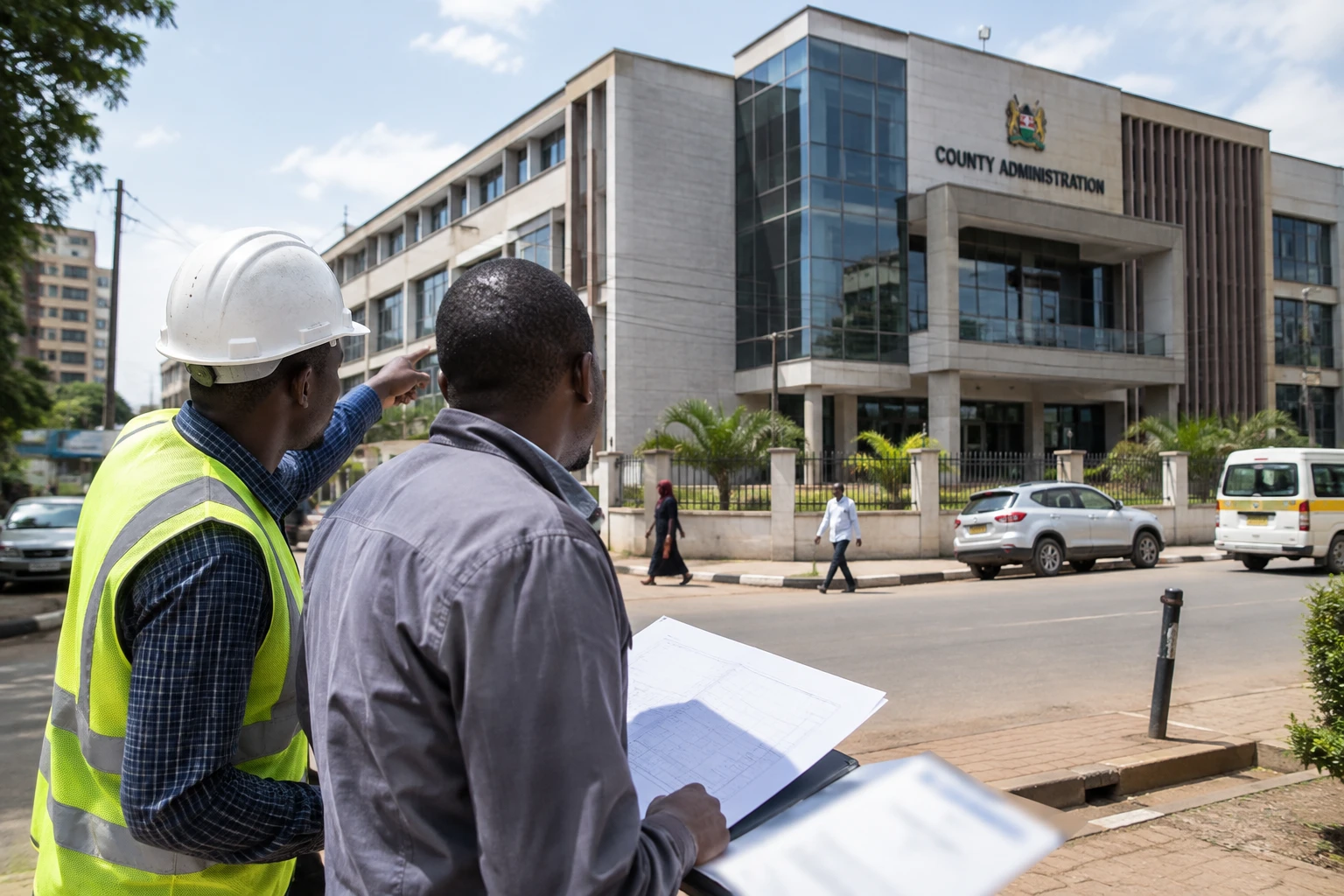
Nairobi Governor Johnson Sakaja said the building did not have the required occupation certificate to host commercial activities. The circumstances of the collapse and any potential liability remain to be established. Authorities have announced an investigation; no cause can be considered confirmed at this stage.
An oversight issue beyond the construction site
Eastleigh is home to residential buildings, businesses and construction activity. In this busy neighbourhood, the accident affects workers, traders, their employees and families seeking news of loved ones. It also highlights the practical difficulties of evacuating and carrying out rescues in a dense urban area, where neighbouring buildings can complicate access to the site.
Kenya has national bodies responsible for regulating the sector, including the National Construction Authority, while county authorities are involved in permits and local oversight. In practice, safety therefore depends on several stages: design, choice of materials, site supervision, inspections and authorisation to occupy the building. A failure at any point in the chain can put far more than the workers at the site at risk.
Available figures show that the issue goes beyond this incident. An analysis published in 2023 by the Kenya Institute for Public Policy Research and Analysis (KIPPRA), a public research body, reports 86 building collapses in the country between 2009 and 2019, and about 200 associated deaths. It also cites a 2018 audit of 14,895 buildings: 4.8% were classified as very dangerous and 72.3% as unsafe. These figures describe a past period; on their own, they cannot assess the current state of the building stock.
KIPPRA also identified co-ordination problems among the agencies involved, as well as failings related to the quality of construction work and materials. This helps explain what is at stake in the investigations: it is not enough to determine how a building collapsed. It is also necessary to establish who approved, supervised and authorised each stage.
Public accountability in question
For the national authorities, the immediate priority is to find the missing people and identify the victims. For Nairobi county, the reported absence of an occupation certificate raises a separate question: how were businesses able to operate in a building that was still under construction? An answer requires verified facts and a full investigation, rather than conclusions drawn in haste.
The economic consequences are also immediate for neighbouring businesses, whose operations may be disrupted by the safety cordon and rescue efforts. For the families of those missing and construction workers, uncertainty remains until the people who were present have been identified and the search is complete.
The issue is also part of Kenya’s debate on urbanisation and housing. Developing housing and commercial premises meets a real demand; this must not come at the cost of inadequate oversight. Construction goals must therefore be matched by inspection resources, technical expertise and clearly assigned responsibility among professionals and authorities.
A warning for East African cities
Kenya is a member of the East African Community, which brings several countries in the region together for economic and political co-operation. The Eastleigh collapse is not a measure of the situation across the region. It does, however, highlight a question shared by growing cities: how can densification and economic activity be reconciled with building safety?
What happens next will depend on the outcome of the rescue operation and the announced investigation. Issues to be clarified include the permits granted, inspections carried out and the status of the businesses operating in the building. These findings will help determine whether the incident was an isolated failure or points to wider shortcomings in the enforcement of regulations in Nairobi.