Algeria
 Egypt
 Libya
 Morocco
 Sudan
 Tunisia
 Benin
 Burkina Faso
 Cabo Verde
 Côte d'Ivoire
 Ghana
 Guinea
 Guinea-Bissau
 Liberia
 Mali
 Mauritania
 Niger
 Nigeria
 Senegal
 Sierra Leone
 The Gambia
 Togo
 Cameroon
 Central African Republic
 Chad
 DR Congo
 Equatorial Guinea
 Gabon
 Republic of the Congo
 São Tomé and Príncipe
 Burundi
 Comoros
 Djibouti
 Eritrea
 Ethiopia
 Kenya
 Madagascar
 Malawi
 Mauritius
 Mozambique
 Rwanda
 Seychelles
 Somalia
 South Sudan
 Tanzania
 Uganda
 Angola
 Botswana
 Eswatini
 Lesotho
 Namibia
 South Africa
 Zimbabwe
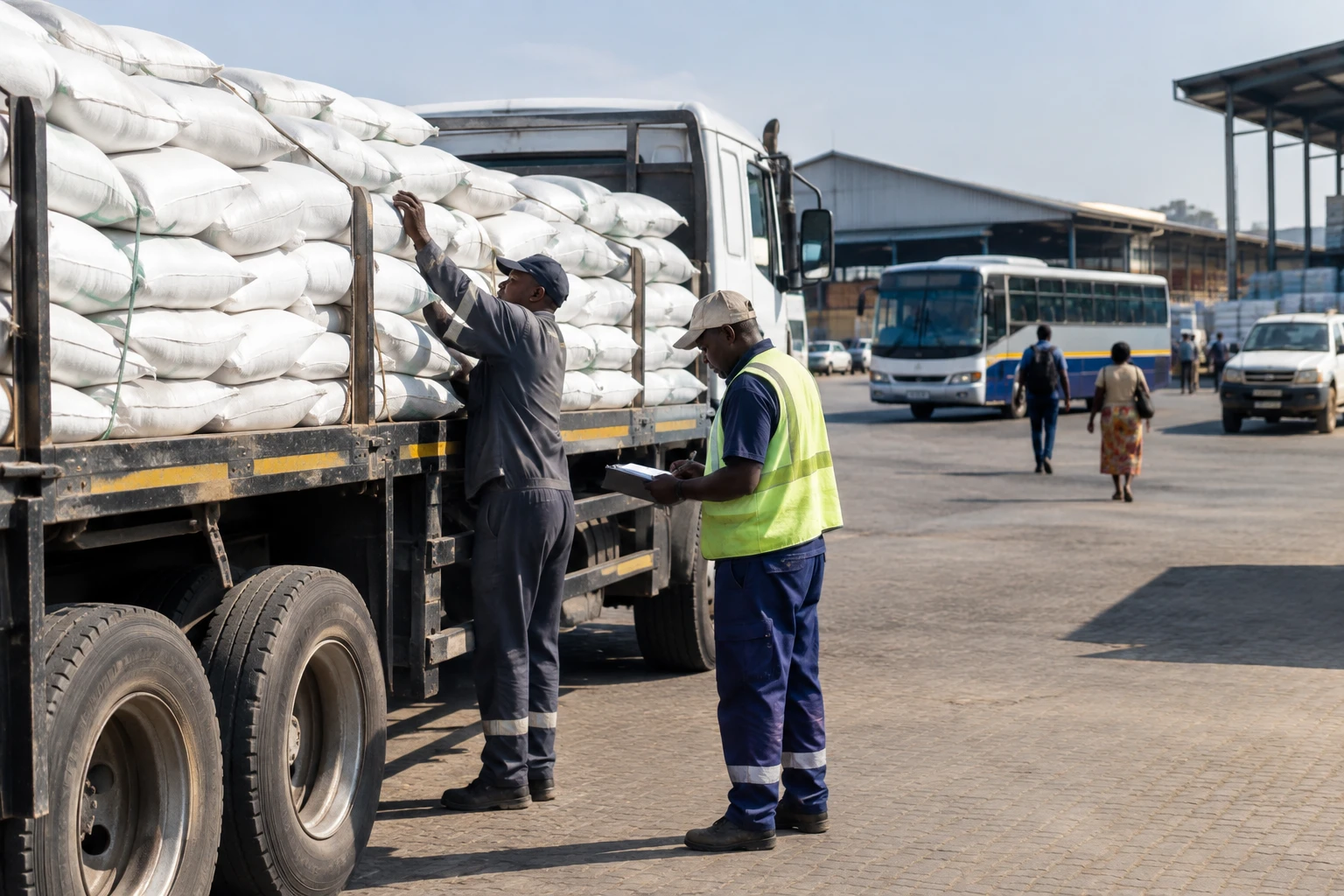
Producing more fertiliser in Zambia does not, on its own, guarantee cheaper inputs in the fields. The new industrial investment at Chilanga raises a practical question: will local supply be able to meet farmers’ needs and capture neighbouring markets?
Chilanga at the heart of an industrial strategy
On 20 October 2026, work began on the expansion of United Capital Fertilizer’s (UCF) complex at Chilanga, in Lusaka Province. The project, announced at $1.6 billion, is intended to increase production capacity for nitrogen-based products. Zambia’s presidency confirmed the ceremony and planned volumes; Zambian media also reported on it the following day.
According to capacity figures released by the company, the new facilities could produce 540,000 tonnes of ammonia, 520,000 tonnes of urea, 400,000 tonnes of ammonium nitrate and 50,000 tonnes of food-grade carbon dioxide each year. UCF has not announced a commissioning timetable in the information reviewed. These figures therefore describe capacity targets, not production already available.
The construction extends the development of the Chilanga site, where UCF already operates compound fertiliser and urea units. The new phase forms part of a broader Zambian ambition: to process more raw materials locally and develop a manufacturing base. The stakes also include local benefits, from industrial jobs to transport and distribution contracts.
Reducing dependence without promising automatic price cuts
Zambia still imports a significant share of the fertilisers used in its agriculture. Figures from the IFDC, a research and development organisation specialising in agricultural inputs, show that total imports exceeded 630,000 tonnes in 2022. International customs data also confirm the scale of external purchases: in 2024, Zambia’s imports of ammonium nitrate amounted to about 144,000 tonnes.
This dependence makes supply sensitive to international prices, transport costs and the availability of foreign currency. Local production could shorten some lead times and limit some import purchases. But the price paid by farmers will also depend on the cost of energy and raw materials, distribution to rural areas, and sales conditions.
The effects will therefore not be the same for everyone. Large farms and distributors close to logistics routes could gain access to the output more quickly. For small-scale producers, particularly those far from urban centres, the challenge will be regular access to appropriately sized bags at an affordable price and at the right time in the farming season. An increase in factory capacity alone is no guarantee of this final step.
The project builds on industrial investments already made. Zambia’s parliament said UCF’s first urea plant had been commissioned in October 2025, with expected capacity of about 360,000 tonnes a year. This recent ramp-up makes it particularly important to distinguish between nameplate capacity, actual production and volumes genuinely delivered to the market.
Regional outlets in the SADC area
Beyond the domestic market, UCF has already developed sales to neighbouring countries. The Zambia Development Agency has reported fertiliser deliveries to Botswana and Tanzania. In 2024, the company announced a contract for 61,000 tonnes of NPK fertiliser for Tanzania’s tobacco season. These examples confirm commercial exchanges, but do not show that the volumes planned for the new facilities will automatically find buyers.
Geography gives this ambition a regional reach. Zambia is a member of the Southern African Development Community (SADC), which facilitates economic co-operation among its member states. The country borders several markets cited for UCF exports, including Tanzania, Malawi, Zimbabwe and Botswana. Transport corridors also connect Zambia to the region’s ports and markets, but logistics costs remain crucial to competitiveness.
Intra-regional trade can strengthen African value chains, particularly when production, processing and distribution complement one another across countries. However, the expansion at Chilanga will have to compete with established suppliers and meet the specific needs of soils and crops. Product quality, reliable deliveries and trade agreements will matter as much as the announced capacity.
What to monitor in the coming months
Several indicators will be essential in assessing the project’s economic significance: construction progress, the start-up date, actual production volumes and their destination. It will also be important to distinguish domestic sales from exports and to see whether the additional supply improves availability for farms, beyond institutional or commercial contracts.
Across southern Africa, the investment reflects a trend towards building local capacity in sectors that have so far depended heavily on imports. Its success will not be measured solely by the size of the plant. It will depend on the ability to link industrial production, farmers’ purchasing power and regional trade — three conditions that will determine whether Chilanga becomes a lasting supplier to Zambia and its neighbours.