Algeria
 Egypt
 Libya
 Morocco
 Sudan
 Tunisia
 Benin
 Burkina Faso
 Cabo Verde
 Côte d'Ivoire
 Ghana
 Guinea
 Guinea-Bissau
 Liberia
 Mali
 Mauritania
 Niger
 Nigeria
 Senegal
 Sierra Leone
 The Gambia
 Togo
 Cameroon
 Central African Republic
 Chad
 DR Congo
 Equatorial Guinea
 Gabon
 Republic of the Congo
 São Tomé and Príncipe
 Burundi
 Comoros
 Djibouti
 Eritrea
 Ethiopia
 Kenya
 Madagascar
 Malawi
 Mauritius
 Mozambique
 Rwanda
 Seychelles
 Somalia
 South Sudan
 Tanzania
 Uganda
 Angola
 Botswana
 Eswatini
 Lesotho
 Namibia
 South Africa
 Zambia

A credit line can help a business pay for imports, fulfil an order or prepare goods for export. In Zimbabwe, a proposed $50m facility could ease some cash-flow constraints. But it is not yet credit that businesses can access: its establishment depends on procedures still to be completed.
An agreement still subject to formalities
The Arab Bank for Economic Development in Africa (BADEA) and CBZ Bank, a Zimbabwean institution, have signed a declaration of intent to establish a $50m trade finance facility. The signing took place on the sidelines of the annual meetings of the World Bank Group and the International Monetary Fund (IMF), held in Bangkok, Thailand, according to BADEA’s announcement.
The project is intended to enable CBZ to support the trade operations of clients deemed eligible. It also targets productive activities and the promotion of exports. However, the two parties have not announced any immediate disbursement: the final agreement remains conditional on the completion of the required procedures and formalities.
This distinction matters to businesses. A declaration of intent paves the way for financing, but does not in itself specify the conditions for access, interest rates, repayment periods, required guarantees or the lending timetable. These factors will determine which businesses can actually benefit.
Foreign trade: surplus and dependencies
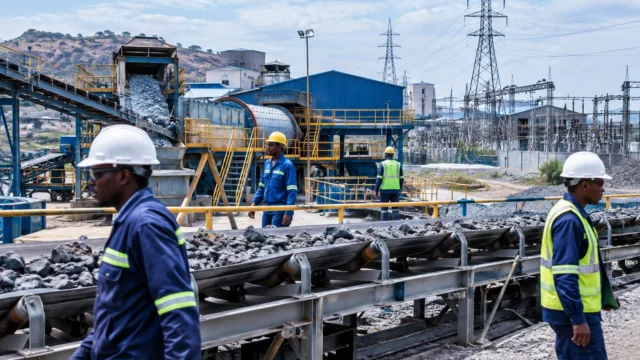
Zimbabwe has a substantial export base, particularly in mining and agriculture. Trade in goods nevertheless remains exposed to businesses’ import needs, fluctuations in export earnings and financing constraints. A trade facility can help finance specific transactions, but cannot on its own resolve wider difficulties in accessing credit.
Official data offer a snapshot of this dynamic. The Reserve Bank of Zimbabwe (RBZ) says the country recorded a trade surplus of $240.2m in December 2025, up from $91.1m in November. Figures published by the national statistics agency, ZIMSTAT, and cited by the Zimbabwean press attribute December’s increase in part to rising exports and falling imports. A monthly surplus, however, guarantees neither steady earnings nor easy access to foreign currency for every business.
The structure of the economy highlights the importance of productive financing. According to ZIMSTAT data cited in information released about the project, manufacturing accounted for 16.8% of gross domestic product in 2025, mining and quarrying for 15.9%, and agriculture for 11.1%. These sectors have different needs: mining exporters may seek transaction financing, while agricultural producers and manufacturers must also cover sometimes longer production cycles.
From bank credit to effects on business activity
A trade finance facility typically supports transactions: the purchase of inputs or goods, payments to suppliers, or the fulfilment of commercial contracts. Its potential benefit is to provide the bank with additional resources to support clients whose operations are viable but who struggle to obtain suitable financing.
The effects will nevertheless depend on the terms yet to be specified. If selection criteria, guarantees and repayment conditions primarily favour large businesses, smaller firms may gain little. Businesses outside Harare could also face additional obstacles in accessing information and submitting applications. Conversely, a scheme distributed through a local bank could draw on its knowledge of clients and the country’s commercial networks.
Macroeconomic data also shed light on the context, though they are not enough to describe the circumstances of each borrower. In its 2025 report, the IMF noted that Zimbabwe’s foreign exchange reserves remained low and that net public external financing had been negative since 2024. The central bank, for its part, reported an increase in foreign currency reserves to $1.2bn in December 2025. These findings cover different periods and are not contradictory: they serve as a reminder that conditions can change and that external liquidity remains an economic policy concern.
Implications for Zimbabwe and southern Africa
For Harare, the immediate challenge will be to turn the announcement into financing that businesses can actually access, and then to track how it is distributed across sectors and firms. BADEA’s project portfolio in Zimbabwe is valued at $116.8m, according to figures attributed to the bank in the announcement. This amount covers all its interventions in the country, not just this trade facility.
Regionally, Zimbabwe is a member of the Southern African Development Community (SADC), which brings together southern African states and promotes, among other things, economic co-operation. Zimbabwean businesses trade in an area where supply chains, transport and payments cross national borders. Better trade financing could therefore matter to regional suppliers and buyers, provided the funds support concrete transactions and disbursement rules are clear.
The facility’s continental reach remains limited: a bank facility is no substitute for lasting reform to access to credit or a broader resolution of the country’s financial constraints. The next milestones will be the conclusion of the final agreement, followed by publication of its terms and the first beneficiaries. Only then will it be possible to judge whether the announced $50m is actually strengthening Zimbabwean businesses’ trading and productive capacity.