Algeria
 Egypt
 Libya
 Morocco
 Sudan
 Tunisia
 Benin
 Burkina Faso
 Cabo Verde
 Côte d'Ivoire
 Ghana
 Guinea
 Guinea-Bissau
 Liberia
 Mali
 Mauritania
 Niger
 Nigeria
 Senegal
 Sierra Leone
 The Gambia
 Togo
 Cameroon
 Central African Republic
 Chad
 DR Congo
 Equatorial Guinea
 Gabon
 Republic of the Congo
 São Tomé and Príncipe
 Burundi
 Comoros
 Djibouti
 Eritrea
 Ethiopia
 Madagascar
 Malawi
 Mauritius
 Mozambique
 Rwanda
 Seychelles
 Somalia
 South Sudan
 Tanzania
 Uganda
 Angola
 Botswana
 Eswatini
 Lesotho
 Namibia
 South Africa
 Zambia
 Zimbabwe
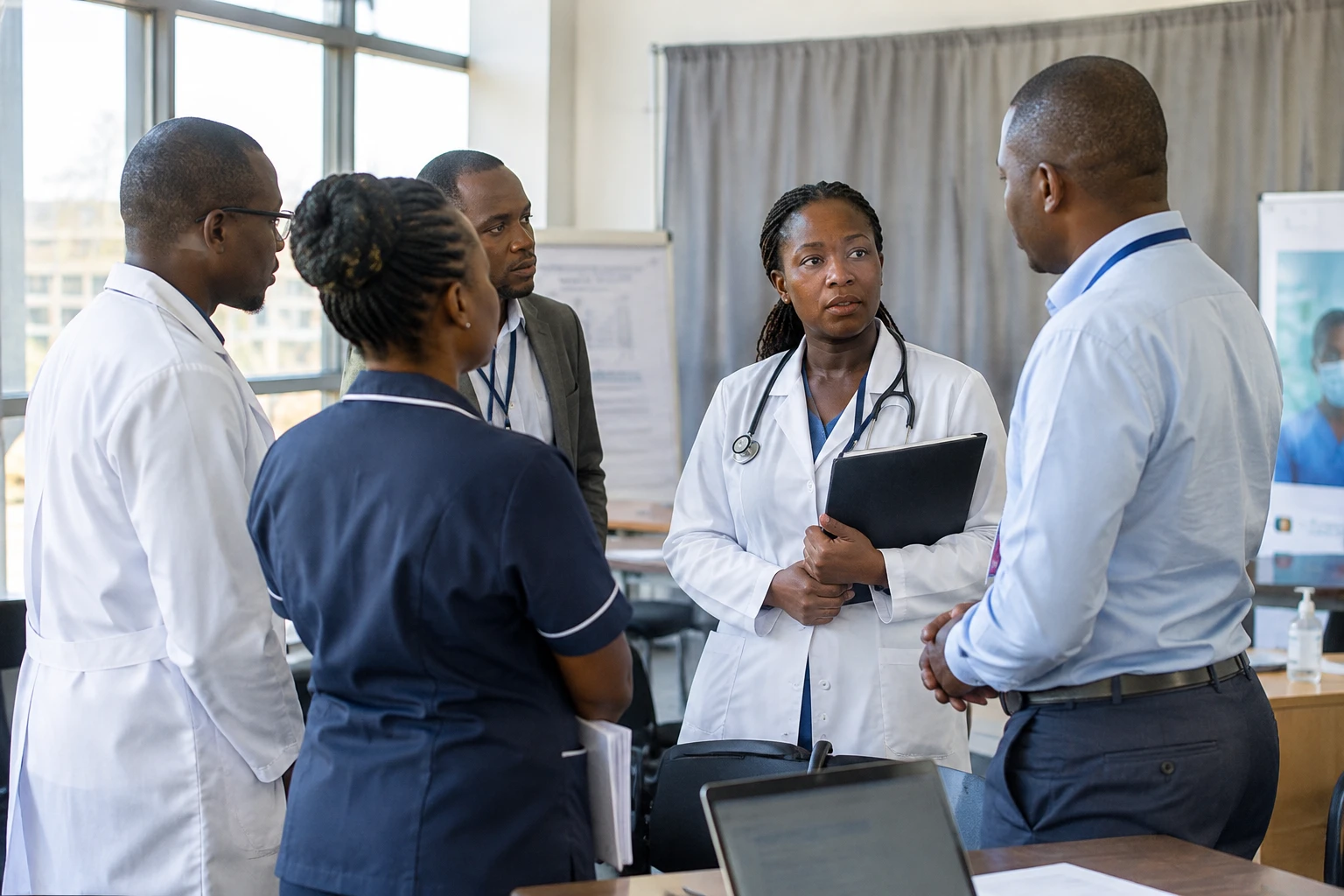
In Nairobi, the challenge is no longer just detecting imported cases: transmission chains in healthcare settings and families must be broken quickly. Kenya’s case count has risen, but the new infections were identified among people already being monitored by health authorities.
Cases linked to the first patient
On 17 October 2026, Kenya’s Ministry of Health announced four new cases of Ebola virus disease. Three involve healthcare workers who had treated the first patient. The fourth is a member of his family. With these infections, Kenya has seven confirmed cases since the start of the month, including the initial patient, who died on 5 October.
The first case was a Kenyan national who had returned from the Democratic Republic of the Congo (DRC), where an Ebola virus disease outbreak is under way. The authorities hospitalised him in Nairobi after his arrival. The disease was confirmed after his death, according to the World Health Organization (WHO).
The four new patients had been identified as contacts and placed in quarantine before developing a fever. They were then isolated and tested positive, according to the ministry. This sequence is important: it indicates that the authorities identified the cases through the monitoring system, rather than after consultations with no known link to the first patient.
The ministry recorded 130 contacts associated with the initial case. At the time of its situation update, 128 were in quarantine and two were still being traced. These figures describe the monitoring reported at that date; on their own, they do not allow any conclusion that all risk of transmission has been ruled out.
A health response under pressure
Contact tracing, isolation and the care of patients are at the heart of the response. They aim to identify symptoms quickly and limit exposure. But the three infections among healthcare workers also highlight the vulnerability of frontline teams, particularly when the disease has not yet been diagnosed.
The WHO says Kenya began stepping up its preparedness in May 2026, after the outbreak was declared in the DRC. Nearly 5,000 health professionals are said to have been trained to recognise the disease and treat patients safely, with the organisation’s support. This preparation is an asset, but it does not eliminate risks in healthcare facilities or the need for rigorous monitoring.
The strain involved is Bundibugyo virus, a rare form of Ebola. The WHO says there is no licensed vaccine or approved specific treatment for this strain. Care therefore relies in particular on supportive treatment and strict infection prevention and control measures. This should not be confused with an absence of care: teams can treat symptoms and complications while protecting other patients and staff.
Kenya’s Ministry of Health said that, at this stage, there was no evidence of community transmission and that the risk to the public remained low. This official assessment should be understood as a statement of the knowledge available at the time of the announcement, not as a guarantee. It depends on the ability to trace the two missing contacts, continue monitoring and detect any further cases.
Trade continues, with targeted vigilance
The authorities said they were not imposing general restrictions on travel, trade or public gatherings. This choice aims to avoid broad measures while the cases recorded are linked to the initial patient. It does not rule out targeted health checks, monitoring of relevant travellers or guidance for healthcare facilities.
For residents, the immediate impact will depend above all on the quality of information and access to testing and care. Patients and their families need clear guidance, without stigma. In hospitals, the priority is to protect staff and people coming in for other forms of care. For businesses and trade workers, keeping exchanges going limits disruption, but developments may change screening practices at points of entry.
Regional movement adds a particular dimension. Kenya is connected to its neighbours by flows of people and goods, as well as by air and land routes. The first patient travelled from the DRC via Uganda, the WHO says. Health authorities in these countries therefore have an interest in sharing information quickly and coordinating monitoring, without equating regional mobility with automatic transmission.
A test of regional coordination
Within the East African Community (EAC), which brings together countries linked by significant trade and mobility, the situation is testing cross-border health cooperation. The Intergovernmental Authority on Development (IGAD), another regional body in East Africa, plays a broader role in preparedness and health security. Practical monitoring, however, rests first with national authorities, their laboratories and their health networks.
The outbreak in Kenya is linked to a larger epidemic in the DRC. In its 8 October update, the WHO reported more than 8,700 confirmed cases and more than 4,200 deaths in the DRC, based on data up to 6 October. These figures are not directly comparable with Kenya’s tally: they relate to a distinct epidemiological situation and a specific reference period. They nevertheless underline why controlling imported infections and cooperation between neighbouring countries remain essential.
The next step will be to see whether the two contacts still being traced are located and whether monitoring reveals further infections outside the group already identified. The number of new cases alone is not enough to measure the effectiveness of the response: the speed of investigations, the safety of care and the continuity of public information will be just as important. For now, Nairobi is keeping everyday activities going while focusing health measures on people who have been exposed.