Algeria
 Egypt
 Libya
 Morocco
 Sudan
 Tunisia
 Benin
 Burkina Faso
 Cabo Verde
 Côte d'Ivoire
 Ghana
 Guinea
 Guinea-Bissau
 Liberia
 Mali
 Mauritania
 Niger
 Nigeria
 Senegal
 Sierra Leone
 The Gambia
 Togo
 Central African Republic
 Chad
 DR Congo
 Equatorial Guinea
 Gabon
 Republic of the Congo
 São Tomé and Príncipe
 Burundi
 Comoros
 Djibouti
 Eritrea
 Ethiopia
 Kenya
 Madagascar
 Malawi
 Mauritius
 Mozambique
 Rwanda
 Seychelles
 Somalia
 South Sudan
 Tanzania
 Uganda
 Angola
 Botswana
 Eswatini
 Lesotho
 Namibia
 South Africa
 Zambia
 Zimbabwe
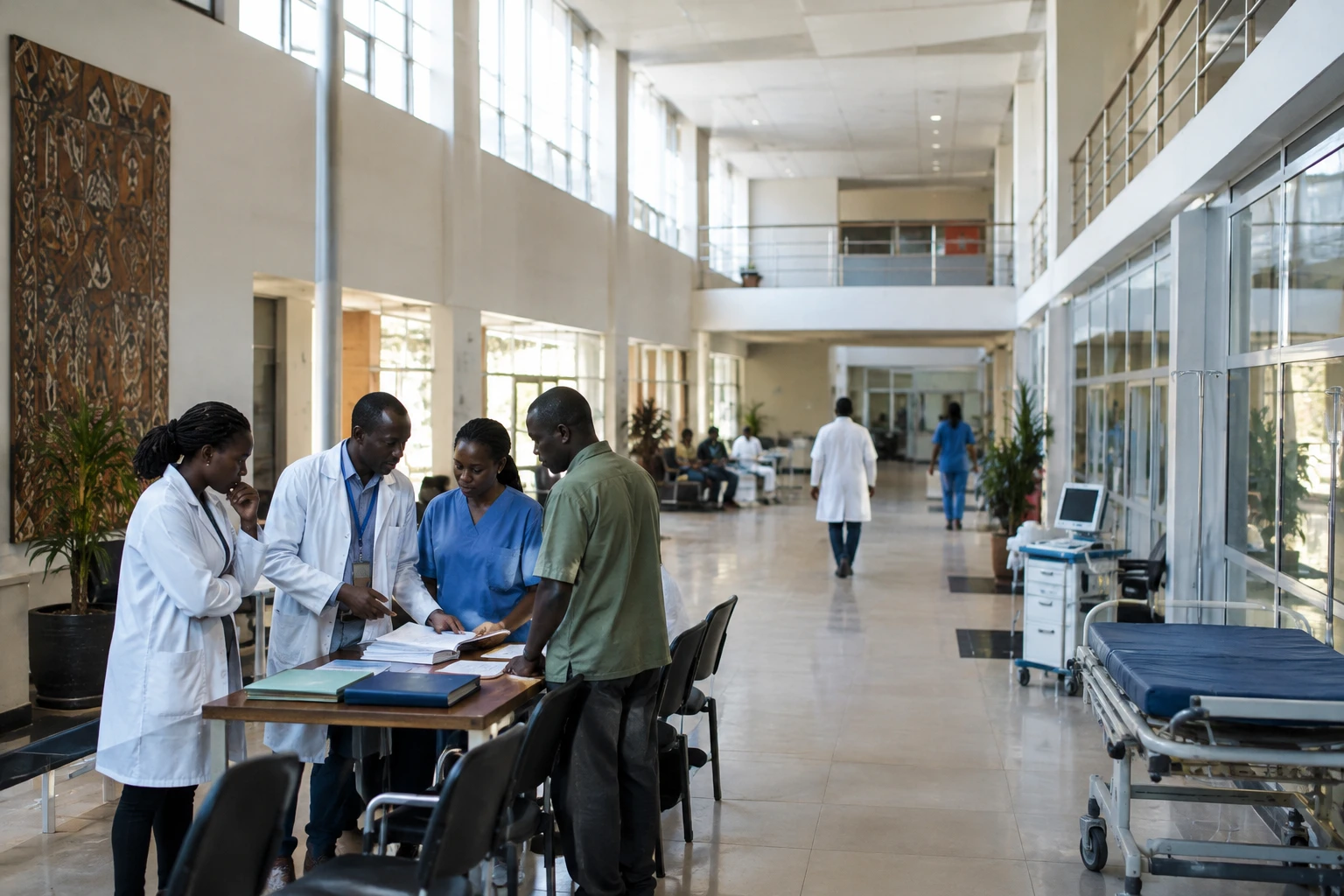
To contain an epidemic that knows no administrative boundaries, health authorities must be able to act on either side of a border crossing using the same guidelines. That is the purpose of the common protocols adopted in Brazzaville by the six CEMAC countries, as the Democratic Republic of the Congo faces a major Ebola outbreak.
A threat that extends beyond the DRC’s borders
The health context has changed since the start of the year. In May 2026, an outbreak caused by the Bundibugyo virus was confirmed in the DRC and Uganda. According to the World Health Organization (WHO), transmission subsequently spread to several Congolese provinces. As of 6 October, the DRC had recorded 8,728 confirmed cases and 4,205 confirmed deaths, according to the latest WHO figures available at the time of the Brazzaville meeting.
Cross-border transmission is already a reality. The WHO reported an imported case in Kenya, in a person who had travelled from the DRC via Uganda. The patient died on 5 October. This sequence is a reminder that an alert detected late can involve several health systems, even when an epidemic remains concentrated in specific areas.
CEMAC — the Central African Economic and Monetary Community — comprises Cameroon, the Central African Republic, the Republic of the Congo, Gabon, Equatorial Guinea and Chad. The DRC, the epicentre of the current outbreak, is not a member. It does, however, belong to the Economic Community of Central African States (ECCAS), which brings together neighbouring countries and provides another framework for regional cooperation.
Common procedures, from alerts to contact tracing
The Brazzaville meeting concluded on Thursday 15 October. Participants, around 100 health stakeholders according to information provided about the meeting, harmonised eight protocols. These cover epidemiological surveillance, the monitoring and management of people who have been in contact with a case, checks at points of entry, and risk communication.
The principle is practical: agree in advance on how to identify an alert, pass it on and organise the response. Compatible guidelines can facilitate exchanges between health services, particularly when someone has crossed a border or a contact needs to be traced in another country.
According to the meeting’s report, the participating states pledged to implement the protocols immediately. Ludovic Fiomona, regional co-ordinator of the Health Security Programme in Central Africa, said the countries were better prepared than before. He also noted that advance preparation could help contain a new epidemic.
Carole Bohimbo, described as the Africa CDC’s head of public health emergency preparedness and response in Central Africa, summed up the rationale for co-operation as follows: “We can never be prepared enough, but preparedness reduces the impact when an event occurs.” Her statement highlights the initiative’s ambition; it is not, by itself, an independent assessment of the six states’ level of preparedness.
Co-ordination cannot replace resources on the ground
A common protocol is useful only if teams can put it into practice. This requires trained staff, laboratories able to analyse samples quickly, protective equipment, transport and treatment facilities. The meeting received support from partners, including the World Bank. However, the available information does not specify either the funding allocated to implementing the eight protocols or the deadlines for their implementation in each country.
The impact of an epidemic and the needs of the response also vary between areas. Services in capital cities may have different capacities from those in remote districts. In border areas, daily travel and trade make early detection particularly important. For residents, better co-ordinated checks can help prevent delays in the response, but poorly tailored communication risks fuelling fear or mistrust. Information must therefore be clear, regular and shared with the communities concerned.
The meeting was held as the 2026 outbreak is already testing contact-tracing and screening mechanisms beyond affected areas. Kenya’s and Uganda’s responses to the imported case show the importance of surveillance at points of entry and information-sharing between countries. The same vigilance is needed in CEMAC states, although this does not mean that a case has been detected there.
A test for regional health co-operation
CEMAC is primarily an economic and monetary integration organisation. Health security, however, requires co-operation that extends beyond its members alone: the DRC and Uganda are directly affected by the outbreak, while Kenya has confirmed an imported case. The Brazzaville protocols can therefore contribute to the regional response, provided that exchanges with neighbouring countries and continental health institutions are maintained.
The next challenge will be to check that the decisions are put into practice: have the procedures been incorporated into national plans, can teams respond quickly, and are alerts being shared between administrations? The outbreak in the DRC is a reminder that preparedness is measured not only by the number of protocols adopted. It also depends on the ability to detect a case, protect health workers and organise a response that is accessible to people in cities and rural areas alike.
Read the WHO report on the Ebola outbreak in the DRC and the imported case in Kenya. Follow WHO updates on the 2026 outbreak. See CEMAC’s membership and remit.