Algeria
 Egypt
 Libya
 Morocco
 Sudan
 Tunisia
 Benin
 Burkina Faso
 Cabo Verde
 Côte d'Ivoire
 Ghana
 Guinea
 Guinea-Bissau
 Liberia
 Mali
 Mauritania
 Niger
 Nigeria
 Senegal
 Sierra Leone
 The Gambia
 Togo
 Cameroon
 Central African Republic
 Chad
 DR Congo
 Equatorial Guinea
 Gabon
 Republic of the Congo
 São Tomé and Príncipe
 Burundi
 Comoros
 Djibouti
 Eritrea
 Ethiopia
 Kenya
 Madagascar
 Malawi
 Mozambique
 Rwanda
 Seychelles
 Somalia
 South Sudan
 Tanzania
 Uganda
 Angola
 Botswana
 Eswatini
 Lesotho
 Namibia
 South Africa
 Zambia
 Zimbabwe
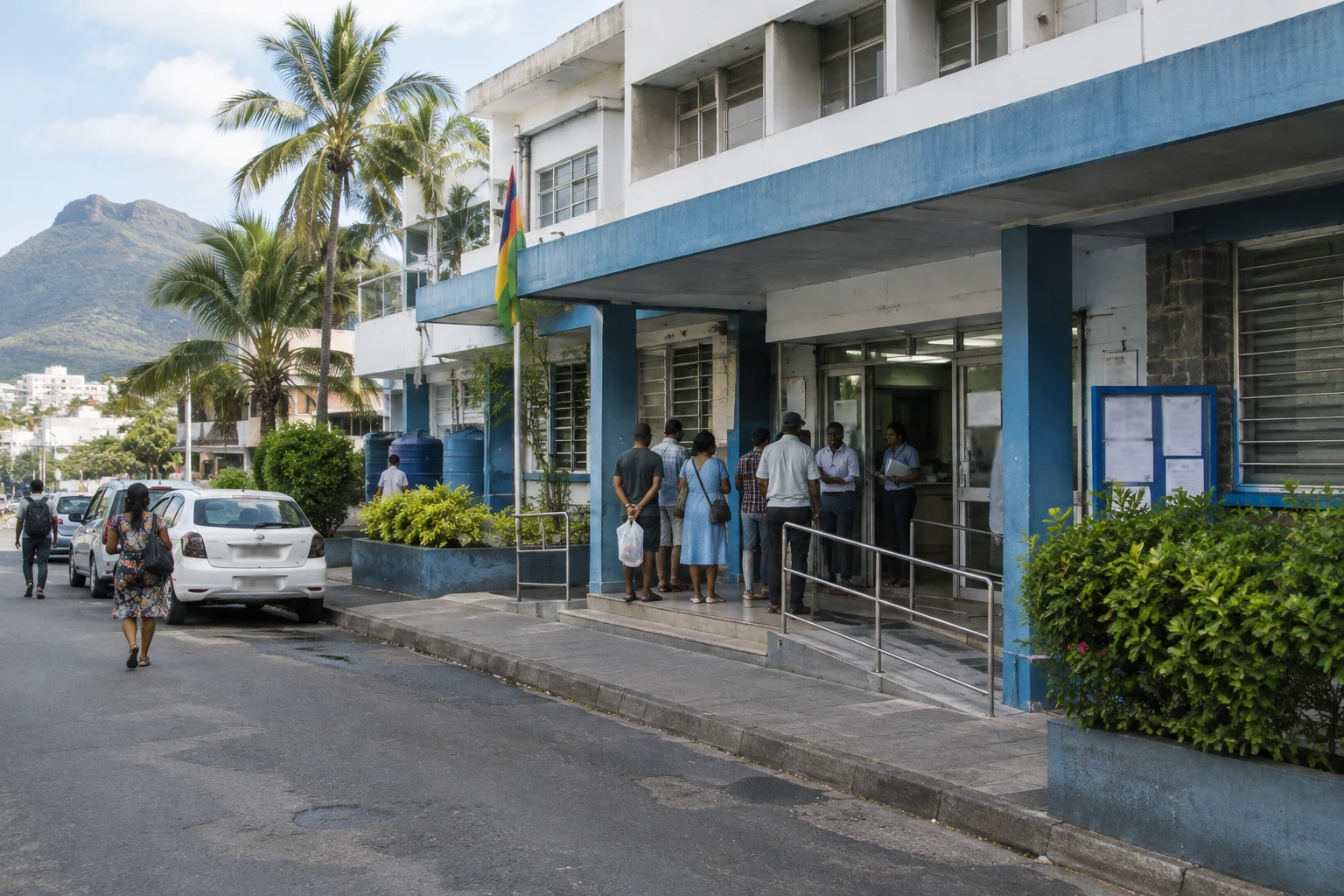
When access to water becomes uncertain and prices put pressure on households, a crisis in essential services can quickly become a crisis of confidence. In Mauritius, protests over shortages and the cost of living were followed by violence, then by new night-time restrictions imposed by the government.
Restrictions extended after several nights of unrest
The Mauritian Cabinet approved two additional curfews on Wednesday 14 October 2026. They apply on the nights of 14–15 and 15–16 October, from 8.30pm to 5am, in the areas concerned. The measure extends an initial restriction imposed the previous day. Available information points to around a third of the territory, including populated areas around Port Louis, the capital. The Cabinet report carried by Defimedia gives the hours and the announced arrests.
The authorities say 94 people have been detained since the unrest began, including 84 on Tuesday 13 October. Sixteen minors are among those arrested. Seven police officers are reported to have been injured. These figures come from the police account issued after a government meeting; they describe law-enforcement operations but do not, on their own, establish each person’s involvement in the violence. An AFP dispatch published by Arab News also reports a total of 94 arrests and seven injured police officers.
Police stations, traffic lights and surveillance cameras are reported to have been damaged or targeted. The Associated Press also reports blocked roads and damaged public buildings. The mobilisation, which began with demands related to water and the cost of living, has therefore taken several forms; violent acts should not be conflated with the entire body of protesters. The Associated Press report on the unrest in Mauritius describes some of the damage and the security measures.
Water, the cost of living and public trust
Water shortages are the immediate trigger for the gatherings reported in recent days. The rising cost of living is also fuelling anger. Both issues affect daily life directly: water is essential for households, businesses and services, while prices particularly affect households whose incomes struggle to keep pace with everyday expenses.
The crisis also shows how supply problems can weigh differently depending on location and activity. Densely populated neighbourhoods and areas where outages last a long time face immediate constraints. Small businesses and workers who rely on travel may, in turn, suffer the effects of restrictions and uncertainty. Curfews are intended to contain violence, but they also restrict night-time movement for the entire population in the affected areas.
Another incident has heightened tensions: a woman was injured by police gunfire on Friday, according to the Associated Press. The officer in question has been arrested, Mauritian media report. It is important not to describe this injury as a death: the sources consulted report that a woman was injured. The investigation and legal proceedings will have to establish the circumstances of the shooting and responsibility.
Prime Minister Navin Ramgoolam condemned the violence in a televised address and urged people not to take the law into their own hands. He also referred to the possible involvement of drug traffickers in the escalation. This allegation must remain attributed to the authorities: on its own, it is not proof of responsibility for the acts committed. To prevent attention shifting entirely to law enforcement, responses on water supply and the cost of living remain crucial.
Security measures and their social consequences
The government has also considered prosecutions under anti-terrorism legislation and an amendment to the law on the detention of minors, which would lower the applicable age from 14 to 12. These are proposals that have been announced, not changes that have already been adopted. Their consideration raises questions of due process, child protection and the proportionality of penalties. Any changes will need to be debated and assessed in the light of existing legal safeguards.
The Ministry of Education suspended classes on Thursday 15 and Friday 16 October at pre-primary, primary and secondary schools. The decision protects pupils and staff during a period of uncertainty, but also disrupts family life and learning. Public transport may also be affected by the restrictions: the population therefore depends as much on the curfew timetable as on how the situation on the ground develops.
A national issue in the Indian Ocean
Independent since 1968, Mauritius has diversified its economy beyond sugar, notably into tourism, textiles and financial services. This trajectory and its political institutions contribute to its reputation for stability. Current events do not define the country; rather, they test the authorities’ ability to respond simultaneously to essential needs, concerns about the use of force and the maintenance of public order.
Regionally, Mauritius is a member of the Southern African Development Community (SADC), which brings together states in southern Africa and the Indian Ocean. The tensions are primarily domestic, but they are a reminder of a shared regional issue: public trust also depends on reliable essential services and institutional responses seen as credible. The immediate priority will be to establish whether the curfews end as scheduled on Friday 16 October, whether classes resume and whether water supplies improve. The sources consulted do not yet make it possible to confirm these developments.