Algeria
 Egypt
 Libya
 Morocco
 Sudan
 Tunisia
 Benin
 Burkina Faso
 Cabo Verde
 Côte d'Ivoire
 Ghana
 Guinea
 Guinea-Bissau
 Liberia
 Mali
 Mauritania
 Niger
 Nigeria
 Senegal
 Sierra Leone
 The Gambia
 Togo
 Cameroon
 Central African Republic
 Chad
 DR Congo
 Equatorial Guinea
 Gabon
 Republic of the Congo
 São Tomé and Príncipe
 Burundi
 Comoros
 Djibouti
 Eritrea
 Ethiopia
 Kenya
 Madagascar
 Malawi
 Mauritius
 Mozambique
 Rwanda
 Seychelles
 South Sudan
 Tanzania
 Uganda
 Angola
 Botswana
 Eswatini
 Lesotho
 Namibia
 South Africa
 Zambia
 Zimbabwe
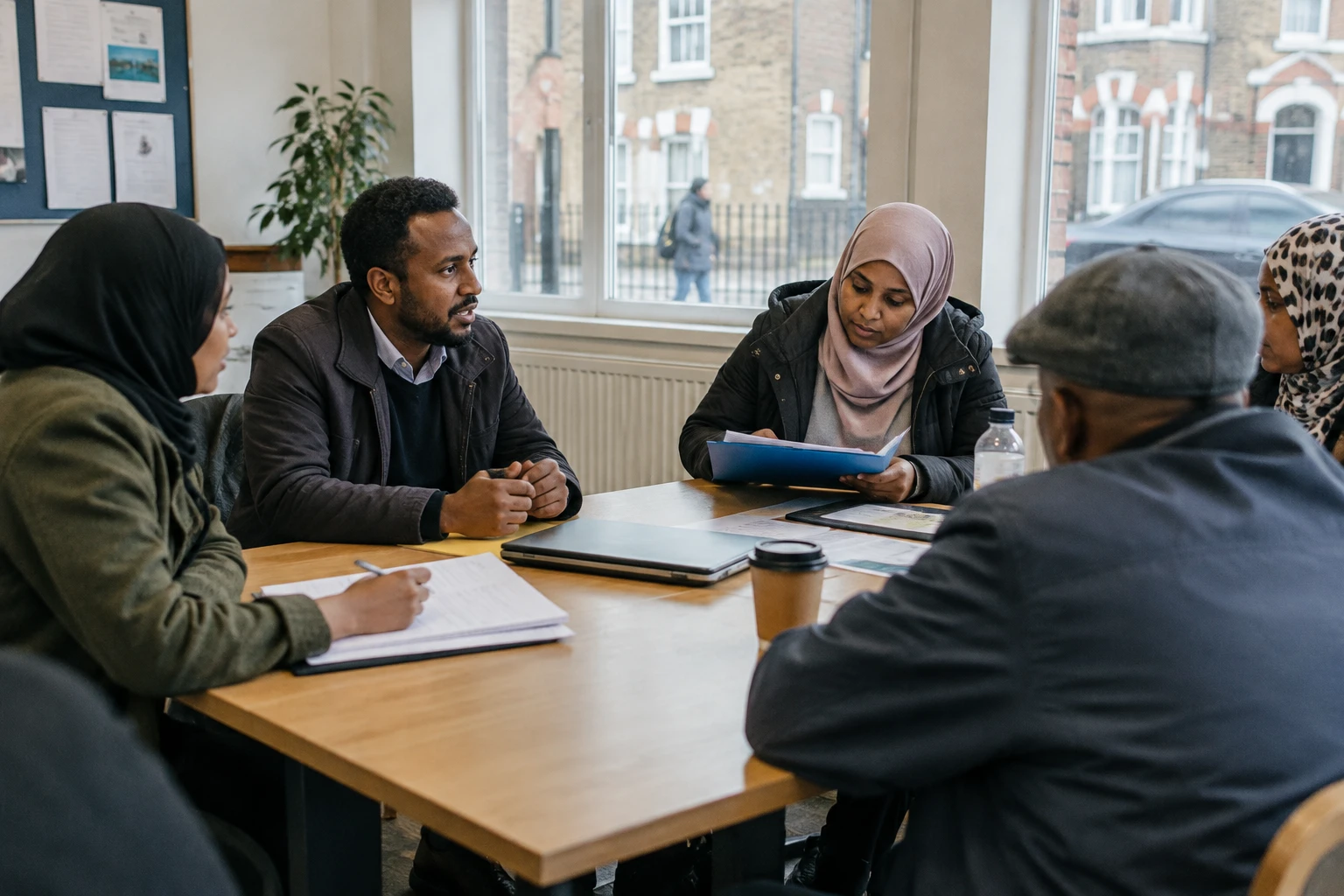
In Camden, north London, grassroots politics has just reached a new milestone. Sagal Abdi-Wali, who arrived as a child from the country whose name she now bears, Somalia, has been elected as a British MP after building a career in local services and neighbourhood associations.
From Camden to Westminster
The Holborn and St Pancras by-election took place on Thursday 8 October 2026. A by-election fills a seat that has become vacant before the next general election. Sagal Abdi-Wali, the Labour Party candidate, received 12,292 votes, or 45.2% of the votes cast.
The result was confirmed by the UK Parliament and Camden Council, which is responsible for local administration and the count. Turnout was 38.6% according to Parliament, and 38.76% in the council’s figures. Zack Polanski, the Green candidate, came second with 8,928 votes, or 32.8%.
The seat became vacant after Keir Starmer resigned, leaving his parliamentary seat in September. The result keeps the constituency in Labour hands, but with notable competition from the Greens. The gap between the two leading candidates was 3,364 votes.
Before the election, Abdi-Wali led Camden Council. Elected as a councillor in 2022, she had previously worked for the authority and taken part in local associations. She has also volunteered, served as a charity trustee and been a governor at two schools, according to biographical information published by Camden.
A career shaped by local life
Born in Somalia, Abdi-Wali arrived in the UK as a child refugee in the 1990s. Camden says she grew up there and has lived in the borough ever since. In May 2026, she became the first Black woman to lead the borough, London’s local administrative tier.
Her career thus connects several centres of decision-making. The council deals with housing, neighbourhood services and social support, among other issues. In the House of Commons, she will represent a constituency and take part in national debates, scrutiny of the government and the consideration of legislation.
This distinction matters to residents. National decisions on housing, welfare or public finances affect local policies. In turn, municipal representatives often deal directly with residents’ concerns, whether about access to housing, services or inequalities between neighbourhoods.
Camden Council presents Abdi-Wali’s involvement in local work as a continuation of her personal experience and life in the borough. This places her career in context without reducing it to her origins: her parliamentary legitimacy comes from the votes of people in Holborn and St Pancras.
A local election in a broader political debate
The result also reflects the balance of power between parties in the UK. Labour has held on to the seat, while the Greens have scored strongly in a constituency represented by Labour for many years. Turnout, at below 40%, is a reminder, however, that a by-election attracts fewer voters than a general election and does not, on its own, sum up public opinion across the country.
For voters, the immediate issue remains representation for their area. The election of an MP with experience in local services may help bring greater knowledge of Camden’s issues to Westminster. It does not, however, guarantee in itself that the constituency’s needs will be met: that will depend on budget choices, parliamentary votes and work with residents.
The campaign also drew interest from people of Somali and African heritage living in the UK. The presence of an MP born in Somalia may serve as a point of reference for representation. But it does not make her the automatic spokesperson for all Somali, British or African communities. These groups are diverse, and their expectations do not necessarily coincide.
An echo for Somalia and its diaspora
For Somalia, an East African country whose capital is Mogadishu, this election is first and foremost part of British political life. It has no direct effect on Somali institutions or government decisions. Its resonance lies instead in the ties between the country and its diaspora, which is settled in several regions of the world.
The case is a reminder that migration journeys do not end with departure and arrival. They can also become part of the institutions of the host country, from the municipal level to parliament. For young Somalis in the diaspora, this visibility may broaden the models of political participation, without obscuring concrete debates about public policy.
What comes next will be shaped by the parliamentary term itself: the MP’s positions, her work on local issues and her ability to put the constituency’s concerns forward. Across the UK, it will also be worth watching whether the Greens’ breakthrough in this election leads to sustained pressure on Labour elsewhere. For Camden, the question now is how its new MP’s municipal experience will translate into national debates.