Algeria
 Egypt
 Libya
 Morocco
 Sudan
 Tunisia
 Benin
 Burkina Faso
 Cabo Verde
 Côte d'Ivoire
 Ghana
 Guinea
 Guinea-Bissau
 Liberia
 Mali
 Mauritania
 Niger
 Nigeria
 Senegal
 Sierra Leone
 The Gambia
 Togo
 Cameroon
 Central African Republic
 Chad
 DR Congo
 Equatorial Guinea
 Gabon
 Republic of the Congo
 São Tomé and Príncipe
 Burundi
 Comoros
 Djibouti
 Eritrea
 Ethiopia
 Kenya
 Madagascar
 Malawi
 Mauritius
 Mozambique
 Rwanda
 Seychelles
 Somalia
 South Sudan
 Uganda
 Angola
 Botswana
 Eswatini
 Lesotho
 Namibia
 South Africa
 Zambia
 Zimbabwe
In a maternity ward, repeated training and appropriate equipment can matter as much as a major reform announced from a podium. In Tanzania, a study conducted in 30 facilities shows that organised improvements to care around childbirth can reduce some deaths. The challenge is to turn these local results into sustainable funding and regular access to care, including in remote regions.
Encouraging hospital results, but limited in scope
The Safer Births Bundle of Care programme was rolled out in 30 facilities across five Tanzanian regions. It combines practical simulation-based training, tools to monitor fetal and newborn heart rates, and analysis of data collected by teams. The aim is to help staff identify and treat complications more quickly during labour and immediately after birth.
A study published in 2025 in the New England Journal of Medicine assessed the programme over three years. It covered more than 281,000 mothers and nearly 278,000 newborns. After implementation, perinatal deaths — stillbirths occurring during labour and deaths in the first 24 hours — fell from 15.3 to 12.5 per 1,000 births, an adjusted relative reduction of 18%. Neonatal mortality during the first 24 hours also declined, while the change in stillbirths during labour was not statistically significant.
The authors also report a fall in maternal deaths in hospitals, from about 240 to 60 per 100,000 births between the baseline period and full implementation. This is an important result, but it does not, on its own, describe maternal mortality across the country. It concerns the facilities and periods studied. The researchers also note notable differences between regions. It is therefore important not to confuse a documented success in hospitals with uniform coverage of care across the country.
This initiative is part of a broader effort by the Tanzanian authorities to strengthen maternal and child health services. In February 2026, President Samia Suluhu Hassan was presented by the Tanzanian presidency as the African Union’s champion for maternal, child and reproductive health. The role gives Dodoma a continental platform. It does not, however, remove the need to report on national results or the practical availability of care.
Funding: the crucial link between commitment and care
A clinical protocol is not enough if maternity wards lack staff, medicines, blood or functioning equipment. Training must also continue despite staff turnover. The budget challenge is therefore not simply to fund a stand-alone initiative, but to cover recurring costs and expand proven practices without undermining other health services.
For families, access also depends on distance, transport and the functioning of primary care. Women treated at a hospital participating in the programme do not necessarily represent those living far from a centre able to manage an obstetric emergency. Disparities between urban and rural areas, as well as between regions, may therefore persist even as hospital results improve.
Budget monitoring should consequently cover not only announced allocations, but also their disbursement and conversion into available services. MPs have an oversight role: they can question ministries about approved resources, implementation delays and staffing levels in maternity wards. Data quality matters just as much. Without reliable, comparable registers, it is difficult to know where preventable deaths remain concentrated and which measures are having an effect.
Arusha, a regional parliamentary crossroads
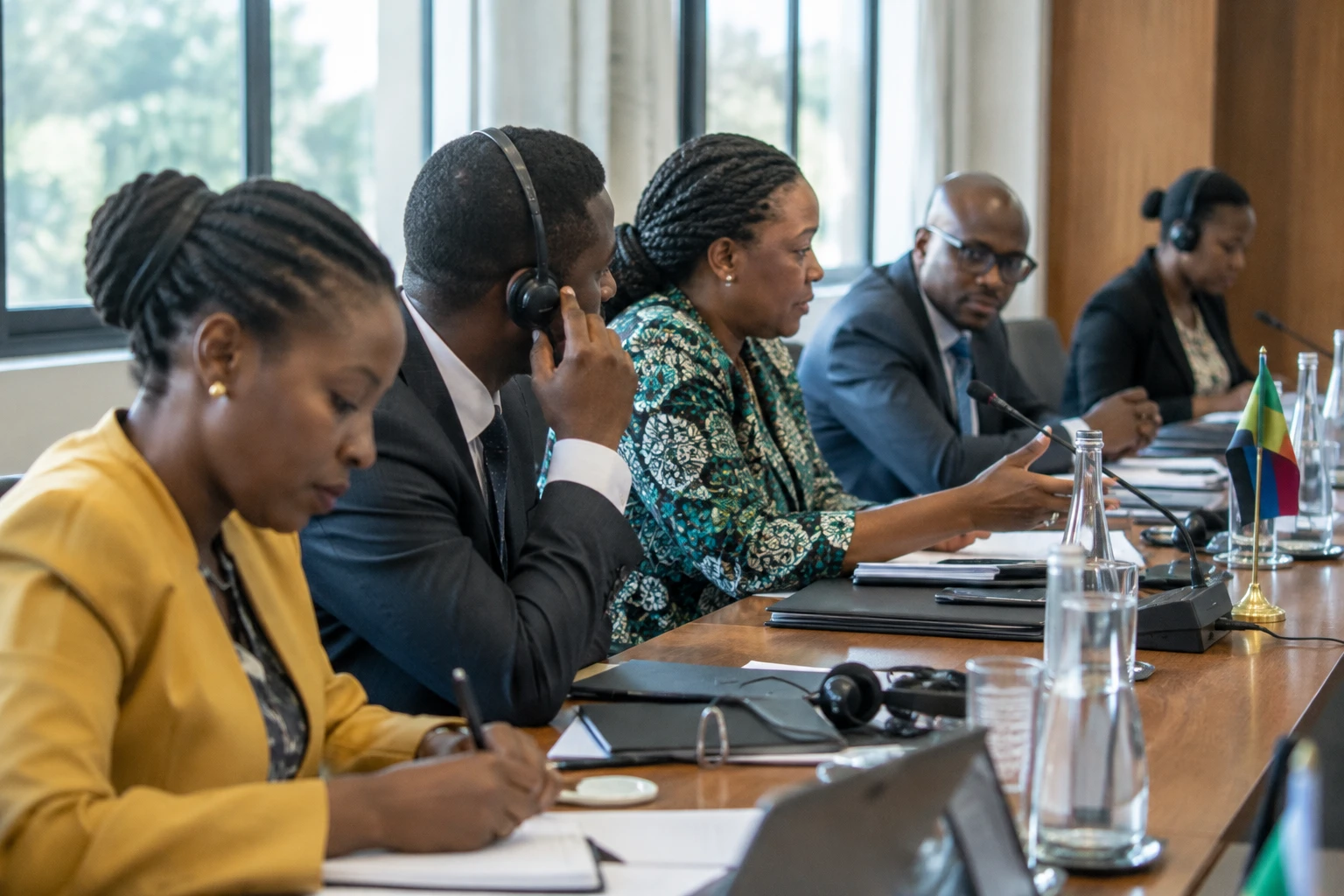
The 153rd Assembly of the Inter-Parliamentary Union (IPU), hosted in Arusha from 5 to 9 October 2026 by the Tanzanian parliament, offers an opportunity to raise these issues with elected representatives from many countries. The IPU brings together national parliaments. East Africa also has a regional forum, the East African Legislative Assembly (EALA), where legislators from member states can discuss shared concerns.
Tanzania is a member of this community, which brings together countries linked by economic exchanges and cross-border issues. In this context, maternal health is not only a matter of diplomacy: it depends on national decisions about budgets, staff and the organisation of care. The Arusha meeting can encourage the sharing of experience, but it cannot, in itself, guarantee that governments will fund the priorities announced.
A specific parliamentary action note on the “Three Zeros” and a 180-day monitoring mechanism are mentioned in the material provided, but these details were not found in the documents consulted from the IPU or other independent sources. They therefore cannot be reported here as confirmed decisions. The distinction is essential: the Assembly’s taking place is verified, while the precise content of any health commitment remains to be established.
Continental reach, to be measured over time
The Tanzanian programme illustrates an approach that could be useful to other African health systems: combining ongoing training, clinical tools and data-driven improvement. But the results of one programme cannot automatically be transferred from one country to another. They depend on the staff available, referral arrangements between health centres and hospitals, and the budgets actually committed.
The next test will therefore be less about the number of declarations than the continuity of resources: maintaining training, supplying maternity wards, publicly monitoring indicators and expanding effective interventions on the basis of evaluation. For Tanzania, whose capital is Dodoma, the continental role of its president may open doors. The credibility of this ambition will depend above all on the ability to deliver safe care to women and newborns beyond pilot facilities and diplomatic gatherings.
The results of the Tanzanian study published in the New England Journal of Medicine · The official programme for the 153rd IPU Assembly in Arusha · The Tanzanian presidency on Samia Suluhu Hassan’s mandate for maternal and child health · The participation of the East African Legislative Assembly in the IPU