
 Algeria
 Egypt
 Libya
 Morocco
 Sudan
 Tunisia
 Benin
 Burkina Faso
 Cabo Verde
 Côte d'Ivoire
 Ghana
 Guinea
 Guinea-Bissau
 Liberia
 Mali
 Mauritania
 Niger
 Nigeria
 Senegal
 Sierra Leone
 The Gambia
 Togo
 Central African Republic
 Chad
 DR Congo
 Equatorial Guinea
 Gabon
 Republic of the Congo
 São Tomé and Príncipe
 Burundi
 Comoros
 Djibouti
 Eritrea
 Ethiopia
 Kenya
 Madagascar
 Malawi
 Mauritius
 Mozambique
 Rwanda
 Seychelles
 Somalia
 South Sudan
 Tanzania
 Uganda
 Angola
 Botswana
 Eswatini
 Lesotho
 Namibia
 South Africa
 Zambia
 Zimbabwe
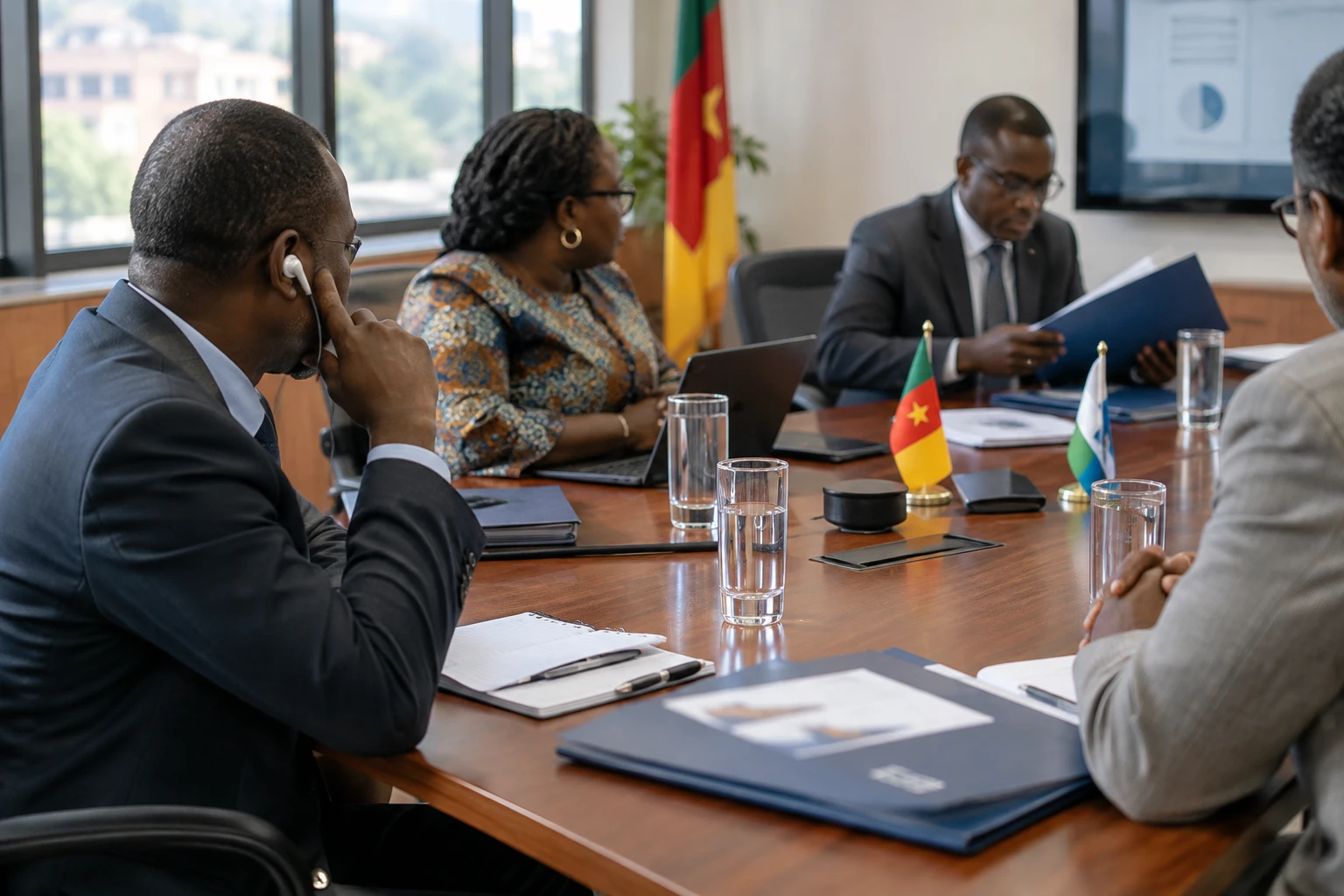
For a pupil at a secondary school in Adamawa, North or Far North region, a reliable connection can open access to lessons and resources unavailable in the classroom. But connecting a school is not enough: electricity, equipment and training must also be in place.
On 7 October 2026, in Yaoundé, public operator Camtel and the Ministry of Secondary Education (MINESEC) signed a framework agreement covering 130 schools in the three regions. The agreement places digital learning within a broader effort to reduce disparities in access between areas, without allowing connectivity to remain merely an announcement.
A rollout adapted to local realities
The 130 schools concerned are in Adamawa, North and Far North regions, in northern Cameroon. Several Cameroonian media outlets have reported the figure and signing date. The partnership is intended to facilitate access to online educational resources and support distance learning.
The announced scheme goes beyond simply providing internet access. It also includes telephone services, website creation for schools and data hosting. According to information published by the Cameroonian newspaper L’Action on the Camtel-MINESEC agreement, Camtel plans to cover half the cost of connection works. Arrangements are to be made with the ministry, taking account of schools’ priorities and technical constraints.
The technology chosen will depend in particular on available coverage. Schools that cannot be connected by fibre may receive a wired or satellite solution. This flexibility matters: cities and rural areas do not have the same infrastructure, and a single model could leave out the most remote schools.
The presence of a Camtel network in all ten regions does not mean that every school already has suitable access. The operator lists fixed-network coverage points, including in Ngaoundéré, Maroua and Garoua. Connecting each school will therefore depend on its location and the work required, as shown by Camtel’s fixed-network coverage map.
Digital tools already being introduced in schools
The agreement adds to equipment distributed by MINESEC. On 11 April 2025, the ministry handed over an initial batch of 100 digital boards to schools in Adamawa, East, Far North and South regions. The devices enable, among other things, video conferencing and distance learning. They are part of the Project to Support the Development of Secondary Education and Employability Skills (PADESCE).
The programme plans to provide 350 boards in total. The ministry described the remaining 250 units as the second batch, intended for other regions. Equipment distribution and network access complement each other: a digital board without a stable connection cannot provide access to online resources, while a connection alone cannot replace either equipment or teacher support. Initial details of the rollout are set out in MINESEC’s report on the digital boards.
The challenge is therefore also pedagogical and material. Provision will have to be made for maintenance, staff training, data security and clarity over who will meet recurring subscription and repair costs. The agreement announces services, but the public information reviewed does not yet specify the connection schedule for each school or the full cost to schools.
Connectivity does not yet guarantee use
The potential benefits are tangible. Teachers could share materials, organise distance lessons or access training content. Pupils could explore a lesson beyond the resources available locally. Digital tools could also make some administrative tasks easier, including document hosting and storage.
These opportunities will nevertheless depend on service quality over time. An interrupted connection, unusable equipment or a lack of technical support would reduce the project’s impact. Urban schools close to infrastructure could be connected more easily than those in less well-served areas. Monitoring will therefore need to measure actual usage and timelines, not just the number of schools included in the programme.
In an article published on 8 October, Journal du Cameroun reports an announced capacity of up to 50 megabits per second. This figure describes a performance level cited for the offer, not a result already observed in the 130 schools. The actual speed delivered, its consistency and the number of users able to connect simultaneously will need to be checked.
An issue extending beyond the three regions
The project directly affects the pupils, teachers and staff concerned. But it raises a national question: how should digital investment be distributed between major centres and less connected areas? For families, access to online educational resources may also depend on the cost of home internet. Connecting schools therefore does not, on its own, resolve all disparities in digital access.
At regional level, Cameroon belongs to the Economic and Monetary Community of Central Africa (CEMAC), which brings together six countries around economic and monetary cooperation. The development of digital skills and services matters to the region, but the announced agreement is a national programme: it does not establish a shared CEMAC school network.
The next step will be implementation: precise selection of schools, a timetable for the works, solutions for areas without fibre coverage and monitoring of service after installation. Success will be judged by schools’ ability to use these tools regularly in the classroom. For pupils in the three regions, the difference will lie less in the signing than in effective access to lessons and content.



