Algeria
 Egypt
 Libya
 Morocco
 Sudan
 Tunisia
 Benin
 Burkina Faso
 Cabo Verde
 Côte d'Ivoire
 Ghana
 Guinea
 Guinea-Bissau
 Liberia
 Mali
 Mauritania
 Niger
 Nigeria
 Senegal
 Sierra Leone
 The Gambia
 Togo
 Cameroon
 Central African Republic
 Chad
 DR Congo
 Equatorial Guinea
 Gabon
 Republic of the Congo
 São Tomé and Príncipe
 Burundi
 Comoros
 Eritrea
 Ethiopia
 Kenya
 Madagascar
 Malawi
 Mauritius
 Mozambique
 Rwanda
 Seychelles
 Somalia
 South Sudan
 Tanzania
 Uganda
 Angola
 Botswana
 Eswatini
 Lesotho
 Namibia
 South Africa
 Zambia
 Zimbabwe
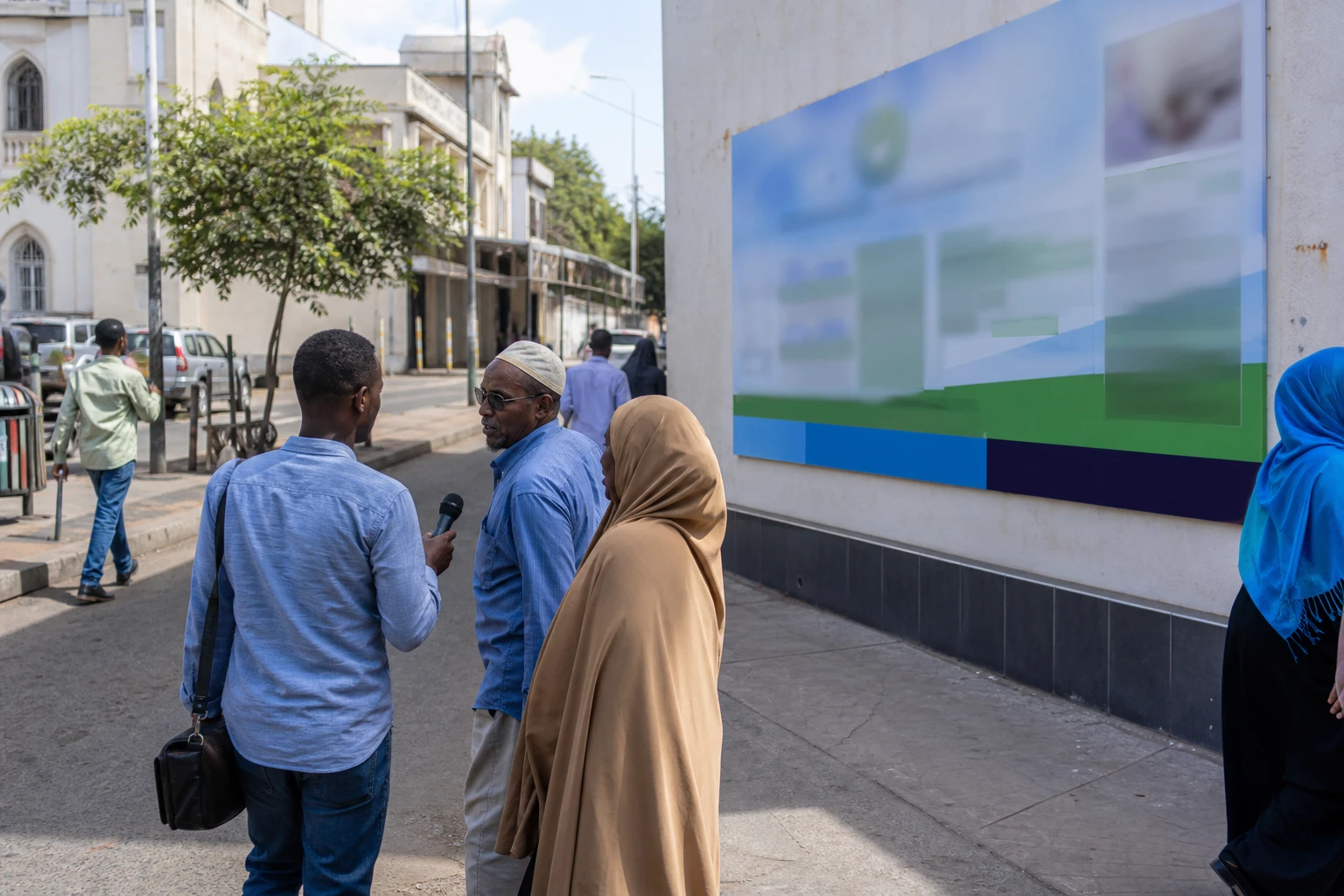
In Djibouti, the football governance crisis reached a new level on Monday 5 October 2026. An extraordinary general assembly announced the removal of the executive committee of the Djiboutian Football Federation (FDF). But the outgoing leadership disputes the procedure. Djiboutian football now faces two authorities each claiming legitimacy.
A federation caught between two interpretations
According to information reported by the Djiboutian news agency and carried by several media outlets, 39 delegates took part in the extraordinary meeting. They voted unanimously to remove Souleiman Hassan Waberi and his executive committee.
The organisers say the required quorum was verified. The meeting was reportedly held in the presence of a legal consultant, a bailiff and two observers from the State Secretariat for Sport. An ad hoc committee was then established to ensure administrative continuity.
Sahardid Hassan Ladieh was appointed acting president. His stated mission is to manage day-to-day activities and prepare the next institutional steps, including the establishment of a new leadership.
The FDF rejects this account. In a statement dated Monday 5 October, the federation says police entered its National Technical Centre, where its headquarters are located, on Sunday 4 October.
The outgoing leadership maintains that its officials and several employees were forced to leave the premises. It says a group of club presidents then entered the building under police escort to hold the assembly.
The FDF therefore considers the meeting to be “without any basis in the statutes”. It also says it intends to take the case to FIFA and the Confederation of African Football, CAF.
The dispute centres on the required number of members
The disagreement concerns more than the presence of the security forces. It also hinges on how the federation’s statutes are interpreted.
The FDF says it has 67 members. In its interpretation, members seeking to convene an extraordinary general assembly must have the support of two-thirds of this body. The threshold would therefore be 45 members.
The outgoing leadership believes that this number was not reached. It also distinguishes between federation members and the delegates who represent them at assemblies. This distinction lies at the heart of the battle for legitimacy under way in Djibouti.
The organisers of the meeting, for their part, rely on the vote by the 39 delegates present. They consider the removal of the executive committee to have been approved and the ad hoc committee able to manage the transition.
So far, no independent ruling has established which interpretation of the statutes should prevail. FIFA and CAF will therefore have to examine the documents submitted by the different parties before recognising any new leadership.
Police intervention at the heart of the international risk
The FDF argues that the police intervention could amount to outside interference in the running of football. FIFA’s statutes require member associations to manage their affairs without interference from third parties.
This rule does not mean that a federation is exempt from all national procedures. It is primarily intended to protect the autonomy of sporting bodies in their internal decisions. In practice, FIFA generally examines the circumstances, the applicable statutes and each party’s ability to demonstrate its legitimacy.
If interference were officially established, the FDF could face disciplinary measures. The most severe outcome would be a suspension of the federation. This could affect national teams, clubs competing in African competitions and development programmes.
However, the legal risk should be distinguished from an actual sanction. The removal announced on 5 October does not automatically lead to Djibouti’s exclusion. A decision by FIFA or CAF would be required.
The situation is particularly sensitive because Souleiman Hassan Waberi is still listed in international records as FDF president. FIFA also lists him as a member of its Council. This institutional recognition does not resolve the domestic dispute, but it strengthens the outgoing leadership’s position in international discussions.
A dispute that goes beyond the individuals involved
The crisis follows several weeks of protests against the FDF’s governance. In September 2026, clubs had already called for an extraordinary assembly to challenge the executive committee. The number of signatories and their status as members were disputed at the time.
The dispute is therefore about the president, the electoral process and the federation’s overall operations. In conflicts of this kind, clubs seek to influence resources, schedules, national teams and the decisions that shape domestic football.
For players, coaches and referees, the uncertainty can quickly have a tangible impact. It can delay national competitions, complicate preparations for national teams and strain relations with technical partners. Clubs with limited resources are the first to be exposed to these administrative blockages.
Djiboutian football also depends on FIFA and CAF development programmes. These schemes support, among other things, training, infrastructure, refereeing and youth competitions. A freeze would not be automatic, but a prolonged crisis could slow funding and ongoing projects.
The FDF has already benefited from a development partnership involving FIFA and the French Football Federation. These programmes have supported the professionalisation of several areas of Djiboutian football. Their continuity now depends as much on resolving the institutional dispute as on sporting results.
Djibouti under scrutiny in the Horn of Africa
The crisis is not confined to Djibouti’s National Technical Centre. The FDF is the recognised representative of Djiboutian football to CAF, FIFA and regional partners. Any uncertainty over its representation could therefore have consequences beyond the domestic league.
Djibouti is part of the sports landscape of the East African Confederation and the Horn of Africa, a region where federations already have to contend with crowded schedules, unequal resources and developing infrastructure. Administrative stability directly affects participation in continental competitions.
The next step will be the response from FIFA and CAF to the notifications from both camps. The international bodies will need to verify how the assembly was convened, the composition of the electoral college, whether the quorum was met and the circumstances in which the meeting took place.
In the meantime, Djiboutian football remains in a state of uncertainty. The priority will be to determine who can commit the federation, sign official documents and represent the national teams. Without swift clarification, the governance dispute could become a sporting, financial and institutional problem for the entire country.