Algeria
 Egypt
 Libya
 Morocco
 Sudan
 Tunisia
 Benin
 Burkina Faso
 Cabo Verde
 Côte d'Ivoire
 Ghana
 Guinea
 Guinea-Bissau
 Liberia
 Mali
 Mauritania
 Niger
 Nigeria
 Senegal
 Sierra Leone
 The Gambia
 Togo
 Cameroon
 Central African Republic
 Chad
 DR Congo
 Equatorial Guinea
 Gabon
 Republic of the Congo
 São Tomé and Príncipe
 Burundi
 Comoros
 Djibouti
 Eritrea
 Ethiopia
 Kenya
 Madagascar
 Malawi
 Mauritius
 Mozambique
 Rwanda
 Seychelles
 Somalia
 South Sudan
 Tanzania
 Uganda
 Angola
 Eswatini
 Lesotho
 Namibia
 South Africa
 Zambia
 Zimbabwe

In Gaborone, diplomacy is taking a very concrete form: a Malagasy passport could soon be enough to enter Botswana without applying for a visa in advance. The announcement marks a new stage in relations between two countries in southern Africa and the Indian Ocean.
A closer relationship within the SADC framework
Botswana’s President Duma Boko announced the decision on Saturday 3 October 2026, during the working visit of his Malagasy counterpart, Michaël Randrianirina, to Gaborone, Botswana’s capital. The visit took place on 2 and 3 October.
Botswana and Madagascar are members of the Southern African Development Community (SADC), a regional organisation that brings together states, notably in southern Africa, around economic, political and security cooperation goals.
This shared membership does not mean that movement between the two countries is automatically unrestricted. Visa regimes remain a matter for national governments. The announced removal is therefore a bilateral measure, not the automatic application of a regional rule.
It comes as Madagascar seeks to strengthen its institutions and partnerships after a period of acute political tensions. Botswana, for its part, wants to expand trade with African countries that have significant mining, agricultural and tourism potential.
A political announcement, but details are still awaited
Duma Boko said Botswana would remove visa requirements for Malagasy nationals. According to the Botswana presidency’s account, the measure is intended to facilitate the movement of people, air links and commercial activity between the two countries.
The statement does not yet specify the date on which the measure will take effect. Nor does it set out the maximum length of stays, the conditions for business travel or any additional requirements that may apply at the border.
This uncertainty matters to travellers. As of 5 October 2026, the Botswana Tourism Organisation’s page listing visa-required countries still included Madagascar among the nationalities concerned. The page may be in the process of being updated, but the presidential announcement alone does not yet replace an official instruction from the immigration authorities.
Malagasy travellers should therefore check the applicable rules with the Botswana authorities and airlines before travelling. The effective date is expected to be specified in an administrative instrument or a separate official announcement.
Economic interests beyond visas
The announced decision is not limited to mobility. Talks between the two presidents covered several sectors: mineral resources, local mineral processing, agriculture, tourism, energy and infrastructure.
Botswana has recognised expertise in managing and developing its mineral resources, particularly in the diamond industry. Madagascar, for its part, has a diverse mineral endowment and is seeking to attract more investment while increasing the local benefits from resource extraction.
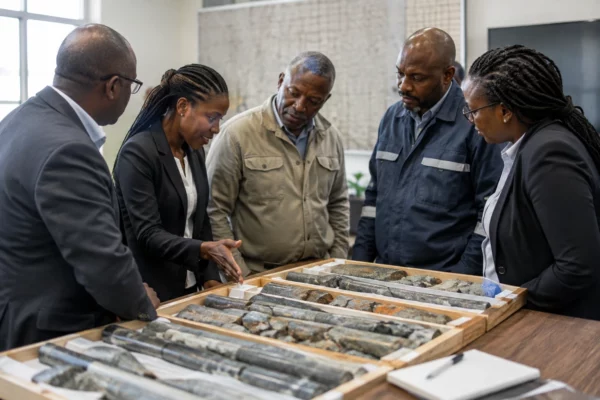
Mining cooperation could therefore cover training, geological expertise, contract governance and local processing. President Boko raised the possibility of deploying Botswana engineers, geologists and other specialists to support projects in Madagascar.
Removing visa requirements could lower an initial administrative barrier. It does not, however, address the high cost of travel or the lack of clearly established direct air links between Gaborone and Antananarivo. For businesses, the ease of making payments, investment protection and stable rules will remain just as important.
Tourism is another area for cooperation. Botswana attracts international visitors with its natural spaces and high-end safari offering. Madagascar has a distinct ecological and cultural heritage, creating scope for complementarity rather than direct competition.
Expected impact on travellers and trade
For Malagasy nationals, the measure could simplify business, academic and tourist trips to Botswana. It would also make family visits and meetings between businesspeople easier.
The benefits will not be the same for everyone. Large companies and investors generally have legal teams able to handle formalities. Small businesses, self-employed workers and individual travellers could benefit more from a streamlined process.
In both countries, the impact will also depend on connectivity. A visa exemption has limited effect if flights remain scarce or expensive. The development of air links, even with connecting flights, will therefore be an important indicator of the announced agreement’s practical reach.
The measure could also boost exchanges between government agencies, universities and professional organisations. But it should not be confused with an automatic right to work or settle. Rules on employment, residence and paid activities are likely to remain subject to national laws.
A signal in support of easier movement within Africa
The Gaborone announcement forms part of a wider continental debate about Africans’ ability to travel within Africa. Free movement is regularly presented as a way to develop intra-African trade and give practical substance to regional integration.
Botswana signed a visa abolition agreement with Rwanda in May 2026. The decision announced for Madagascar confirms a diplomatic approach that seeks to build up bilateral partnerships beyond traditional relations between neighbouring countries.
It also brings together two regions often separated by geography. Botswana is a landlocked country in southern Africa. Madagascar is a large island in the Indian Ocean. Their cooperation could build bridges between SADC economic networks, island markets and regional mining or agricultural value chains.
The next step will be administrative. The effective date, length of permitted stays and documents required at the border still need to be confirmed. Publication of these details will show whether the announcement quickly becomes a practical travel facilitation measure or takes longer to implement.