
 Algeria
 Egypt
 Libya
 Morocco
 Sudan
 Tunisia
 Benin
 Burkina Faso
 Cabo Verde
 Côte d'Ivoire
 Ghana
 Guinea
 Guinea-Bissau
 Liberia
 Mali
 Mauritania
 Niger
 Nigeria
 Senegal
 Sierra Leone
 The Gambia
 Togo
 Central African Republic
 Chad
 DR Congo
 Equatorial Guinea
 Gabon
 Republic of the Congo
 São Tomé and Príncipe
 Burundi
 Comoros
 Djibouti
 Eritrea
 Ethiopia
 Kenya
 Madagascar
 Malawi
 Mauritius
 Mozambique
 Rwanda
 Seychelles
 Somalia
 South Sudan
 Tanzania
 Uganda
 Angola
 Botswana
 Eswatini
 Lesotho
 Namibia
 South Africa
 Zambia
 Zimbabwe
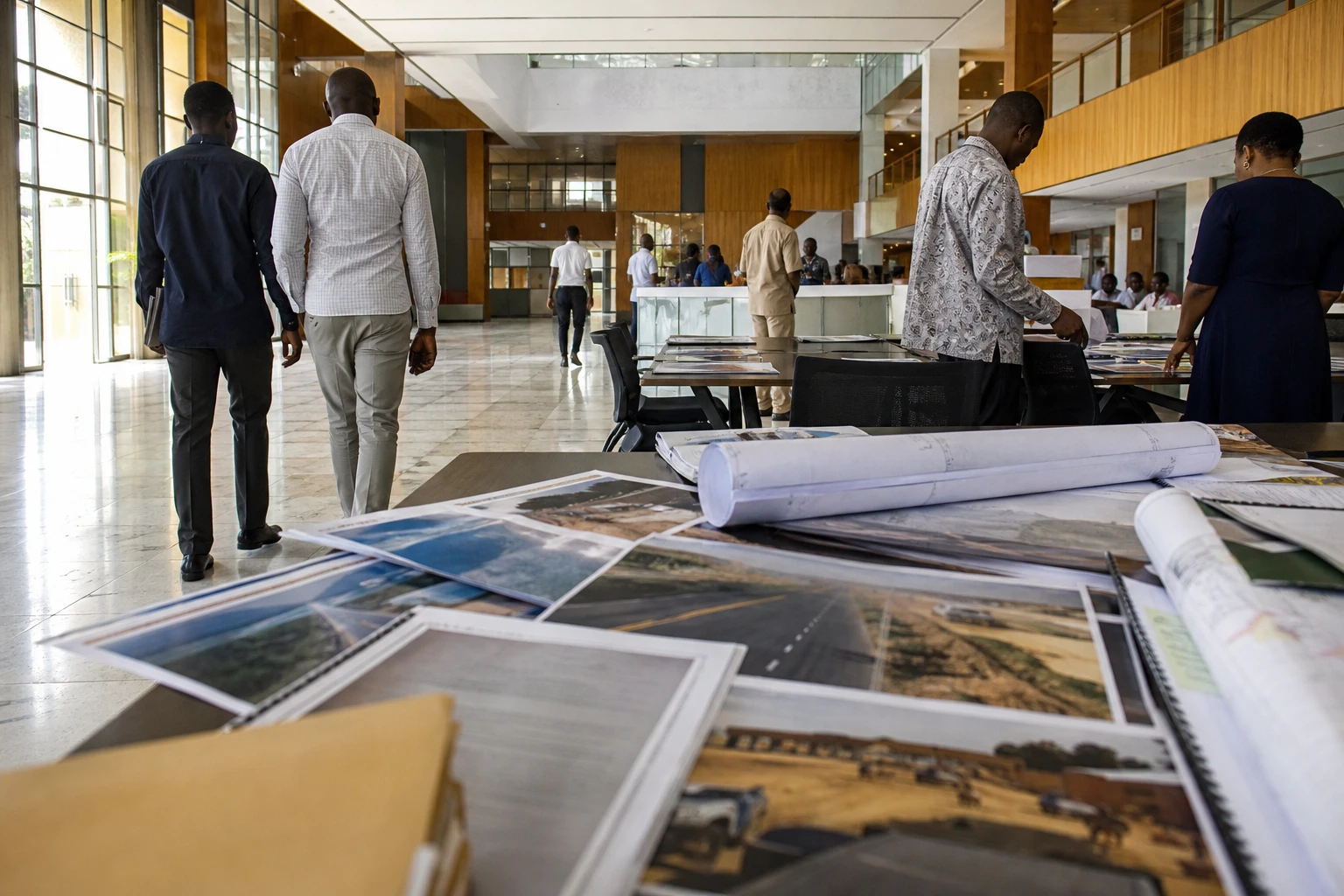
Between the port of Douala and the markets of Bangui, the issue is no longer simply one of building a road. It is about securing a trade artery on which Cameroon, the Central African Republic and, through the wider network, Chad depend. The new programme backed by the World Bank aims to address road surfaces, checks, logistics and maintenance.
A corridor at the heart of trade in Central Africa
The Douala-Bangui corridor links Cameroon’s main maritime outlet with the Central African capital. Stretching more than 1,400 kilometres, it is the Central African Republic’s main gateway to international markets. The World Bank estimates that more than 80% of the Central African Republic’s external trade uses this route.
The route primarily concerns Cameroon and the Central African Republic. However, its influence extends beyond these two countries. Some goods destined for Chad also transit through Cameroon’s road network, particularly between Douala and Garoua-Boulaï, on the Central African border.
This configuration gives the port of Douala a regional role. It also explains why the state of the road has effects far beyond the areas it directly crosses. A delay at a checkpoint, a break in the road surface or a wait at customs can push up the price of goods in Bangui and N’Djamena.
The corridor is part of the CEMAC area, the Economic and Monetary Community of Central Africa, which includes Cameroon, the Central African Republic and Chad, among others. For several years, the organisation has sought to improve the movement of people and goods in a region where several states have no direct access to the sea.
Funding exceeds the amount initially announced
On 12 June 2026, the World Bank approved a regional programme worth $1.12 billion to modernise the Douala-Bangui Economic Corridor. The first phase amounts to $525 million for Cameroon, the Central African Republic and CEMAC.
For Cameroon, this phase provides for $407 million from the International Bank for Reconstruction and Development, the World Bank arm that primarily lends to middle-income countries. It also includes $18 million from the International Development Association.
The amount therefore exceeds the $390 million package mentioned in the first reports on the project. The difference may be explained by changes to the financing structure and the inclusion of several components in a regional programme. The funding officially presented in June 2026 is not solely for the rehabilitation of a road section.
The package also provides $90 million for the Central African Republic and $10 million for CEMAC. The funds are intended to finance the rehabilitation of priority sections, improvements to road safety, axle-load controls, logistics centres and feeder roads.
The World Bank’s regional programme also provides for reforms to facilitate transit. The aim is to reduce bottlenecks that slow lorries, increase costs and disrupt supplies to cities.
Roadworks are needed, but traffic reform is essential
Deteriorating roads are only part of the problem. Data published by the World Bank cite 38 checkpoints along the corridor in Cameroon. At 17 of them, informal payments are reportedly involved. These practices add to delays and make transport costs less predictable.
Even under normal conditions, the journey can take between nine and 12 days. Transport costs can reach $270 per tonne. For traders, these expenses feed through to prices. For households, they can affect the cost of food, construction materials and imported goods.
The expected gains will therefore depend on more than tarmac. They will also require better customs coordination, more transparent checks and regular maintenance. Without these measures, a new road risks quickly encountering the same problems again.
The project also aims to make infrastructure more resilient to climate hazards. In areas exposed to heavy rainfall, drainage structures, bridges and road shoulders are just as important as the road surface itself. Their maintenance will directly affect the lifespan of the investments.
Cameroon’s Ministry of Public Works is, for its part, preparing to upgrade the section linking Douala, Yaoundé, Bertoua and Garoua-Boulaï. This stretch passes through several of Cameroon’s economic hubs before reaching the Central African border. It is therefore important for regional trade, as well as for mobility between Cameroonian cities and rural areas.
The challenge of debt and sharing the benefits
For the Cameroonian government, external financing makes it possible to accelerate works that public revenue alone is insufficient to fund. The country has already mobilised other partners for its infrastructure, including on the Douala-Bafoussam route and the Douala-N’Djamena corridor.
This strategy provides substantial resources, but it also increases the state’s financial commitments. The repayment schedule, loan terms and the infrastructure’s ability to generate revenue will need to be closely monitored. Debt is useful only if investment durably improves economic activity and public services.
The effects will not be the same for everyone. Large transport operators will initially benefit from shorter delays and fewer breakdowns. Small businesses, traders and local producers may also gain access to new markets if secondary roads are genuinely connected to the main corridor.
In cities, lower logistics costs could improve supplies. In rural areas, the challenge will be different. Producers will need to reach markets, and transport services must not focus solely on cargo destined for the capitals.
A test for CEMAC integration
The Douala-Bangui corridor is a practical test of integration in Central Africa. Regional agreements have existed for a long time. Their effectiveness, however, is measured on the ground, in journey times, the number of checks and the regularity of deliveries.
The programme will therefore need to be monitored on several fronts: the actual launch of procurement processes, the choice of priority sections, procedural transparency, changes in journey times and improvements in maintenance. Another question will be whether Cameroon, the Central African Republic and CEMAC can coordinate their administrations.
By modernising this route, the financial partners aim to strengthen a trade chain linking the Gulf of Guinea with the interior of Central Africa. Success will not be measured solely by the number of kilometres rehabilitated. It will be demonstrated by the actual movement of goods, lower costs and the ability of local economies to benefit from this regional connection.



