Algeria
 Egypt
 Libya
 Morocco
 Sudan
 Tunisia
 Benin
 Burkina Faso
 Cabo Verde
 Côte d'Ivoire
 Ghana
 Guinea
 Guinea-Bissau
 Liberia
 Mali
 Mauritania
 Niger
 Nigeria
 Senegal
 Sierra Leone
 The Gambia
 Togo
 Cameroon
 Central African Republic
 Chad
 DR Congo
 Equatorial Guinea
 Gabon
 Republic of the Congo
 São Tomé and Príncipe
 Burundi
 Comoros
 Djibouti
 Eritrea
 Ethiopia
 Madagascar
 Malawi
 Mauritius
 Mozambique
 Rwanda
 Seychelles
 Somalia
 South Sudan
 Tanzania
 Uganda
 Angola
 Botswana
 Eswatini
 Lesotho
 Namibia
 South Africa
 Zambia
 Zimbabwe
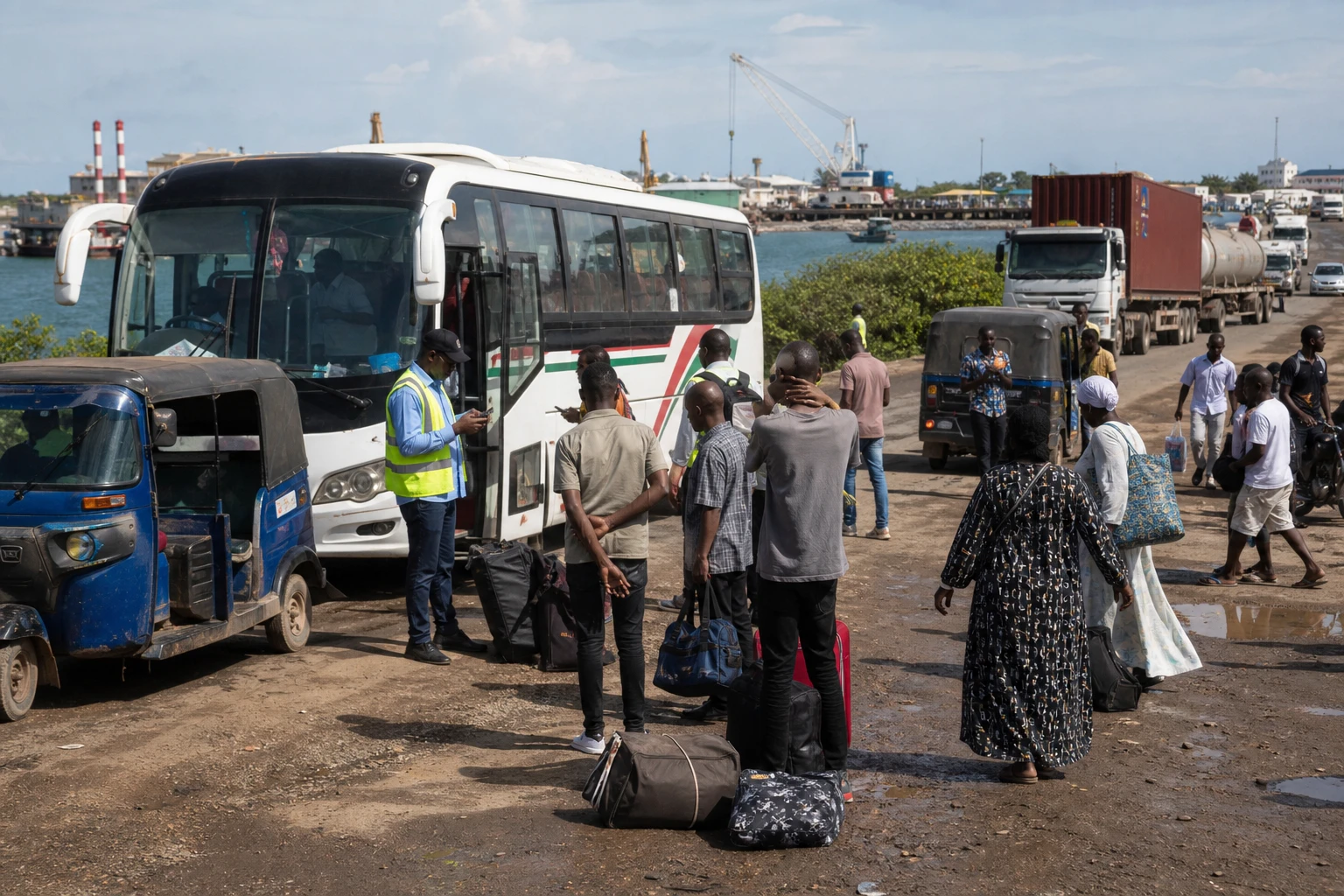
In Lamu, on Kenya’s coast, a $16 billion industrial promise already faces a decisive question: who should benefit from development, and on what terms? The refinery project led by Nigerian Aliko Dangote’s group aims to transform East Africa’s energy balance. But residents are contesting land rights linked to the site.
A project designed for East Africa
Work on the project was officially launched on 30 September 2026 in Lamu, eastern Kenya. The ceremony brought together Kenyan President William Ruto, Aliko Dangote and several African leaders.
The future facility is expected to process up to 700,000 barrels of crude oil a day. According to announcements made at the launch, construction could take about 40 months. The Dangote group is to deliver the project and hold a stake in the infrastructure.
The stated goal is regional. The refinery would not serve only the Kenyan market. It would use crude oil from Uganda and other African producers, among others, before supplying refined products to East African economies.
The choice of Lamu is part of the LAPSSET corridor. This major infrastructure programme is intended to link the port of Lamu to Ethiopia and South Sudan through roads, oil pipelines and logistics platforms. The site also offers deep-water access.
The project was initially considered for Tanga, Tanzania. Aliko Dangote has said that Lamu offered conditions considered more favourable for hosting heavy industrial equipment and handling maritime transport.
Kenya wants to reduce its dependence on imports
Kenya does not yet produce enough oil to supply a large domestic refining industry. The country therefore imports most of its fuel, mainly through the port of Mombasa, before distributing it on its own market and in several neighbouring countries.
The Changamwe refinery in Mombasa ceased production in 2013. The site has since been used mainly for storage and distribution. The new Lamu project would therefore mark the return of major industrial refining capacity to Kenya.
For Nairobi, the stakes go beyond fuel availability. Regional production could reduce exposure to shipping costs, fluctuations in international markets and pressure on foreign exchange. It could also boost public revenues and create demand for logistics, engineering and maintenance services.
Promoters cite the creation of tens of thousands of jobs, as well as the development of local technical skills. These effects will, however, depend on the actual content of contracts, the training offered to Kenyans and the role given to Lamu businesses.
Residents contest land rights
Even before major construction work began, the project was taken to court. One hundred and thirty-three residents of Chandavai, in Lamu County, say the land earmarked for the refinery includes areas occupied by their families for several generations.
The claimants are seeking recognition of their land rights and compensation, as well as a resettlement plan. They argue that development cannot proceed without first resolving the questions of ownership and compensation.
The dispute is part of a wider context. Residents in the area already point to the effects of projects linked to the LAPSSET corridor, the Kenyan navy base at Manda Bay, the US military installation at Camp Simba and Magogoni airstrip.
On 29 September 2026, a court ordered that the status quo be maintained pending consideration of the case. The court did not, however, prevent the launch ceremony on 30 September. The land dispute therefore remains unresolved, even as the political launch has taken place.
Protests have also taken place in Lamu. Residents are demanding full compensation and a clearly defined resettlement plan. Environmental organisations, for their part, have warned of risks to the marine ecosystems of the Kenyan coast.
A delicate balance between investment and local rights
The Kenyan government presents the refinery as a catalyst for industrialisation. In the authorities’ view, Lamu could become an energy and logistics hub capable of supporting regional trade.
But the promised benefits will not automatically be shared. Skilled jobs could be concentrated among international companies and in major urban centres. Residents of the villages concerned, meanwhile, are above all seeking guarantees over their land, fishing activities, agricultural incomes and access to the coast.
Environmental concerns will also be central. A refinery of this size entails storage tanks, pipelines, port facilities and increased maritime traffic. The authorities will therefore have to make public the results of impact assessments, emissions monitoring arrangements and procedures for dealing with pollution.
The record of major infrastructure projects in Kenya shows that consultation cannot be limited to administrative meetings. Kenya’s Constitution recognises specific rights over community land. The extent to which these are respected will be scrutinised by courts, associations and local communities.
For Dangote, the project is also a test. Following the phased start-up of its large refinery in Lekki, Nigeria, the group wants to expand its presence in several African sectors. The Kenyan project must demonstrate that African private investment can support regional integration without reproducing the land tensions associated with some major developments.
A project with implications beyond Kenya’s borders
The refinery could alter the balance of energy power within the East African Community (EAC), which includes Kenya, Uganda, Tanzania, Rwanda, Burundi, South Sudan, the Democratic Republic of the Congo and Somalia, among others.
Uganda is also seeking to add value to its crude oil. President Yoweri Museveni has reiterated that Kampala is maintaining its plan for a small domestic refinery. This position shows that regional interests do not always converge around a single infrastructure project.
Lamu’s economic success will therefore depend on several conditions: securing crude supplies, guaranteeing regional markets, organising transport and preventing a single player from controlling the entire energy chain.
The next challenge will be legal. Decisions on land rights and compensation could slow construction or impose new obligations on the promoters. Contract transparency, community participation and the distribution of jobs will be just as important as the refinery’s announced size.
In Lamu, Kenya is therefore undertaking far more than a development project. It is testing a model in which pan-African ambition will have to meet a local demand: to build a regional industry without sidelining the people who live on the project site.