Algeria
 Egypt
 Libya
 Morocco
 Sudan
 Tunisia
 Benin
 Burkina Faso
 Cabo Verde
 Côte d'Ivoire
 Ghana
 Guinea
 Guinea-Bissau
 Liberia
 Mali
 Mauritania
 Niger
 Nigeria
 Senegal
 Sierra Leone
 The Gambia
 Togo
 Cameroon
 Central African Republic
 Chad
 DR Congo
 Equatorial Guinea
 Gabon
 Republic of the Congo
 São Tomé and Príncipe
 Burundi
 Comoros
 Djibouti
 Eritrea
 Ethiopia
 Madagascar
 Malawi
 Mauritius
 Mozambique
 Rwanda
 Seychelles
 Somalia
 South Sudan
 Tanzania
 Uganda
 Angola
 Botswana
 Eswatini
 Lesotho
 Namibia
 South Africa
 Zambia
 Zimbabwe
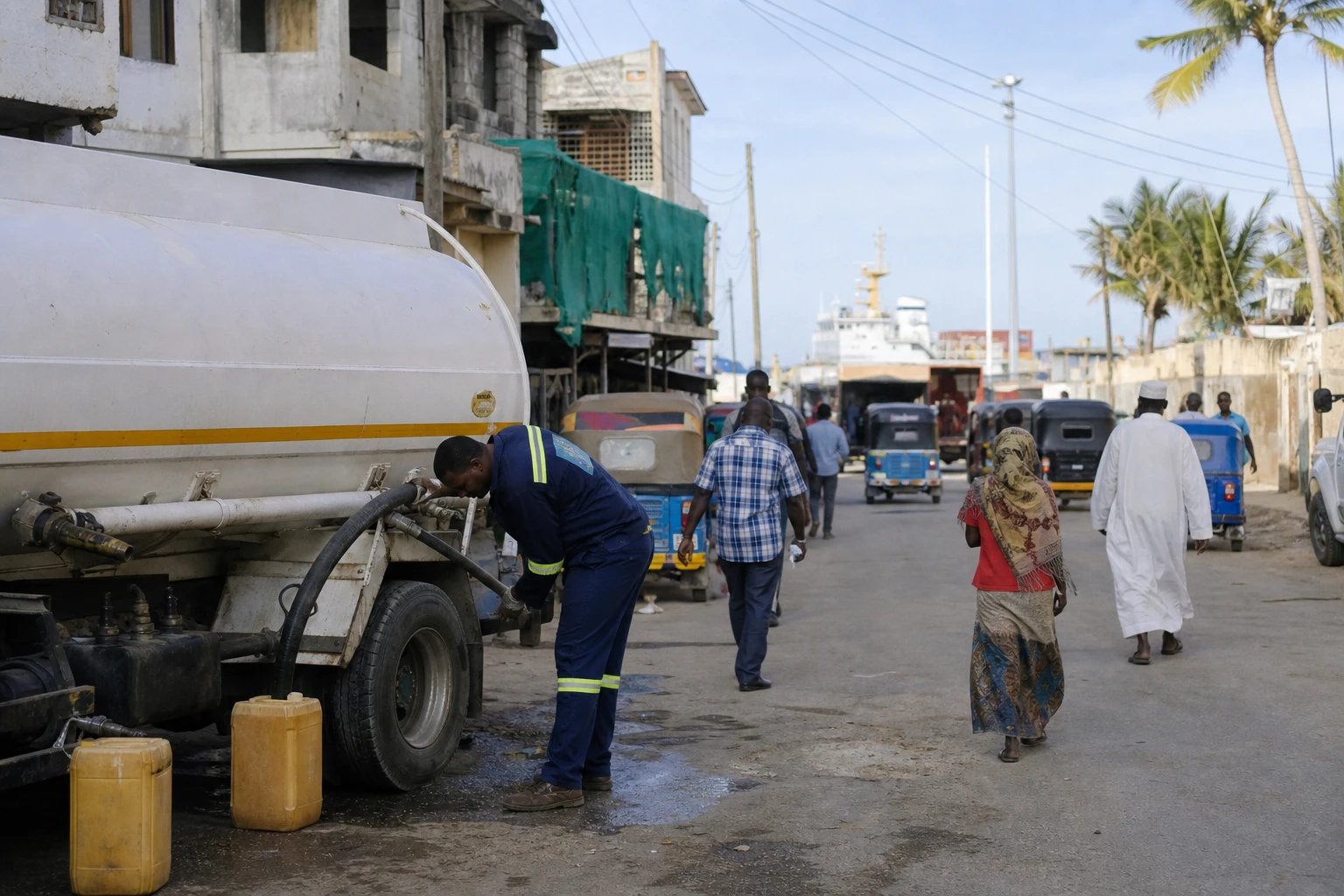
In Lamu, on Kenya’s coast, the debate over African energy autonomy is moving beyond announcements and towards infrastructure. The refinery project led by Nigerian group Dangote promises to process 700 000 barrels of crude oil a day. But its success will depend less on its size than on its financing, links to markets and the region’s capacity to distribute fuel.
Lamu, a future energy hub for East Africa
On 30 September 2026, Kenyan authorities and the project’s promoters launched construction of the refinery in Lamu County. The project is valued at about $16 billion and construction is expected to take nearly 40 months, according to information released at the ceremony. Kenya’s transport ministry describes the facility as a project intended to strengthen the country’s energy security and support port activity.
The announced capacity of 700 000 barrels a day would make the facility one of the largest on the continent. It would far exceed Kenya’s current consumption and would therefore target a regional market. Potential destinations include Uganda, Ethiopia, Tanzania, Rwanda and other countries served by East Africa’s corridors.
Lamu was chosen for its maritime advantages. The refinery could receive crude oil by sea and then ship refined products to the region’s ports and inland depots. The Port of Lamu, which is still scaling up, would thereby gain a major industrial activity. Kenyan authorities also anticipate increased demand for maritime transport, storage, maintenance and technical skills. Kenya’s department responsible for maritime affairs believes the project could transform the port economy and the market for skilled jobs in the area.
More capacity, but not yet energy independence
Africa produces crude oil, but still imports a significant share of the petrol, diesel, kerosene and aviation fuel it consumes. The problem is therefore not limited to available reserves. It also concerns refining, the reliability of supply, storage networks and transport to consumers.
International Energy Agency forecasts show that African demand for oil products is expected to continue rising, reaching about 5.3 million barrels of oil equivalent a day in 2030. In this context, a refinery with capacity of 700 000 barrels a day would significantly alter the regional balance, without being enough on its own to meet the continent’s needs. The IEA’s projections emphasise that the outlook will depend on both new capacity and the actual utilisation of existing facilities.
The Kenyan project is part of a broader trend. In Nigeria, the Dangote refinery in Lekki has a nameplate capacity of 700 000 barrels a day. Its owner has announced plans to expand this to 1.4 million barrels a day. The precise timing of this increase nevertheless depends on financing, equipment and the availability of crude. Dangote Group describes the expansion as a step in its industrial development.
Other projects are under way or have been announced in Angola, Ghana, Senegal, Côte d’Ivoire, Uganda and several North African countries. Yet capacity on paper does not automatically mean steady production. Past experience in Africa shows that technical shutdowns, difficulties accessing crude, maintenance problems and financial constraints can sharply reduce the volumes actually available.
The real challenge comes after the refinery
For motorists and businesses, the key question will be the price at the pump. A refinery can reduce imports, but it must also produce at a competitive cost. The outcome will depend on the price of crude oil, electricity costs, taxes, the cost of financing the facility and transport charges.
Kenya will also need to expand its storage capacity. Today, much of the fuel is transported by lorry from ports or major depots. This system increases costs and leaves remote areas exposed to supply disruptions. Pipelines, intermediate depots and better-connected terminals will be needed for Lamu to serve the hinterland effectively.
This constraint is particularly important for landlocked countries. Uganda, Rwanda, Burundi and Ethiopia will not automatically benefit from Lamu’s proximity. They will need reliable roads, pipelines or supply contracts. Overland transport can quickly absorb some of the savings from local refining.
How the benefits are shared will be another issue. In Lamu, authorities highlight jobs, port services and industrial activity. But the gains will depend on training Kenyan workers, the role given to local businesses and measures to protect communities living near the site. Growth in an energy complex does not, by itself, guarantee an equitable distribution of benefits.
Continental ambition comes with conditions
The Lamu project reflects a strategic shift in Africa. Several states now want to process more of their oil on the continent, rather than export crude and buy back finished products at a higher price. This approach aligns with the industrialisation goals championed by the African Continental Free Trade Area, which seeks to increase trade in goods produced in Africa.
The Kenyan refinery could also strengthen economic ties within the East African Community, a regional organisation that includes Kenya, Uganda, Tanzania, Rwanda, Burundi, the Democratic Republic of the Congo, South Sudan and Somalia, among others. This will require member states to harmonise their standards, taxes and transit rules.
The timetable will offer the first test of the project’s credibility. Progress will need to be tracked on financial close, engineering contracts, access to crude oil, port works and the construction of distribution networks. Fuel autonomy will not be achieved with a single inauguration. It will depend on a coherent network of reliable refineries, sufficient stocks and regional markets able to absorb the volumes produced.