Algeria
 Egypt
 Libya
 Morocco
 Sudan
 Tunisia
 Benin
 Burkina Faso
 Cabo Verde
 Côte d'Ivoire
 Ghana
 Guinea
 Guinea-Bissau
 Liberia
 Mali
 Mauritania
 Niger
 Nigeria
 Senegal
 Sierra Leone
 The Gambia
 Togo
 Cameroon
 Central African Republic
 Chad
 DR Congo
 Equatorial Guinea
 Gabon
 Republic of the Congo
 São Tomé and Príncipe
 Burundi
 Comoros
 Djibouti
 Eritrea
 Ethiopia
 Kenya
 Madagascar
 Malawi
 Mauritius
 Mozambique
 Rwanda
 Seychelles
 Somalia
 South Sudan
 Tanzania
 Uganda
 Angola
 Botswana
 Eswatini
 Lesotho
 Namibia
 Zambia
 Zimbabwe
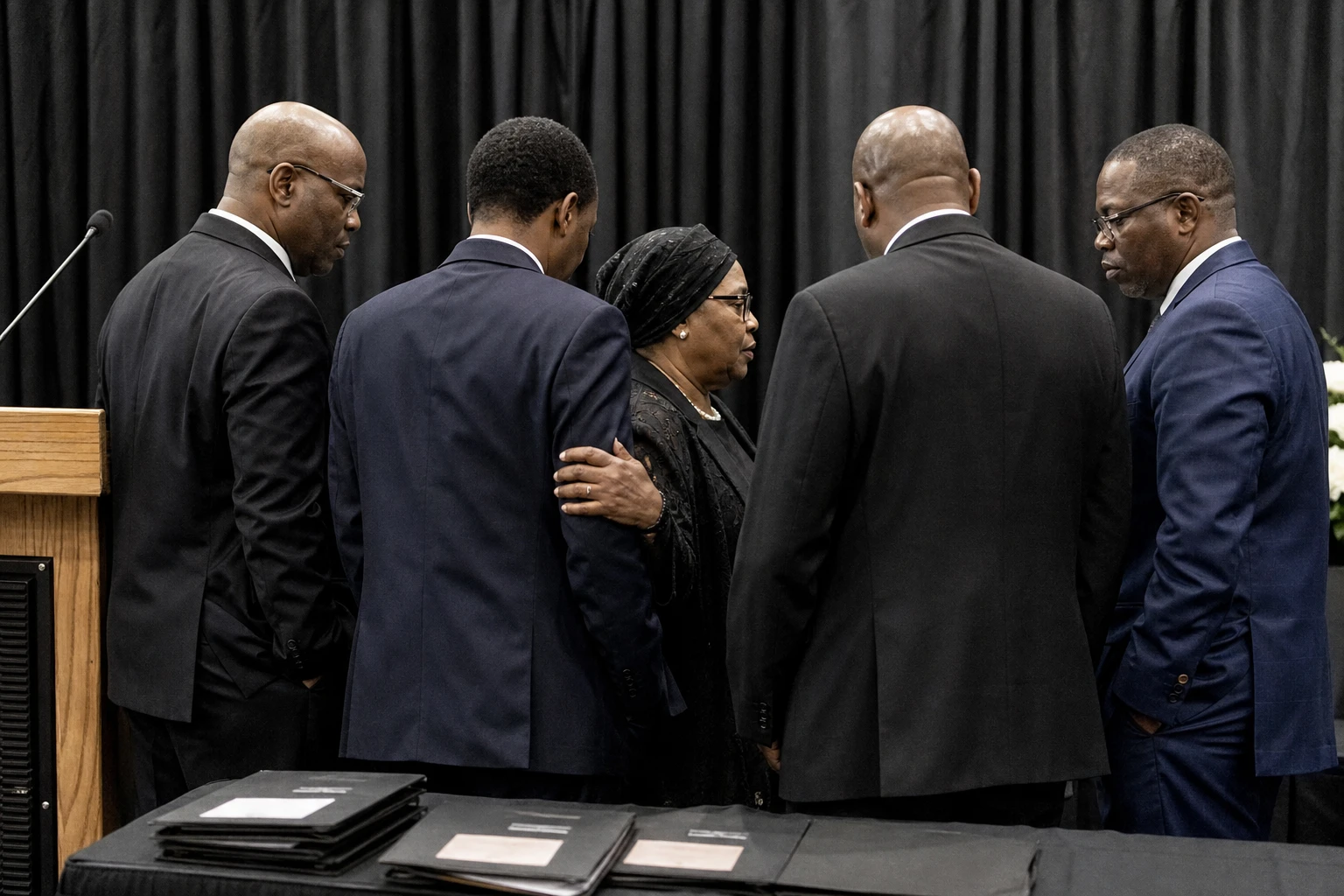
Within a few hours, two working-class neighbourhoods in South Africa were hit by separate armed attacks. In Wedela, in Gauteng province, and then in Lwandle, near Cape Town, customers gathered at local establishments were targeted. The provisional death toll stands at 27, with 26 injured.
Two attacks in different local contexts
The first shooting took place on Saturday 26 September 2026 at around 9.30pm in Wedela, near Carletonville, west of Johannesburg. The town is in an area marked by mining activity and the presence of criminal networks around abandoned mining sites.
According to initial information released by the South African Police Service, eight armed men opened fire on customers gathered outside a tavern. The attackers are then believed to have entered the premises and continued shooting. Seventeen people were killed, including 13 men and four women. Another 15 were injured.
Investigators say assault rifles and pistols were used. Two vehicles were also reportedly set on fire before the suspects fled. Police say some customers were searched and had their phones stolen. No suspects had been arrested by Sunday 27 September.
The second attack took place a few hours later in Lwandle, in Western Cape province. At around 1.46am on Sunday, armed men opened fire on customers at a leisure venue that also sells braaied meat. Five people died at the scene. Five others died of their injuries while being transferred to health facilities. Eleven injured people were still receiving treatment.
Police have opened investigations into murder and attempted murder in both cases. They have not yet established a link between the attacks. The motives remain unknown. Authorities must also confirm the victims’ identities after informing their families.
Violence concentrated in local gathering places
The shootings did not take place in isolated locations. They hit taverns, shops and busy social spaces in the townships. These establishments often play an important economic role. They serve workers, young people and residents who go there to eat, meet up or watch sporting events.
Their vulnerability is also linked to their surroundings. In several neighbourhoods, small businesses operate with limited resources. Lighting, CCTV and police presence remain uneven. Residents can therefore find themselves exposed to clashes linked to gangs, extortion or control of informal trade.
In Wedela, police are examining the possibility of a settling of scores. One of the victims was reportedly being sought in connection with an incident at the same venue the previous month. This remains a line of inquiry, not a judicial conclusion.
Illegal mining further complicates the situation in some parts of Gauteng. Criminal groups compete for access to abandoned mine shafts, transport routes and commercial activities that have grown up around these sites. The South African government has already stepped up police operations in several hotspots, with occasional military support.
The challenge goes beyond the security response
South Africa faces persistent violent crime. Figures generally cited by authorities and news agencies put the number of homicides at about 60 a day. This places the country among those with the highest murder rates in the world, although conditions vary considerably between provinces and neighbourhoods.
The circulation of firearms is a central factor. Some are legally owned. Others come from trafficking, theft or diversion. In areas where criminal networks are established, guns are used to protect illegal activities, intimidate traders and settle disputes.
The public response therefore faces several obstacles. Police must identify the perpetrators, protect witnesses and preserve evidence. They must also rebuild trust in communities where residents are sometimes reluctant to speak for fear of reprisals.
Deploying soldiers can temporarily strengthen the state’s presence. It is no substitute for a robust judicial investigation, a consistent community policing presence and a strategy to disrupt arms supply networks. Nor does it address the economic difficulties that fuel some people’s reliance on informal trade and criminal networks.
The geography of the attacks is also a reminder that violence is not confined to major urban centres. Johannesburg and Cape Town are hubs for economic activity and services, but their outskirts face very different realities. Gauteng’s mining neighbourhoods do not face the same problems as townships in Western Cape, even if guns and gangs can have comparable consequences.
Further pressure on the authorities
President Cyril Ramaphosa has already described crime as one of the major threats facing South Africa. The authorities are now under scrutiny on three fronts: the arrest of suspects, transparency in the investigations and the protection of residents in gathering places.
The recent succession of mass shootings is also increasing pressure on the government and police services. In 2024, an attack in Lusikisiki, in Eastern Cape province, had already exposed the scale of collective violence in rural areas. In 2026, several operations also targeted urban areas affected by gangs and illegal mining.
Regionally, South Africa plays a major role in the Southern African Development Community, SADC. Cross-border crime, arms trafficking and illicit financial flows do not stop at national borders. Cooperation between security services and judicial authorities therefore remains crucial.
For the families of Wedela and Lwandle, the immediate priorities are concrete: identifying the victims, treating the injured and securing justice. For the authorities, the next test will be to show that these attacks will not remain isolated episodes without judicial consequences. The credibility of the public response will be judged as much in the courts as by its ability to prevent another shooting.