Algeria
 Egypt
 Libya
 Morocco
 Sudan
 Tunisia
 Benin
 Burkina Faso
 Cabo Verde
 Côte d'Ivoire
 Ghana
 Guinea
 Guinea-Bissau
 Liberia
 Mali
 Mauritania
 Niger
 Nigeria
 Senegal
 Sierra Leone
 The Gambia
 Togo
 Cameroon
 Central African Republic
 Chad
 DR Congo
 Equatorial Guinea
 Gabon
 Republic of the Congo
 São Tomé and Príncipe
 Burundi
 Comoros
 Djibouti
 Eritrea
 Ethiopia
 Kenya
 Madagascar
 Malawi
 Mozambique
 Rwanda
 Seychelles
 Somalia
 South Sudan
 Tanzania
 Uganda
 Angola
 Botswana
 Eswatini
 Lesotho
 Namibia
 South Africa
 Zambia
 Zimbabwe
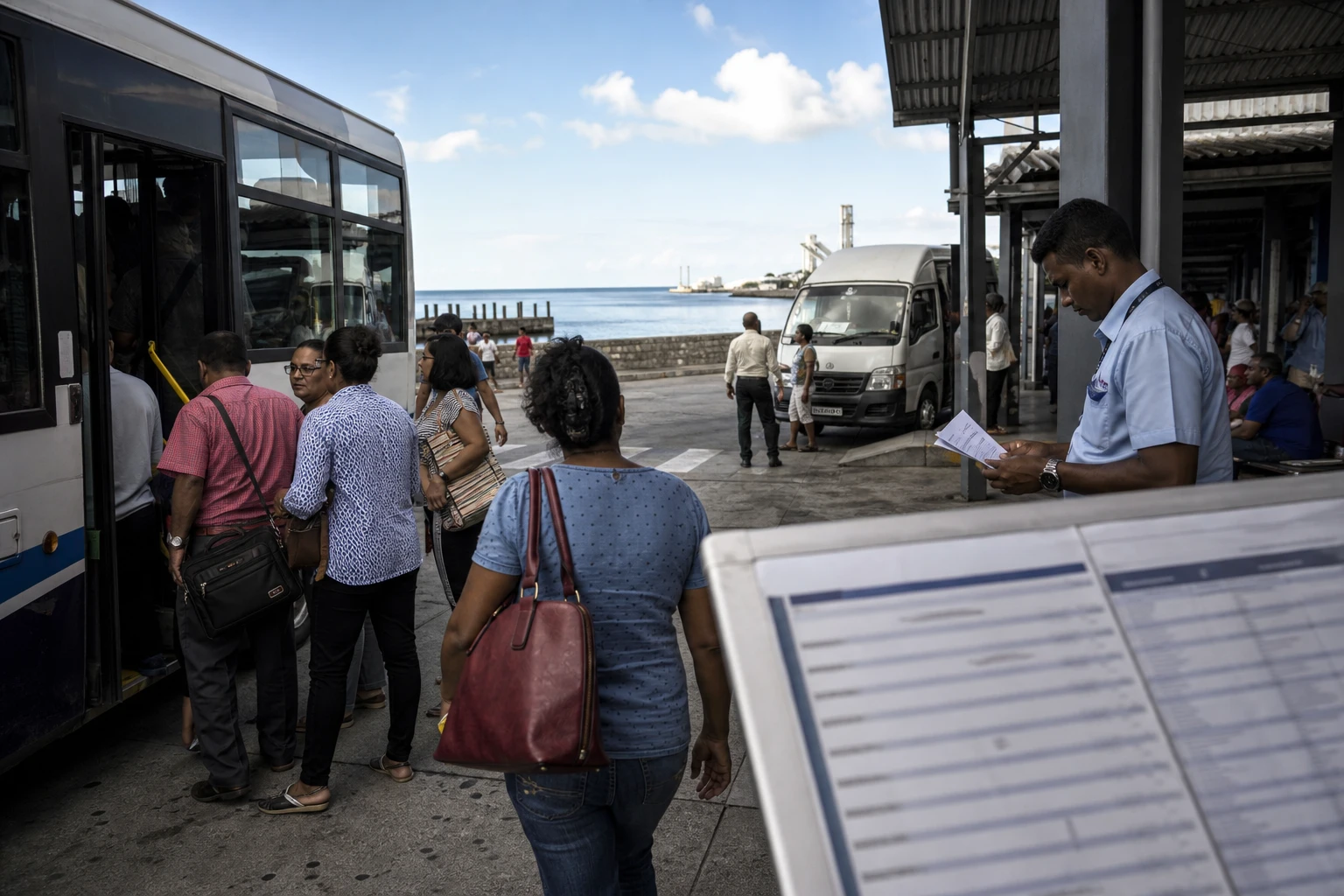
In Port Louis, the Tromelin issue has returned to the debate as Mauritius seeks to consolidate its position on several Indian Ocean territories. The island is tiny. The maritime areas associated with it, however, carry considerable weight in regional balances.
A long-running dispute between two Indian Ocean neighbours
Mauritian Foreign Minister Ritish Ramful has asked France to resume discussions on the future of Tromelin. He spoke at the United Nations on Saturday 26 September 2026, alongside Mauritius’s position on the Chagos Archipelago.
Mauritius’s top diplomat called on Paris to renew a “constructive dialogue”. He also invoked “the friendship between the two countries”, as relations between Mauritius and France remain extensive in economic, people-to-people and security terms.
Tromelin lies in the Indian Ocean, north of Réunion. The island is uninhabited and covers about one square kilometre. France administers it from the French Southern and Antarctic Lands. Mauritius has claimed sovereignty over it since 1976.
For the Mauritian authorities, the dispute is therefore about more than an islet. It also concerns the rights attached to the surrounding waters and Mauritius’s place in a maritime area where fishing, scientific research, biodiversity protection and monitoring of shipping routes intersect.
A maritime zone far larger than the island
The exclusive economic zone, or EEZ, is the maritime area in which a state has rights over natural resources. The zone around Tromelin is generally estimated at nearly 280,000 square kilometres.
This area explains the strategic significance of the issue. The waters are rich in fish. They are also home to fragile ecosystems under pressure from fishing, climate change and maritime traffic.
For Mauritius, the stakes are twofold. First, they are legal, with the aim of securing recognition of a territorial claim maintained for several decades. Second, they are economic, since access to marine resources could support fishing, research and the blue economy, meaning activities linked to ocean spaces.
The issue also touches on regional security. The islands and islets of the Indian Ocean give the states that administer them the ability to monitor vast maritime areas. They also strengthen their presence in a region crossed by major trade flows.
The 2010 agreement never resolved the question of sovereignty
France and Mauritius signed a framework agreement on the joint economic, scientific and environmental management of Tromelin and its surrounding maritime areas in Port Louis on 7 June 2010.
Joint management was intended to enable the two countries to work together without immediately resolving their territorial disagreement. The text provided, in particular, for cooperation on fishing, environmental protection and archaeological research.
The principle was specifically not to alter the legal positions of either party. The agreement’s implementation was therefore intended to organise practical cooperation without constituting recognition of Mauritius’s sovereignty claim or a French renunciation of its rights.
However, the arrangement never fully came into force. The French parliament did not complete the ratification process. In January 2017, consideration of the text by the National Assembly was removed from the agenda amid strong reservations among several French MPs.
The French government continues to say that the ratification process is incomplete. This leaves the 2010 agreement in an intermediate state: signed by both governments, but without the expected political and legal effect.
Why the issue is resurfacing now
The Mauritian request comes after several years of deadlock. It also forms part of a diplomatic sequence shaped by the Chagos issue, an archipelago claimed by Mauritius from the United Kingdom.
The Chagos and Tromelin disputes are separate. The first is between Mauritius and London. The second concerns Mauritius and Paris. However, both cases relate to the same question for Port Louis: control over territories and maritime areas separated from the main territory during the colonial period.
By reiterating at the UN that Mauritian sovereignty over the Chagos was “non-negotiable”, Ritish Ramful also brought Tromelin back into Mauritius’s foreign policy. The message is clear: the resolution of one dispute must not erase the country’s other claims.
For Paris, the difficulty is different. France considers Tromelin French territory administered from Réunion. It fears that a new joint-management agreement could be interpreted as a first step towards sharing sovereignty or as weakening its position in the Indian Ocean.
This caution is also explained by the wider context of French territories in the region. France faces other claims, notably from Madagascar over the Scattered Islands and from the Comoros over Mayotte. Each case has its own history and legal framework. But all contribute to a regional debate about borders inherited from the colonial period.
A test for regional cooperation
Mauritius belongs to the Southern African Development Community, SADC, and also participates in the Indian Ocean Commission, an organisation bringing together several island and coastal states in the region. Tromelin is primarily a matter for bilateral dialogue. Yet its implications extend beyond that framework.
Marine resource management, the fight against illegal fishing and the protection of ecosystems cannot be addressed effectively by a single actor. Cooperation between Mauritius and France could therefore meet practical needs, even while sovereignty remains contested.
This approach could also protect the interests of fishers and communities linked to the maritime economy. Decisions on licences, fishing zones or monitoring can have different effects on Mauritian operators, French vessels and regional actors.
Resuming discussions would not automatically mean reaching an agreement. It would first require a clear political mandate on both sides. The parties would then need to define the scope of cooperation, the status of resources and the safeguards surrounding their sovereignty positions.
The next signal to watch, then, will be less a statement of principle than a possible return of diplomatic teams to the negotiating table. For Mauritius and France alike, Tromelin will remain a test of their ability to manage a territorial dispute without interrupting useful cooperation in the Indian Ocean.