Algeria
 Egypt
 Libya
 Morocco
 Sudan
 Tunisia
 Benin
 Burkina Faso
 Cabo Verde
 Côte d'Ivoire
 Ghana
 Guinea
 Guinea-Bissau
 Liberia
 Mali
 Mauritania
 Niger
 Nigeria
 Senegal
 Sierra Leone
 The Gambia
 Togo
 Cameroon
 Central African Republic
 Chad
 DR Congo
 Equatorial Guinea
 Gabon
 Republic of the Congo
 São Tomé and Príncipe
 Burundi
 Comoros
 Djibouti
 Eritrea
 Ethiopia
 Kenya
 Madagascar
 Malawi
 Mozambique
 Rwanda
 Seychelles
 Somalia
 South Sudan
 Tanzania
 Uganda
 Angola
 Botswana
 Eswatini
 Lesotho
 Namibia
 South Africa
 Zambia
 Zimbabwe
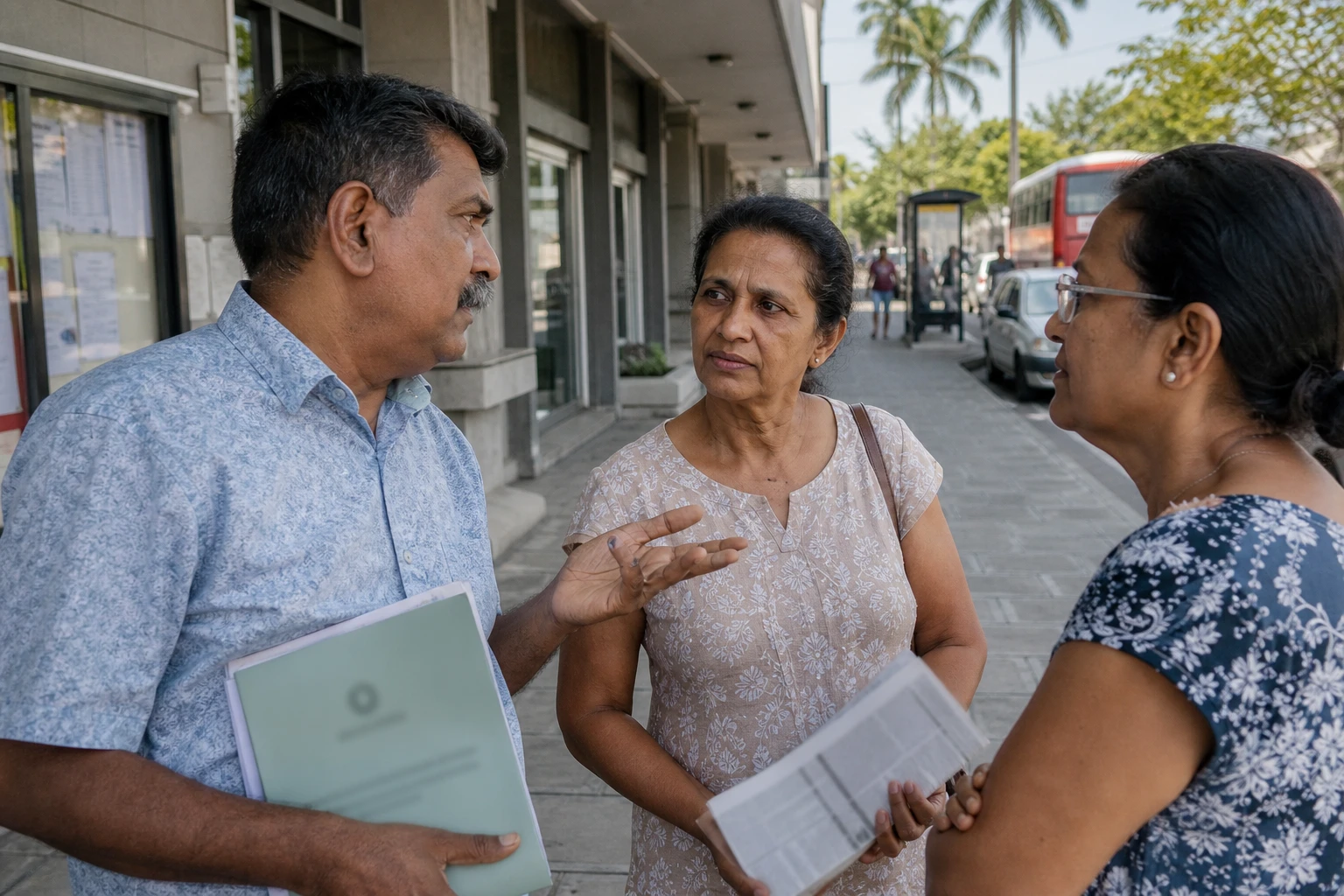
In Port Louis, the Chagos issue is once again at the centre of the power struggle between London and Washington. The agreement signed in May 2025 was intended to recognise Mauritius’s sovereignty over the archipelago while keeping the joint US-UK military base on Diego Garcia. But Donald Trump’s continued opposition is now complicating its implementation.
An agreement reached, but still not fully implemented
The United Kingdom and Mauritius signed their agreement on the Chagos Islands on 22 May 2025. The text provides for the transfer of sovereignty to Mauritius. At the same time, London is to retain the right to use Diego Garcia for 99 years, to ensure the continuity of British and US military activities.
Diego Garcia is the largest island in the Chagos. Its position in the centre of the Indian Ocean makes it a strategic base for US and UK air, naval and logistical operations. The agreement therefore provides for the base to remain, despite the recognition of Mauritian sovereignty over the entire archipelago.
The British government presents this compromise as a way to secure the future of the base and settle a longstanding colonial dispute. The Mauritian authorities, for their part, see it as a major step towards decolonisation and the restoration of their territorial integrity.
The text must still pass several political and legal hurdles in the United Kingdom. Ratification is not complete. Negotiations with Washington are also still needed on military and financial arrangements linked to Diego Garcia.
US pressure changes the course of the dispute
Donald Trump initially appeared willing to accept the principle of the agreement. Since January 2026, however, the US president has openly criticised the plan. He believes the transfer of sovereignty could weaken the security of the base and create uncertainty around a facility considered strategic by the Pentagon.
This position has placed the British government in a difficult position. London is a signatory to the agreement with Mauritius, but the Diego Garcia base operates within the framework of close military cooperation with the United States. Without US agreement on operational guarantees, implementing the treaty becomes more politically and militarily complex.
In April 2026, the United Kingdom put the parliamentary process on hold. The government said the legislative timetable no longer allowed the text to be passed before the end of the parliamentary session. This suspension does not necessarily mean the agreement has been abandoned. It does, however, reflect the absence of final approval from Washington.
Recent British statements now refer to the search for a “compromise” between the parties. Defence Secretary Wes Streeting acknowledged that the agreement, in its current form, could not proceed without US support. This opens the way to renegotiating the guarantees linked to the base, the terms of the lease or security arrangements around Diego Garcia.
For Mauritius, a matter of sovereignty and redress
In Mauritius, the issue is not simply a military negotiation. The archipelago was separated from the colony of Mauritius by the United Kingdom in 1965, before Mauritius gained independence in 1968. Chagossians were subsequently expelled from their islands in the 1960s and 1970s to make way for the Diego Garcia base.
The issue therefore involves three interconnected dimensions: Mauritius’s sovereignty, the Chagossians’ right to return and the continuation of foreign military activities. The Mauritian government must defend its interests in talks with London and Washington while also taking the expectations of the Chagossian community into account.
The authorities in Port Louis have repeatedly said that their claim is supported by several international rulings and opinions. In 2019, the International Court of Justice found that British administration of the Chagos should end as rapidly as possible. In 2021, the International Tribunal for the Law of the Sea also recognised Mauritius’s sovereignty over the archipelago in the case before it.
These decisions do not automatically resolve the question of the base. They nevertheless strengthen Mauritius’s legal position. They also make it harder to maintain indefinitely a territorial status inherited from the colonial period.
The Mauritian government will also have to assess the economic impact of the impasse. The agreement provides for financial arrangements linked to the military presence and the use of Diego Garcia. A prolonged delay could defer expected payments and postpone projects related to the development of the archipelago, protection of its marine environment and remembrance of the displaced populations.
A dispute that goes beyond London-Washington relations
The standoff comes amid intensifying rivalry in the Indian Ocean. The region connects trade routes between Africa, the Middle East and Asia. It is also the focus of issues involving maritime surveillance, access to resources and military projection.
For the United States, Diego Garcia offers infrastructure far from the main areas of tension in the Middle East and Asia. For the United Kingdom, the base is one of its main military footholds east of Suez. For Mauritius, the issue is different: it is about securing recognition of sovereignty contested for several decades, without undermining regional stability.
The dispute also concerns the credibility of principles defended by international organisations. If recognition of Mauritian sovereignty remains subject to the objections of an external military power, several African states could see this as evidence that power dynamics inherited from decolonisation persist.
Mauritius is a member of the Southern African Development Community, or SADC, a regional organisation that brings Southern African countries together around political and economic cooperation. Although the dispute is being played out mainly with London and Washington, its course is therefore of direct interest to the regional space of the Indian Ocean and Southern Africa.
The next step will be decisive
The key question will be whether London seeks to change the terms of the agreement or simply to obtain additional guarantees for the United States. A substantial revision could revive the discussions, but it could also delay the effective recognition of Mauritian sovereignty.
The government in Port Louis, for its part, will have to maintain a balance between legal firmness and practical negotiation. The Mauritian authorities have an interest in preserving the international support built up through legal proceedings while ensuring that the Diego Garcia issue does not overshadow that of the Chagossians.
The Chagos dispute will therefore remain a test for three parties. For the United Kingdom, it measures the room for manoeuvre in its foreign policy vis-à-vis Washington. For the United States, it raises the question of the security of a strategic base. For Mauritius, the challenge is to turn recognition in principle into sovereignty exercised in practice.