
 Algeria
 Egypt
 Libya
 Morocco
 Sudan
 Tunisia
 Benin
 Burkina Faso
 Cabo Verde
 Côte d'Ivoire
 Ghana
 Guinea
 Guinea-Bissau
 Liberia
 Mali
 Mauritania
 Niger
 Nigeria
 Senegal
 Sierra Leone
 The Gambia
 Togo
 Central African Republic
 Chad
 DR Congo
 Equatorial Guinea
 Gabon
 Republic of the Congo
 São Tomé and Príncipe
 Burundi
 Comoros
 Djibouti
 Eritrea
 Ethiopia
 Kenya
 Madagascar
 Malawi
 Mauritius
 Mozambique
 Rwanda
 Seychelles
 Somalia
 South Sudan
 Tanzania
 Uganda
 Angola
 Botswana
 Eswatini
 Lesotho
 Namibia
 South Africa
 Zambia
 Zimbabwe
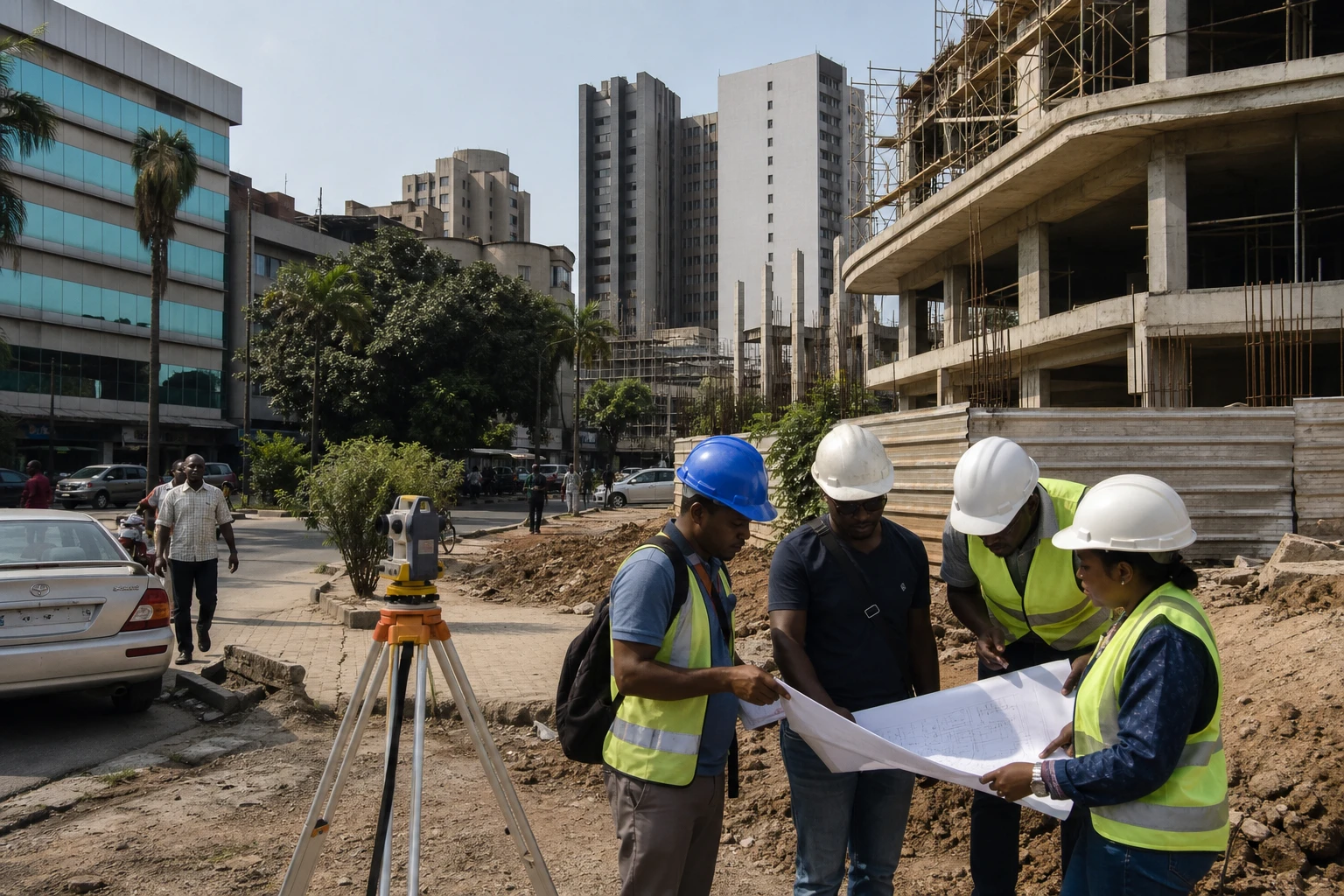
In Douala, the Bonanjo district is preparing to welcome a property development that aims to bring accommodation, offices, shops and events together on one site. The Kempinski Shekinah Palace project, led by Cameroonian group ALS Group, represents an announced investment of FCFA 220 billion, including tax and customs benefits.
A complex designed for business in Douala
The foundation stone is due to be laid in Bonanjo on Friday 25 September 2026, under the chairmanship of Cameroon’s Prime Minister, Joseph Dion Ngute. The construction follows several years of studies, permits and financial preparation.
The site covers nearly two hectares in Douala’s administrative and economic centre. It is close to the port area, a strategic location for business travellers, official delegations and companies based in the economic capital.
The programme includes a hotel with 214 rooms and suites, as well as 35 serviced apartments. In addition, ALS Group has announced about 17,000 square metres of Grade A offices, meaning spaces that meet high standards of construction, comfort and services.
The future complex is also set to include a 2,000-seat multipurpose conference hall, about 2,000 square metres of retail space, five restaurants, five bars and a 500-square-metre art gallery. Two swimming pools, a fitness centre of about 2,000 square metres, sports facilities and 600 parking spaces are also planned.
The hotel component will operate under the Kempinski Hotels brand. The hotel group, founded in 1897, is already present in Central Africa with a property in Brazzaville, in the Republic of the Congo. This gives the Cameroonian project a regional point of comparison, without in itself guaranteeing the operation’s commercial success.
A financing structure still to be completed
The overall amount communicated by the developer is FCFA 220 billion. However, the project cost to be financed by investors is estimated at FCFA 207.62 billion in the dossier presented. The difference corresponds in particular to the tax and customs benefits included in the announced overall value.
The financing is based on several sources. Senior debt of FCFA 92.30 billion is expected to account for about 44.5% of the financed cost. This tranche would have a maturity of 13 years. The structure also includes investor contributions, the developer’s equity and the valuation of the land.
The Development Bank of Central African States, BDEAC, has identified direct financing of FCFA 30 billion for the project in its institutional documents. BDEAC is the regional institution responsible for supporting structural investment in CEMAC countries, the Central African Economic and Monetary Community.
The developer is also counting on the sale of some of the serviced apartments. This approach could help mobilise capital before opening, but it also leaves the project exposed to the market’s actual capacity to absorb high-end properties in a challenging economic climate.
Construction is expected to take 36 months. The announced schedule allows 31 months for construction and five months to install the equipment. If work starts as planned in September 2026 and stays on schedule, delivery could take place around September 2029.
Jobs announced, impact still to be assessed
ALS Group estimates that construction could generate about 3,000 jobs. Once the complex is operational, the developer projects potential for 4,000 direct and indirect jobs. These estimates have not yet been broken down by occupation, contract duration or the proportion of permanent jobs.
The issue, therefore, is not limited to the announced number. For Cameroon, questions will also include training, local subcontracting and the integration of Cameroonian companies into the value chain. Jobs in hospitality, catering, maintenance, security, transport and events could be affected.
The project also includes external works that are not part of its main budget. These include drainage, roadworks, public lighting, pavements and improvements to the connection between Douala International Airport and the city centre.
The cost and schedule for these public works have not been specified. Yet their delivery will affect the complex’s accessibility and its integration into Bonanjo’s urban fabric. The issue directly concerns public authorities, local residents, road users and businesses in the district.
Douala expands its high-end offering
Kempinski Shekinah Palace will not be entering an empty market. Douala already has several hotels catering to business and high-end clients, particularly in Bonanjo and Akwa. Other hotel projects are also seeking to benefit from the city’s economic weight.
Competition will therefore hinge less on the number of rooms than on service quality, operational consistency and the ability to attract international events. By combining a hotel, offices, shops and conference facilities, ALS Group aims to target several client groups at once.
This strategy reflects Douala’s particular place in Cameroon’s economy. The city concentrates a large share of the country’s commercial, financial, logistics and industrial activities. It is also a gateway to the CEMAC market, which brings together six Central African states in a common economic and monetary area.
For companies, a complex of this size could provide a suitable venue for meetings, training and major professional gatherings. For residents, the impact will depend more on the jobs actually created, the skills transferred and the benefits for local service providers.
Execution will be the next test
The project has been documented since 2019. Feasibility studies preceded architectural development, the granting of the building permit in December 2022 and the completion of detailed studies in September 2023. A construction contract was subsequently concluded with China Machinery Engineering Corporation, with no amount disclosed publicly.
This timeline shows that the project has passed several milestones. It also serves as a reminder that a foundation-stone ceremony is not the same as delivery. Compliance with the financing, schedule, technical standards and public commitments around the site will be decisive.
At regional level, the project reflects Douala’s ambition to position itself more strongly in business tourism and the hosting of major gatherings. It comes as several Central African capitals and cities seek to modernise their hotel offerings and service infrastructure.
The event on 25 September 2026 will therefore open a new phase. After the announcement and the financing structure, the main indicator will be the construction’s actual progress towards the 2029 deadline.
details of the Kempinski Shekinah Palace project in Douala and the mention of BDEAC’s regional financing provide further information on the main elements of the project.



