Algeria
 Egypt
 Libya
 Morocco
 Sudan
 Tunisia
 Burkina Faso
 Cabo Verde
 Côte d'Ivoire
 Ghana
 Guinea
 Guinea-Bissau
 Liberia
 Mali
 Mauritania
 Niger
 Nigeria
 Senegal
 Sierra Leone
 The Gambia
 Togo
 Cameroon
 Central African Republic
 Chad
 DR Congo
 Equatorial Guinea
 Gabon
 Republic of the Congo
 São Tomé and Príncipe
 Burundi
 Comoros
 Djibouti
 Eritrea
 Ethiopia
 Kenya
 Madagascar
 Malawi
 Mauritius
 Mozambique
 Rwanda
 Seychelles
 Somalia
 South Sudan
 Tanzania
 Uganda
 Angola
 Botswana
 Eswatini
 Lesotho
 Namibia
 South Africa
 Zambia
 Zimbabwe
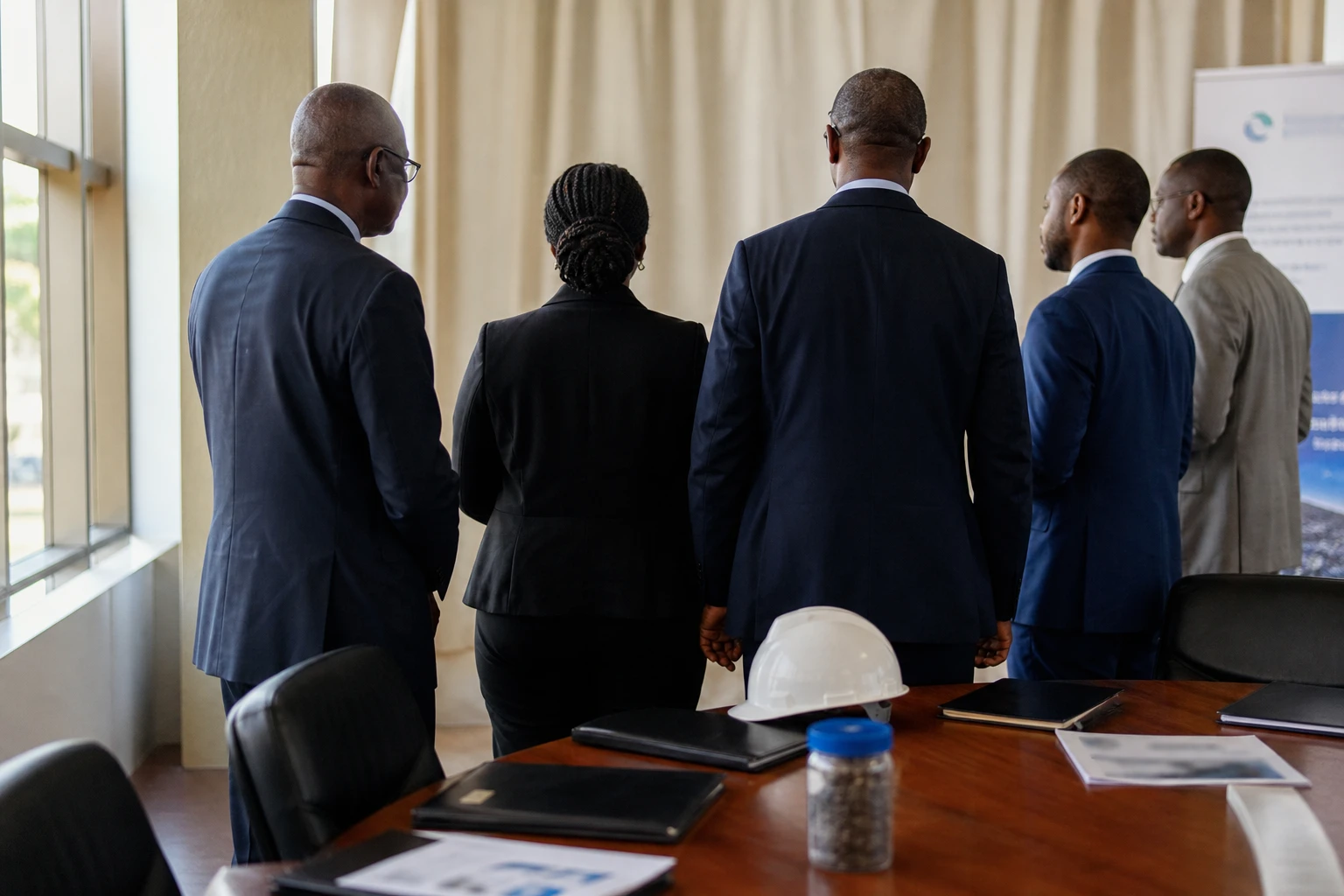
At Sèmè, Benin is not merely seeking to bring an old field back into production. The country must now prove it can turn a technical restart into regular commercial activity. A first cargo of 250 000 barrels is expected in October 2026, but the real test will begin after the sale.
A return awaited for nearly three decades
The Sèmè offshore field, located off south-eastern Benin, had already produced about 22 million barrels between 1982 and 1998. Operations stopped amid low prices, with crude trading at around $14 a barrel at the time.
The redevelopment of the site reached an institutional milestone in December 2023. The Beninese state signed a production-sharing contract for Block 1 with Akrake Petroleum Benin. This type of agreement shares production and revenue between the operator and the country, after the recovery of costs provided for under the contract.
Akrake holds a 76 % stake in the project. The Beninese state owns 15 %, while Octogone Trading holds 9 %. Akrake is linked to Singapore-based Rex International Holding through Lime Petroleum Holding.
According to available technical documents, proven and probable recoverable reserves in the targeted horizons at Sèmè are close to 11 million barrels. This is a limited volume by the standards of the major producers in the Gulf of Guinea. It could nonetheless matter to a country that still imports most of its petroleum products.
Production restarted after several delays
The drilling campaign began in August 2025. It subsequently ran into technical difficulties in unstable geological formations. In November and then December 2025, the operator acknowledged that the initial timetable could not be met.
Drilling of the horizontal AK-2H well, designed to reach the H6 reservoir, was finally completed in early February 2026. The well extends about 1 405 metres horizontally. Nearly 950 metres are said to pass through an oil-bearing zone with no water, according to operational information published by the group.
Production began in March 2026. The system relies on the Stella Energy 1 mobile offshore production unit and the Kristina floating vessel, which stores the crude before it is collected by a tanker. The start-up was, however, described as a commissioning and testing phase ahead of the stabilisation of operations.
The current rate is estimated at about 3 000 barrels a day. It remains below initial projections, which targeted 5 000 to 6 000 barrels a day for this phase. The first cargo announced for October would therefore represent more than 80 days of production at the current rate.
The first sale does not yet settle the economic equation
The sale of 250 000 barrels would mark the return of Beninese crude to the international market for the first time in more than 20 years. The buyer has not been named publicly. October should therefore be understood as an announced target, not a delivery that has already taken place.
This caution is important. In an offshore project, the start of the flow does not automatically guarantee stable production. Connections, testing, reservoir pressure and equipment reliability could still affect the volumes that can actually be exported.
The project must also absorb the costs associated with delays. Lime Petroleum Holding said in February 2026 that drilling cost overruns and the delay to production had weighed on its financial position. This difficulty directly affects the operator, but it could also influence the investment needed to develop other horizons in Block 1.
For Benin, expected revenue will depend on several factors: the sale price, recoverable costs, the tax regime set out in the contract and the regularity of cargoes. A single sale will therefore not be enough to transform public finances significantly.
A local and regional issue for Porto-Novo
The economic effects will not be the same for all stakeholders. Specialist companies could benefit from maintenance, logistics and maritime services contracts. Coastal communities, by contrast, will be looking above all for lasting jobs, safety measures and protection for fishing activities.
Transparency around the contract and revenue will be another point to watch. The issue is not only the amount of revenue. It also concerns how it is used, the prevention of environmental risks and the ability of Beninese institutions to oversee an operation conducted offshore.
The project is part of a regional environment already shaped by hydrocarbons. The port of Sèmè-Kpodji is also an outlet for Nigerien oil transported by pipeline. Separate from the Sèmè field project, this development has put Benin at the centre of West African oil flows and tensions between Porto-Novo and Niamey.
This position strengthens the country’s logistical capabilities, but also exposes it to regional diplomatic, security and commercial risks. The Economic Community of West African States, ECOWAS, will have to navigate differing energy trajectories among its coastal and Sahelian member states.
What happens next will be decided after October
The next step will be to establish whether the announced cargo actually leaves the Sèmè facilities in October 2026. Attention will then turn to the monthly rate, the stability of the AK-2H well and the decision on developing the H7 and H8 horizons.
Benin is thus entering the oil sector with modest but strategic production. The project’s success will not be measured by a single cargo. It will depend on operational continuity, cost control and the state’s ability to turn this resource into verifiable benefits for the national economy.