Algeria
 Egypt
 Libya
 Morocco
 Sudan
 Tunisia
 Benin
 Burkina Faso
 Cabo Verde
 Côte d'Ivoire
 Ghana
 Guinea
 Guinea-Bissau
 Liberia
 Mali
 Mauritania
 Niger
 Nigeria
 Senegal
 Sierra Leone
 The Gambia
 Togo
 Cameroon
 Central African Republic
 Chad
 DR Congo
 Equatorial Guinea
 Gabon
 Republic of the Congo
 São Tomé and Príncipe
 Burundi
 Comoros
 Djibouti
 Eritrea
 Ethiopia
 Madagascar
 Malawi
 Mauritius
 Mozambique
 Rwanda
 Seychelles
 Somalia
 South Sudan
 Tanzania
 Uganda
 Angola
 Botswana
 Eswatini
 Lesotho
 Namibia
 South Africa
 Zambia
 Zimbabwe
When reform of the global system becomes an African debate
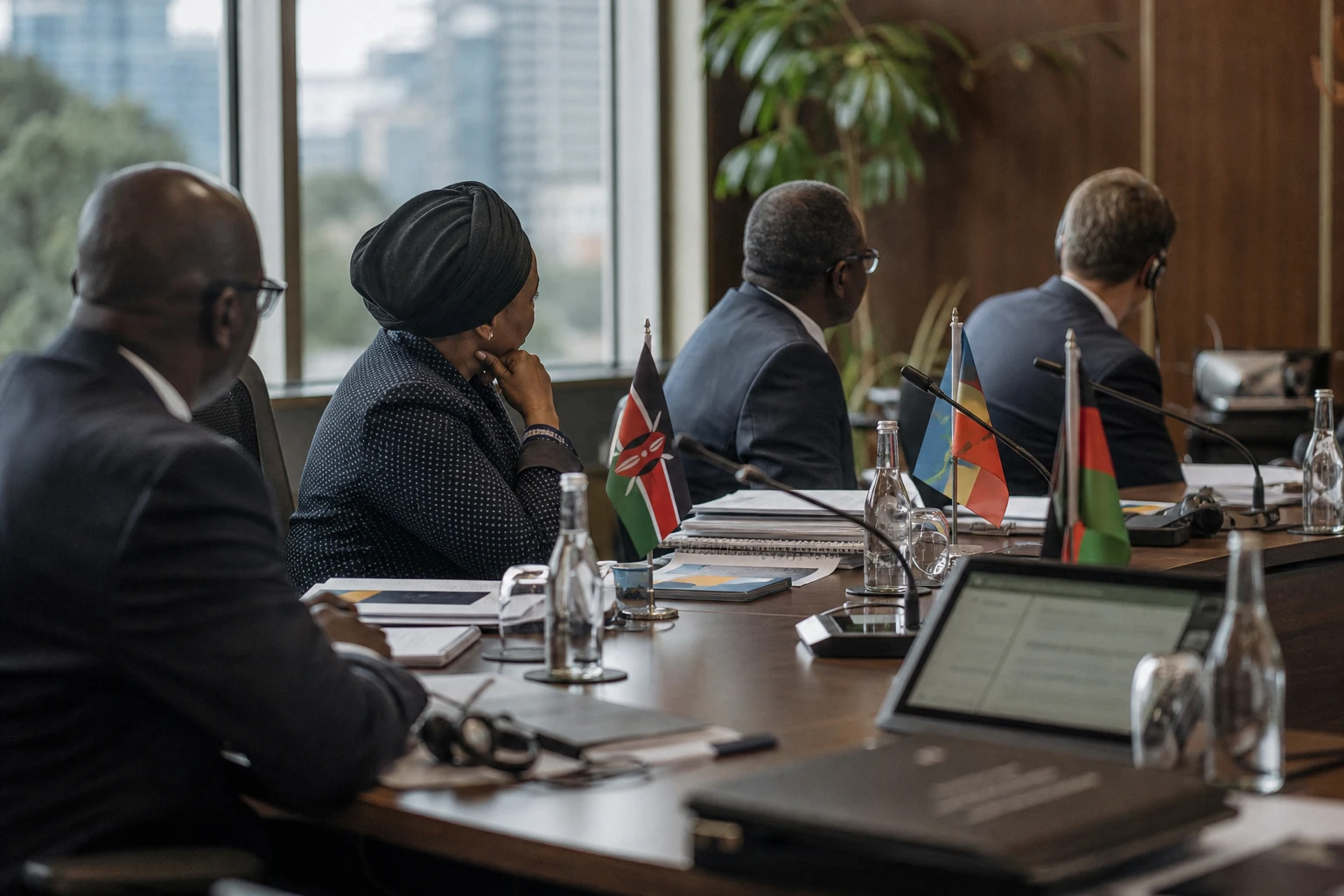
In New York, the discussion was not only about distant institutions. It also touched on a very concrete question for Nairobi, Addis Ababa, Pretoria and Dakar: who funds development, who sets the rules, and what place do African countries have in an international order that calls itself multilateral? The “Partners for Multilateralism” summit was launched on 21 September 2026, on the sidelines of the high-level week of the 81st session of the United Nations General Assembly. It brings together Australia, Barbados, Brazil, Canada, India, the European Union and Kenya, among others.
For Kenya, the issue goes beyond diplomatic protocol. For several years, the country has played a prominent role in debates on reforming multilateralism, debt, climate and Africa’s representation on the Security Council. This stance also fits within the broader framework of the East African Community, where member states are seeking greater influence over trade, security and financial issues.
What Nairobi sought to put forward
Kenyan President William Ruto defended a simple idea: partnership with Africa must change in nature. In his view, the real question is no longer only how much money external partners can bring to the continent, but how to mobilise the resources already present in Africa. In a text released by the Kenyan presidency after his address to the UN General Assembly in 2025, he had already warned that institutions lose their legitimacy when they stop adapting to the realities of the times. The position is therefore consistent.
In this approach, Ruto is not talking only about official development assistance. He is also focusing on the role of multilateral development banks. In his view, they should no longer be mere lenders, but tools capable of leveraging far greater volumes of private finance. This position reflects a debate that is now central in Africa: how to move from a relationship of financial dependence to an architecture that supports productive investment, infrastructure, energy and climate resilience.
The summit served not only as a political showcase. The presidency of the European Council presented the initiative as a platform open to partners from all regions who are ready to defend shared principles and practical solutions. Its stated aim is to support the multilateral system, coordinate positions and advance reforms on climate, global health, artificial intelligence, inequality and international security.
A battle over legitimacy, not just figures
Behind the diplomatic language, the issue is political. Ruto speaks of a world in which the institutions inherited from 1945 no longer reflect Africa’s demographic, economic and strategic weight. The UN secretary-general himself has acknowledged several times this year that reform of the global financial architecture has become a demand advanced by African countries. He has also recalled that the continent still has no permanent seats on the Security Council, despite having more than 1.5 billion inhabitants.
The heart of the debate is therefore twofold. On one side is the question of representation: who speaks for the world and who makes the decisions? On the other is the question of effectiveness: how can multilateral institutions be made to genuinely finance energy transitions, climate adaptation and the infrastructure Africa needs? Summit participants stressed the need for multilateralism that is more flexible, more practical and less paralysed by disputes between major powers.
For African states, the implications are immediate. Reform that expands the lending capacity of multilateral banks, mobilises more private capital and improves access to finance can ease pressure on national budgets. Conversely, without real change, governments will continue to contend with narrow fiscal headroom, high borrowing costs and persistent dependence on external cycles. This is particularly important for economies where needs for roads, energy and social services remain very high.
What this means for Kenya and the continent
Kenya is seeking to strengthen its image as a bridge between the Global South and Western institutions. This position allows it to engage with several blocs at once: major emerging economies, the European Union, Latin America and Pacific partners. It also reflects Kenyan diplomacy in recent years, which combines regional security, financial reform and advocacy for a stronger African voice in global forums. Nairobi wants to count, without being confined to the role of a mere seeker of funds.
Regionally, this intervention resonates across East Africa. Countries in the region face similar challenges: pressure from public debt, exposure to climate shocks, fragile supply chains and the need for massive investment in energy, ports, rail and digital infrastructure. In this context, reform of multilateralism is no abstraction. It determines states’ ability to finance growth without sacrificing social stability.
The next steps will now play out in texts, coalitions and financing. The “Partners for Multilateralism” initiative aims to expand its ranks and turn its principles into concrete proposals. Its real impact will be measured there: in reform of development banks, in the governance of artificial intelligence, in the response to climate change and in the ability to give African voices greater weight in international forums. The New York summit has opened the process. The real test starts now.