Algeria
 Egypt
 Libya
 Morocco
 Sudan
 Tunisia
 Benin
 Burkina Faso
 Cabo Verde
 Côte d'Ivoire
 Ghana
 Guinea
 Guinea-Bissau
 Liberia
 Mali
 Mauritania
 Niger
 Nigeria
 Senegal
 Sierra Leone
 The Gambia
 Togo
 Cameroon
 Central African Republic
 Chad
 DR Congo
 Equatorial Guinea
 Gabon
 Republic of the Congo
 São Tomé and Príncipe
 Burundi
 Comoros
 Djibouti
 Eritrea
 Ethiopia
 Kenya
 Madagascar
 Malawi
 Mauritius
 Mozambique
 Rwanda
 Seychelles
 Somalia
 South Sudan
 Tanzania
 Uganda
 Angola
 Botswana
 Eswatini
 Lesotho
 South Africa
 Zambia
 Zimbabwe
Windhoek seeks to secure fuel supplies as offshore plans take shape
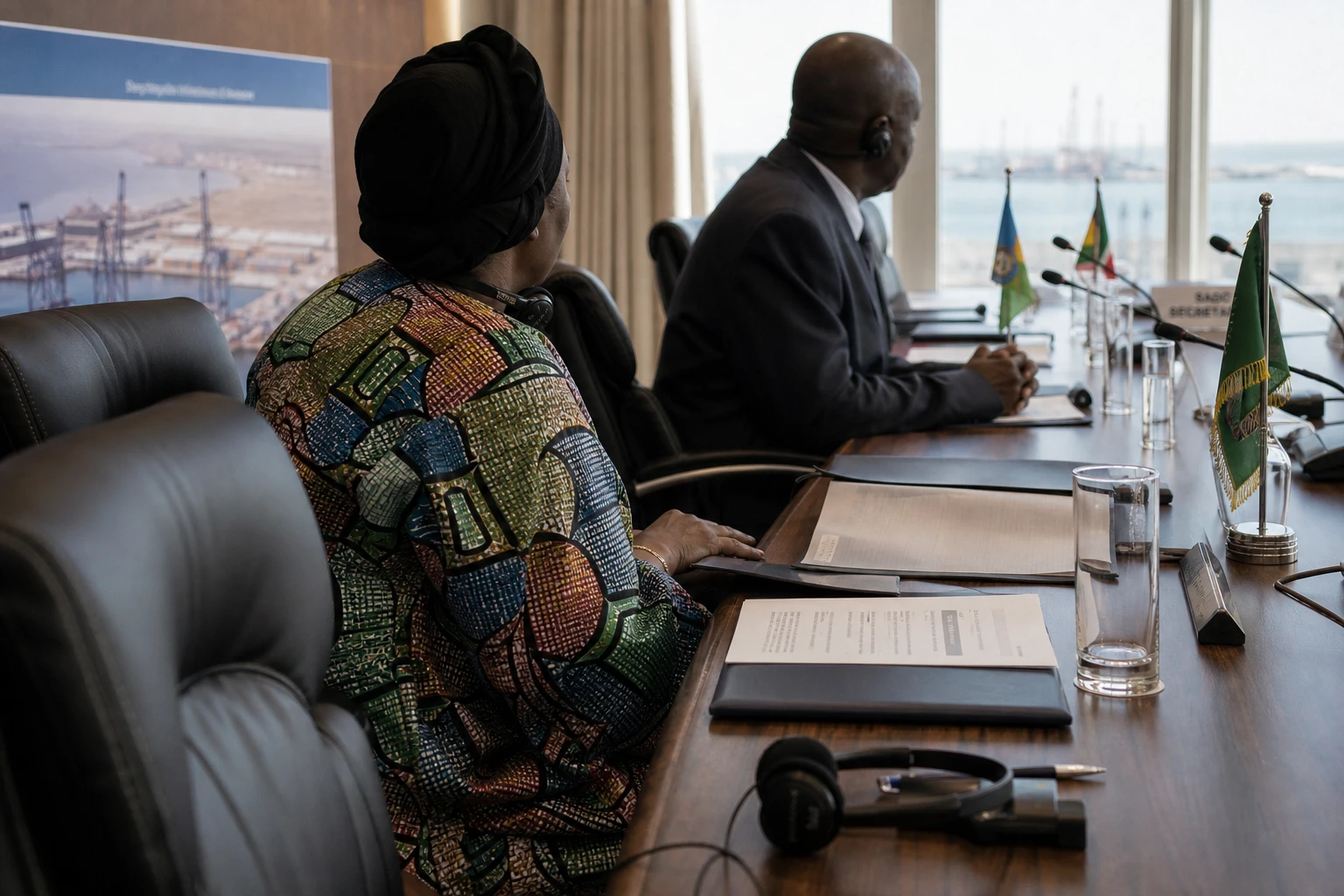
In Namibia, two matters are moving forward in parallel, reflecting much about the country’s new energy phase. On one side, the state wants to guarantee the regular arrival of imported fuel, which is essential to the day-to-day economy. On the other, it is preparing for the development of future offshore oil that is still a long way from supplying the domestic market. In both cases, Windhoek is seeking to reduce its vulnerability while retaining control over the economic terms of development.
This moment is part of the trajectory of a SADC member, the Southern African Development Community, where energy security remains a major regional issue. Namibia still depends on imports of refined products, even though it now has some of the continent’s most closely watched offshore oil prospects. The authorities have also expanded storage capacity at Walvis Bay, a sign that they are already thinking in terms of supply, logistics and resilience, not just exploration.
A short-term fuel contract with immediate effects
The Namibian government has awarded TotalEnergies a contract to supply all the country’s petrol and diesel needs for three months, from November 2026 to January 2027. The announced volume is about 345.3 million litres, comprising 246.9 million litres of diesel and 98.4 million litres of petrol. Deliveries will be handled by TOTSA, the group’s trading arm. The ministry said the decision followed a competitive tender.
The successful bid offers a discount of 61 Namibian cents per litre for diesel and 71 cents for petrol, against the Basic Fuel Price, the benchmark price Namibia uses for its imports. The ministry said it expected savings of about 220.5 million Namibian dollars, or nearly 13.6 million US dollars. This margin should first ease pressure on the National Energy Fund, which absorbs the difference between purchase costs and pump prices to prevent a sharp increase for households and businesses.
This is a decisive point. In a country where road transport underpins much of domestic trade, fuel costs affect food prices, service costs and the margins of both the informal economy and logistics operators. The government is therefore seeking less a simple bargain than some budgetary breathing space. The contract also shows that the Namibian state continues to favour competitive bidding rather than a lasting monopoly on imports.
Mopane, Venus and the shift towards offshore oil
The commercial contract comes days after another announcement, one far more significant for the country’s future. TotalEnergies has finalised its agreement with Galp and taken a 40% operated interest in licence PEL83, which contains the Mopane discovery. Galp retains 40%, while Namcor and Custos each hold 10%. In exchange, Galp has taken a 10% interest in PEL56, where Venus is located, and 9.39% in PEL91. The French group thus becomes operator of the two largest oil discoveries in Namibia’s Orange Basin.
The timetable remains cautious, however. For Mopane, a new exploration and appraisal campaign is due to start in the fourth quarter of 2026 to clarify the field’s true potential. For Venus, studies are focused on a floating production and storage unit, with processing capacity of about 160,000 barrels a day. Public environmental documents also refer to peak production of around 150,000 to 160,000 barrels a day, with first production targeted for the beginning of the next decade.
The final investment decision still depends on discussions with the Namibian authorities, particularly on fiscal stability and development terms. This is one of the key sticking points. Namibia wants to attract major investment for its ultra-deep waters, but it also wants to avoid having a future strategic asset locked into terms that are too favourable to the majors. This is a familiar negotiation in new oil-producing countries, but it is particularly important here because the country does not yet have refining infrastructure capable of processing its crude locally.
What this expansion means for Namibia
For Windhoek, the stakes go beyond the arrival of a major international name. TotalEnergies has been established in Namibia for decades as a player in the distribution network, with 43 service stations, according to industry data. But its role is now evolving into a pivotal position spanning import logistics, deep-water exploration and the prospect of broader industrial development. This concentration does not mean the group will soon be supplying its stations with locally extracted oil; crude from Mopane or Venus will first have to be produced, exported or processed.
For the Namibian state, the real test will be its ability to turn this potential windfall into stable revenue, skilled jobs and infrastructure that serves purposes beyond the oil sector alone. Ports, storage, maritime services, engineering and technical training will all be directly affected. Coastal areas, already strategically important for fuel imports, could become even more significant to the national economy, while inland areas will remain highly sensitive to the cost of transporting goods and food.
The implications are regional, too. Within SADC, Namibia joins the list of countries seeking to turn offshore discoveries into a driver of development without repeating past mistakes. The experience of neighbouring countries shows that a discovery is not enough: clear fiscal frameworks, strong institutions and transparent decision-making are needed. That will determine whether this is merely another announcement cycle or a genuine move up the industrial value chain. Windhoek is therefore advancing on two fronts at once: keeping fuel prices in check today and setting the rules for tomorrow’s oil.