
 Algeria
 Egypt
 Libya
 Morocco
 Sudan
 Tunisia
 Benin
 Burkina Faso
 Cabo Verde
 Côte d'Ivoire
 Ghana
 Guinea
 Guinea-Bissau
 Liberia
 Mali
 Mauritania
 Niger
 Nigeria
 Senegal
 Sierra Leone
 The Gambia
 Togo
 Central African Republic
 Chad
 DR Congo
 Equatorial Guinea
 Gabon
 Republic of the Congo
 São Tomé and Príncipe
 Burundi
 Comoros
 Djibouti
 Eritrea
 Ethiopia
 Kenya
 Madagascar
 Malawi
 Mauritius
 Mozambique
 Rwanda
 Seychelles
 Somalia
 South Sudan
 Tanzania
 Uganda
 Angola
 Botswana
 Eswatini
 Lesotho
 Namibia
 South Africa
 Zambia
 Zimbabwe
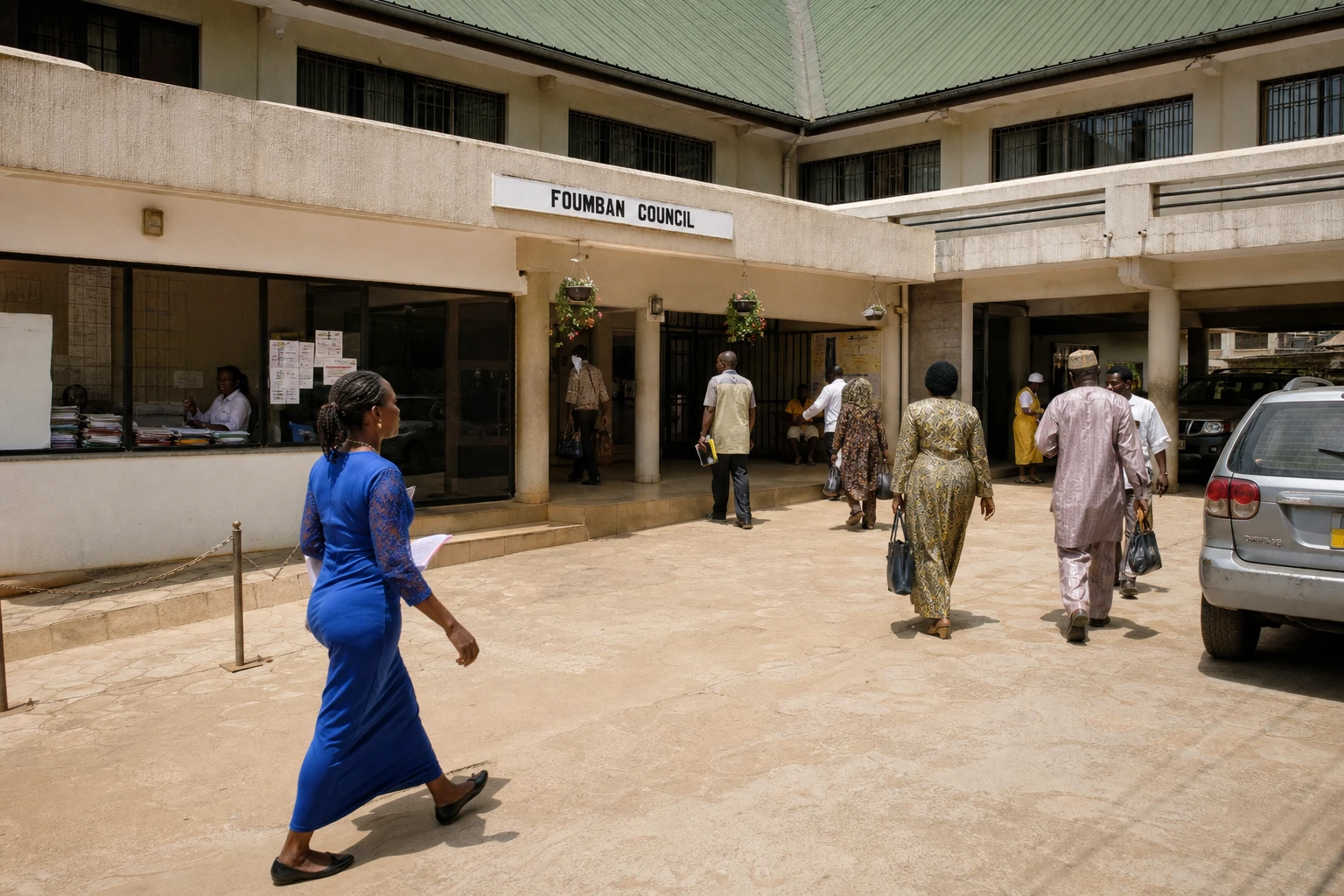
In Yaoundé, parties are moving as if the election campaign has already begun
In Cameroon, the electoral battle often begins long before the first ballot is cast. It is fought in party branches, local committees, candidate selections and lists of candidates. This is where useful power balances are forged, especially when the prospect of a vote remains dependent on a political decision from above.
This time again, the stakes go beyond simple competition between parties. Legislative and municipal elections have a direct impact on local life, municipalities, the state’s territorial representatives and the ambitions of those seeking to retain a seat in parliament or on municipal executives. In a country organised into 10 regions, 58 departments and 360 districts, the map of power is also read at the very concrete level of local areas.
Timetable still open, but terms of office already extended
The institutional framework explains this nervousness. MPs saw their term extended by the law of 25 March 2026, while that of municipal councillors was extended by the decree of 4 May 2026. The authorities have therefore already pushed back the deadline. Officially, the door remains open to a further adjustment of the timetable, although political parties are currently working on the assumption of an election in 2027.
In Cameroon’s electoral system, Elections Cameroon, better known as Elecam, oversees the organisation of the vote and the management of candidacies. The electoral code, available on its platforms, sets out the general framework for the process and states that candidacies, the calling of the electorate and the publication of lists are governed by a precise timetable. It is precisely this timetable that is now driving parties’ internal calculations.
The political context is all the more sensitive because the terms of office of local and national institutions have already been extended. Parliament and municipal councils are thus operating on an extended timeline, fuelling both anticipation and competition among parties to get ahead.
Candidate selection, training and monitoring: parties seek footholds
In this climate, the UNDP has stepped up its preparations. The party of Bello Bouba Maïgari has set up pre-selection commissions to screen candidates and target constituencies considered winnable. The idea is simple: focus resources where the party can turn its activist presence into seats, in municipalities as well as in the National Assembly. The approach is territorial, not merely symbolic.
The SDF, for its part, is relying on a more conventional but structured approach: checking voter registration, training polling-station representatives, setting up a monitoring unit to counter irregularities and running a grassroots campaign to persuade abstainers. This approach reflects a different bet: starting from the grassroots, the value of the vote and monitoring the ballot, rather than counting on a single national momentum.
The UDC has chosen a similar line, but with a greater focus on internal mobilisation. In Foumban, the National Executive Council worked on the party’s new structures, the state of the electoral rolls and preparations for the double election. The challenge is clear: to broaden the party’s roots beyond its stronghold of Noun and turn local entrenchment into a capacity to expand nationally.
The MRC, long excluded from local contests after its decisions to boycott them, is instead seeking to re-enter the game. The party now says it aims to field as many lists and candidates as possible. This return to the ballot box has particular significance: without mayors or MPs, a political party has fewer institutional levers, less local visibility and fewer channels through which to influence the next phase of political contest.
RDPC secures its ground as opposition tests its room for manoeuvre
The ruling RDPC is, of course, at the centre of the effort. Its strategic seminar in Yaoundé in July 2026 served to put the party machine back in motion around an explicit goal: retaining its majority in the legislative elections and keeping control of municipalities. In a system where local power also shapes relations with the centre, municipal elections are never secondary. They provide a recruitment base, a show of strength and preparation for subsequent elections.
The simultaneous mobilisation of all camps has a straightforward political explanation. Parties are not preparing for just one election. They are preparing for a possible decision to postpone it, a further extension of terms, or a voting window that could open sooner than expected. In this kind of period, the first advantage goes to those with strong local structures, incumbent elected officials, administrative networks and internal discipline.
The debate over the timetable is not merely technical. It concerns the legality of electoral boundaries, access to candidacies and confidence in institutions. Some actors believe the current boundaries are outdated and that the candidate register needs to be clarified. Others, by contrast, fear that a further delay will leave the country in an institutional grey zone for the long term. Both interpretations are in circulation and are already shaping the parties’ messaging.
A Cameroonian electoral period with implications for Central Africa
Beyond Cameroon, the issue matters to the whole of Central Africa. In the CEMAC region, where institutional balances rely heavily on capitals and territorial networks, holding or postponing a combined local and legislative election says a great deal about a country’s political stability. Yaoundé is watching, but other capitals are also looking at how the state balances continuity, changes to the timetable and party competition.
The continental significance is the same: when parties reorganise long before a vote, they are testing their ability to survive in a system where competition is not confined to election day. They are assessing their reach, discipline and local credibility. For Cameroonians, the real test will therefore be less about party leaders’ rhetoric than the actual date on which the electorate is called to vote, followed by how candidacies are screened, validated and contested. That is when the pre-campaign will cease to be a waiting game and become a real battle.



