Algeria
 Egypt
 Libya
 Morocco
 Sudan
 Tunisia
 Benin
 Burkina Faso
 Cabo Verde
 Côte d'Ivoire
 Ghana
 Guinea
 Guinea-Bissau
 Liberia
 Mali
 Mauritania
 Niger
 Nigeria
 Senegal
 Sierra Leone
 The Gambia
 Togo
 Cameroon
 Central African Republic
 Chad
 DR Congo
 Equatorial Guinea
 Gabon
 Republic of the Congo
 São Tomé and Príncipe
 Burundi
 Comoros
 Djibouti
 Eritrea
 Ethiopia
 Madagascar
 Malawi
 Mauritius
 Mozambique
 Rwanda
 Seychelles
 Somalia
 South Sudan
 Tanzania
 Uganda
 Angola
 Botswana
 Eswatini
 Lesotho
 Namibia
 South Africa
 Zambia
 Zimbabwe
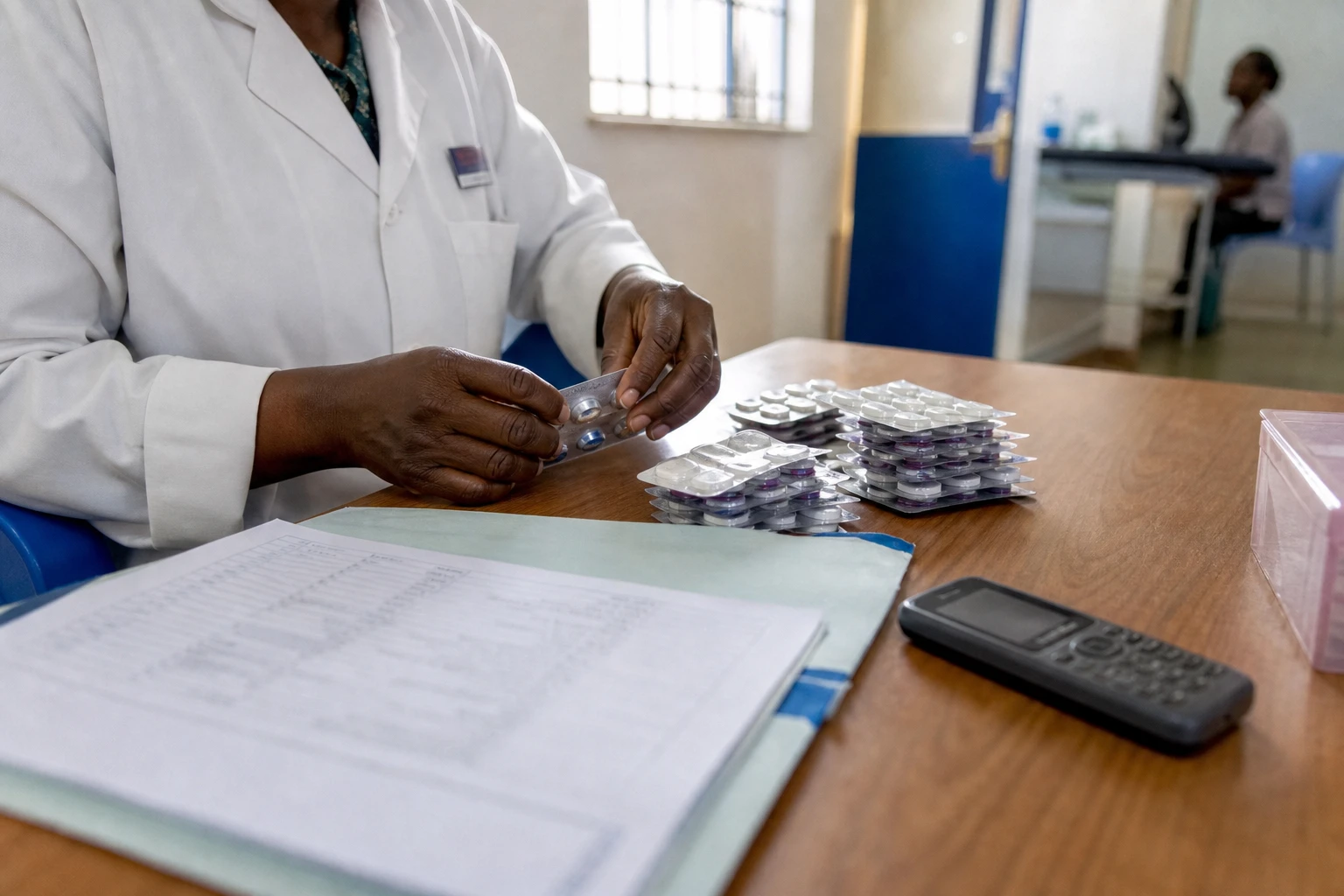
A silent health crisis is unfolding far from the headlines in Nairobi
In the Kenyan capital, the fight against HIV is not confined to laboratory figures or official speeches. It is also waged in low-income neighbourhoods, in community clinics and through the ability of those most at risk to obtain continuous treatment without fear. When this network breaks down, the first to bear the impact are women who already face stigma, followed by their families and, more broadly, the entire health system.
Kenya remains one of the East African countries that has made the most progress in its response to HIV, with about 1.36 million people receiving antiretroviral treatment at the end of 2024 and national prevalence estimated at around 3.0% to 3.3%, according to the latest publicly available data. But this progress still rests on a fragile balance, particularly in poor urban areas and counties with a high HIV burden, where community services remain vital for testing, prevention and adherence to medication.
Community clinics shut, patients disappear from care
Since US aid was frozen and then redirected in early 2025, several Kenyan facilities serving “key populations” have scaled back or halted their activities. In March 2025, UNAIDS described disruptions to prevention, testing and the distribution of condoms and PrEP, as well as supply-chain difficulties for HIV-related products. Kenya’s health ministry also acknowledged the need for a continuity plan and a reorganisation of services.
In this context, community organisations that supported sex workers have seen their role collapse. AFP confirmed the deaths of at least 24 HIV-positive sex workers in Kenya who died after their care was interrupted, according to frontline workers and local associations. One of them, Judy, lived in Nairobi. Her case illustrates a wider reality: when neighbourhood clinics close, some patients do not transfer to public hospitals. They simply stop appearing in the records.
The phenomenon is not confined to the capital. In the west of the country, the NGO Kisumu Sex Workers Alliance said that none of the 25 clinics funded by USAID for sex workers had survived. On the coast, the Coast Sex Workers Alliance reported several similar deaths. These figures remain estimates from associations, but they are consistent with UNAIDS warnings about the closure of community centres, declining follow-up and rising infections among those most at risk.
Why the issue goes beyond foreign aid alone
In Kenya, the HIV response has long relied on a close partnership between the state, donors and civil society organisations. This structure helped reduce new infections and widen access to antiretroviral drugs. But it also created a heavy dependence on external funding, particularly for community services aimed at the most vulnerable groups. The government says it wants to integrate HIV services more fully into general healthcare and strengthen a new 2025-2030 roadmap. That is necessary. But the transition must not make community-based care a budgetary adjustment.
The problem is not only financial. It is also social. Sex workers interviewed by health workers and associations fear stigma in public facilities. In a predominantly Christian country, where discrimination against people living with HIV remains a reality, many would rather forgo care than disclose their status. This fear has an immediate health cost: interrupting treatment increases the risk of complications, as well as viral load and, consequently, transmission.
Health authorities themselves acknowledge that reduced external support is putting hard-won gains at risk. Kenya has, however, embarked on a broader transition of its health system, with new bilateral agreements with Washington. In December 2025, Nairobi and the United States signed a health co-operation framework described as the first of its kind between the two countries, and the two sides continued to flesh it out in 2026. This shift towards government-to-government agreements does not automatically address challenges on the ground: it may secure funding flows, but it cannot replace neighbourhood teams or the trust patiently built in the slums of Nairobi, Kisumu or Mombasa.
A test for East Africa and the wider African HIV response
Kenya’s experience resonates across East Africa. In the East African Community, several countries face the same equation: reducing dependence on donors without dismantling prevention services that reach the hardest-to-reach groups. UNAIDS estimates that US cuts have already led to the closure or reduction of many community programmes in the region. This is not a dispute between donors. It is a risk of reversing progress in a fight where gains depend precisely on continuity.
The signal from Nairobi is therefore political as well as health-related. It shows that the sustainability of African health systems can no longer rely on a single source, especially for frontline services that protect women, young people, drug users, LGBTQ people and sex workers. It also shows that the promise of universal coverage must include prevention, not just treatment. Otherwise, centres empty, diagnoses come too late and infections spread again into the general population. In a country that aims to eliminate Aids as a public health threat by 2030, the real challenge is not to proclaim health sovereignty. It is to fund it, neighbourhood by neighbourhood, before invisible deaths become a national statistic.