
 Algeria
 Egypt
 Libya
 Morocco
 Sudan
 Tunisia
 Benin
 Burkina Faso
 Cabo Verde
 Côte d'Ivoire
 Ghana
 Guinea
 Guinea-Bissau
 Liberia
 Mali
 Mauritania
 Niger
 Senegal
 Sierra Leone
 The Gambia
 Togo
 Cameroon
 Central African Republic
 Chad
 DR Congo
 Equatorial Guinea
 Gabon
 Republic of the Congo
 São Tomé and Príncipe
 Burundi
 Comoros
 Djibouti
 Eritrea
 Ethiopia
 Kenya
 Madagascar
 Malawi
 Mauritius
 Mozambique
 Rwanda
 Seychelles
 Somalia
 South Sudan
 Tanzania
 Uganda
 Angola
 Botswana
 Eswatini
 Lesotho
 Namibia
 South Africa
 Zambia
 Zimbabwe
A local tragedy, but a national warning
In Minna, in Niger State, the deaths of dozens of people detained on suspicion of illegal mining go beyond a local incident. They expose a broader reality: in Nigeria, artisanal mining revenues fuel local economies and criminal networks, while security decisions are often brutal. In a region where gold, lithium and other minerals attract thousands of miners, the line between state control, community protection and respect for rights is becoming fragile.
Niger State occupies a particular place in this landscape. Located in central Nigeria, it is among the areas where artisanal mining has expanded without sufficient oversight. Local authorities have said for several months that they want to regulate the sector more effectively, drawing on «responsible» mining mechanisms — that is, authorised and registered extraction subject to better monitoring. On the ground, however, pressure from informal mining sites remains strong, particularly in rural areas where mining supplements agricultural incomes that have become insufficient.
What is known about the deaths
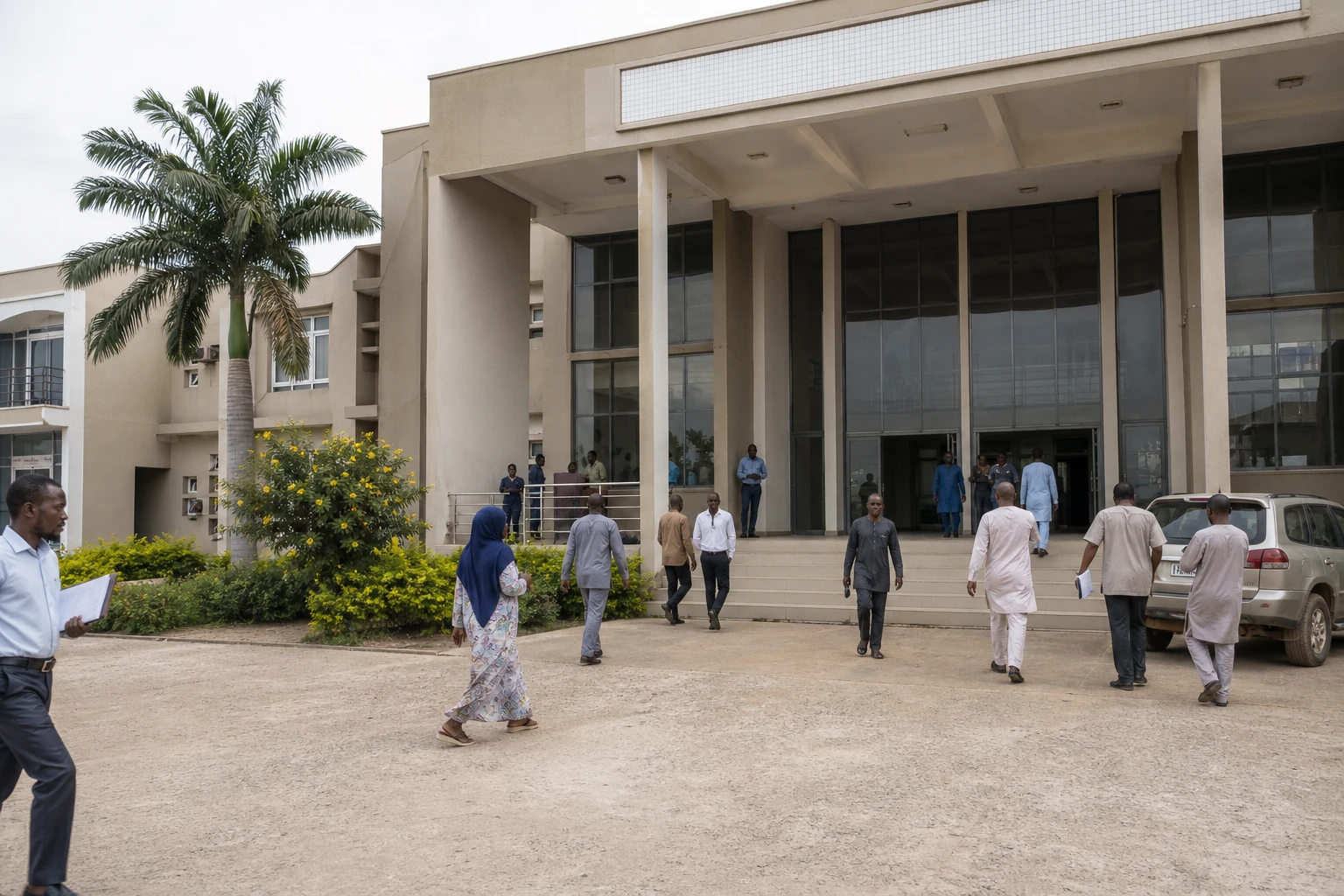
On Thursday 17 September 2026, Niger State Governor Mohammed Umaru Bago announced an investigation into the deaths of 37 detainees suspected of being illegal miners. The victims were in the custody of the Nigeria Security and Civil Defence Corps, the NSCDC, a body tasked, among other things, with protecting infrastructure and combating illegal mining. The NSCDC confirmed the deaths and said the bodies had been taken to Minna General Hospital for examinations to establish the exact cause.
According to initial information reported by the authorities and corroborated by several media outlets, the detainees had been arrested during operations on 15 and 16 September targeting suspected illegal mining sites. Niger State Police also announced an investigation. The official account points to a possible illness. But one survivor said the detainees had been crammed into an overcrowded, poorly ventilated cell, leaving open the possibility of asphyxiation or a serious failure in detention conditions. At this stage, the precise death toll and causes remain matters for the investigating authorities to establish.
The governor declared three days of mourning, a sign of an unusual political shock over a case involving people in detention. As the police and the NSCDC increasingly work together on illegal extraction, the case is also becoming a test of the security services’ credibility. The NSCDC says on its website that its mission includes protecting sensitive national assets and combating illegal mining. But that mission takes on a different dimension when suspects die in its custody.
What the mining crisis in the country’s centre reveals
The heart of the problem is not only security-related. It is economic. Niger State is home to sought-after minerals, including gold and lithium. Yet African artisanal gold often escapes formal channels. SWISSAID estimates that between 321 and 474 tonnes of artisanal gold are produced in Africa each year without being declared, with most of these flows passing through a handful of trading hubs, including the United Arab Emirates. This does not mean that every informal miner belongs to a criminal network. It does, however, show that a parallel economy thrives where controls are weak and supply chains opaque.
Nigeria has already tried to formalise some of this activity. The federal PAGMI programme, launched to organise artisanal gold mining, was intended in particular to connect miners to the legal market and reduce tax losses. The strategy responds to a simple reality: repression alone is not enough in regions where mines support entire families, sometimes in the absence of solid economic alternatives. When informal sites are shut down without a replacement solution, the problem risks being displaced rather than resolved.
The issue also affects public safety. Several analyses and official documents have already established links between illegal mining, rural insecurity and the financing of armed groups or bandits. In central and north-western Nigeria, informal mining can become a source of illegal taxes, extortion and control over remote communities. Rural populations then pay several times over: through land degradation, fear, and then lost income as violence escalates.
A Nigerian case, but a West African question
The case resonates beyond Nigeria. Across West Africa, the movement of gold, critical minerals and capital linked to informal extraction raises the same question: how can communities be protected without indiscriminately criminalising artisanal workers? ECOWAS, which brings together the countries of the sub-region, regularly sees these issues raised in debates on security, trafficking and resource governance. The Minna case is a reminder that credible mining policy must combine justice, oversight, public health and traceability.
For Abuja and the Niger State authorities, the case will be judged on three points: the transparency of the investigation, the accountability of the officers responsible for the detainees, and concrete measures to prevent a recurrence. If medical causes are confirmed, it will be necessary to explain why people were held in such dangerous conditions. If asphyxiation or overcrowding is established, the problem will extend beyond the mining case alone. It will affect the entire chain of detention, policing and internal security in a Nigeria where resource management remains one of the major governance challenges.



