Algeria
 Egypt
 Libya
 Morocco
 Sudan
 Tunisia
 Benin
 Burkina Faso
 Cabo Verde
 Côte d'Ivoire
 Ghana
 Guinea
 Guinea-Bissau
 Liberia
 Mali
 Mauritania
 Niger
 Nigeria
 Senegal
 Sierra Leone
 The Gambia
 Togo
 Cameroon
 Central African Republic
 Chad
 DR Congo
 Equatorial Guinea
 Gabon
 Republic of the Congo
 São Tomé and Príncipe
 Burundi
 Comoros
 Djibouti
 Eritrea
 Kenya
 Madagascar
 Malawi
 Mauritius
 Mozambique
 Rwanda
 Seychelles
 Somalia
 South Sudan
 Tanzania
 Uganda
 Angola
 Botswana
 Eswatini
 Lesotho
 Namibia
 South Africa
 Zambia
 Zimbabwe
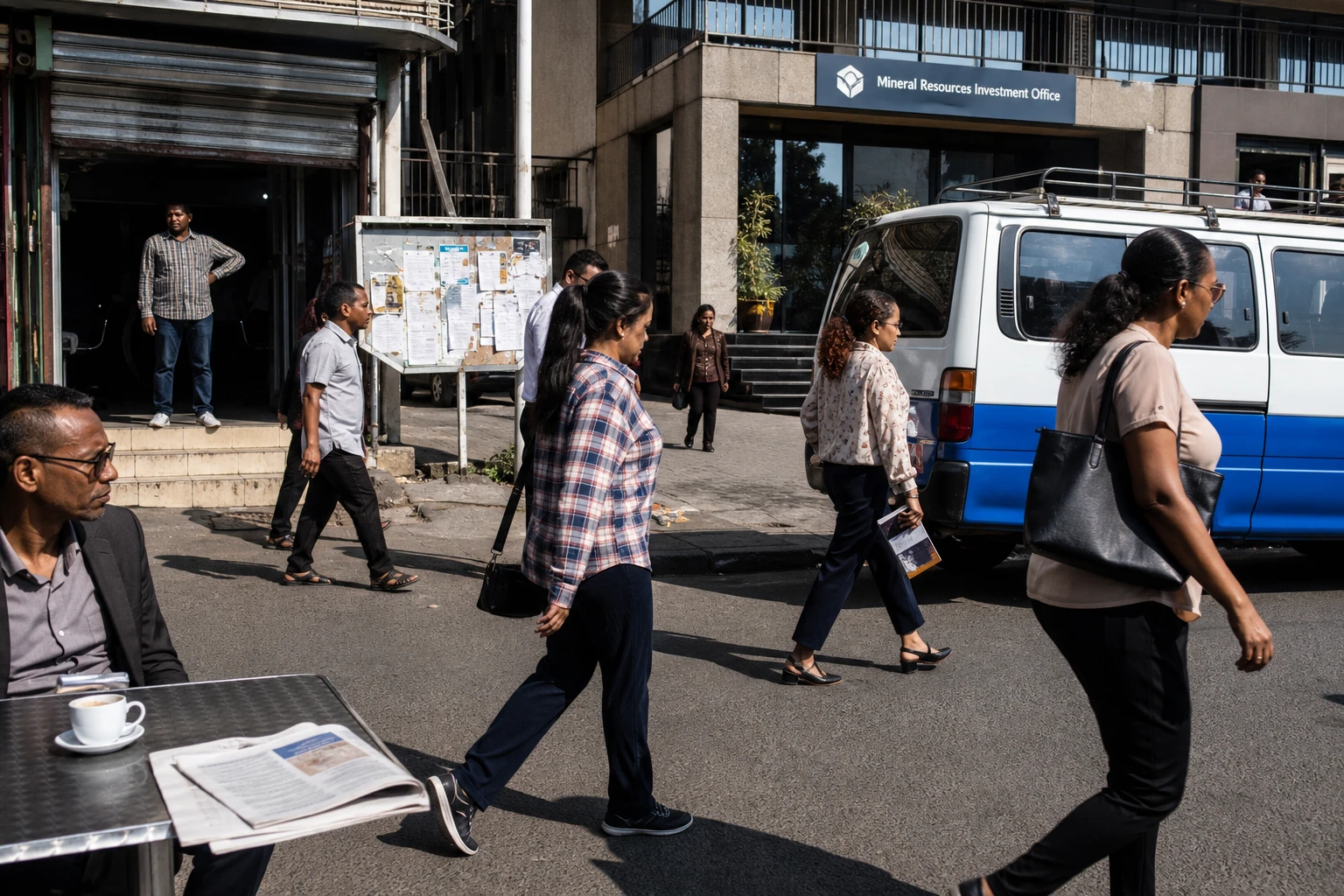
In Oromia, gold attracts capital but also exposes fault lines
In Ethiopia, gold is no longer just an export asset. It has become a test of economic sovereignty, local security and the sharing of benefits. In Oromia, where many mining projects are concentrated, every site now raises a simple question: who decides, who protects and who benefits?
This question weighs heavily on Addis Ababa. The Ethiopian government wants to turn its mineral resources into a source of foreign currency as the country seeks to shore up its foreign-exchange reserves and attract investors to a sector still marked by insecurity and a gap between industrial output and local communities’ expectations. The Ministry of Mines is highlighting a framework of licences, data and investment promotion to structure this expansion.
Threats targeting mining companies
On 4 September 2026, the Tulu Kapi gold project in western Oromia was hit by a serious security incident. KEFI Gold and Copper subsequently said the attack had caused several deaths, including that of a company employee, and that it was suspending development at the site until a safe environment could be guaranteed. The company said it was working with the Ethiopian authorities, regional officials and community representatives to establish the conditions for resuming work.
At the same time, the Oromo Liberation Army, or OLA, warned companies operating in the extractive sector that they should agree to in-depth discussions with local communities and ensure that residents benefited directly. The group described Tulu Kapi as a warning to companies that failed to meet these demands. The OLA’s statements were reported by several media outlets and carried in an AFP dispatch picked up by African media.
The Ethiopian government classifies the OLA as a terrorist organisation. ACLED, for its part, describes Oromia as an area where an Oromo nationalist insurgency is active, amid persistent armed violence and multiple tensions across the country. This context explains why a mining site, despite being conceived as a development project, can become a symbolic target.
A strategic sector for Addis Ababa, but exposed to local risks
The stakes extend well beyond a single project. In early July 2026, Ethiopian authorities said the country had earned $5.5 billion from gold exports in the previous financial year. A few weeks later, the Ministry of Mines announced that the mining sector had generated more than $5.7 billion in foreign-currency earnings, with gold remaining by far the largest contributor. These figures show the country’s growing dependence on this sector.
This performance is helping drive Addis Ababa’s economic liberalisation strategy. But it also reveals a vulnerability: when a production area is contested, the shock quickly spreads to investors, public revenues and the country’s image. Tulu Kapi, presented as a future flagship industrial site, was meant to demonstrate Ethiopia’s ability to attract long-term capital. Its suspension instead sends a note of caution to foreign and domestic operators.
The problem is also social. In mining areas, communities expect jobs, roads, water, compensation for land and a visible share of revenues. When these expectations are not met, mines become contested infrastructure. The OLA is capitalising on this discontent by presenting itself as an actor demanding local participation. But its chosen method, based on armed threats, fuels fear and primarily puts civilians living around the sites at risk.
The Ethiopia-based researcher cited in the press is right about one essential point: this type of attack is not an isolated incident. It is part of a deteriorating security environment in Oromia, where the state is trying both to secure transport routes and contain armed groups while preserving economic activity. For companies, this means higher costs, delays, tighter security arrangements and, at times, the outright suspension of work.
What this episode says about Ethiopia and the region
The implications extend beyond Addis Ababa. Ethiopia is a central player in the Horn of Africa and is closely watched by African and international investors. When a major mining project falters in Oromia, the credibility of the business security framework as a whole is called into question. This also matters for the East African Community, of which Ethiopia is now a member, as value chains, capital flows and logistics corridors are increasingly planned on a regional scale.
The Tulu Kapi case also highlights a recurring tension in East Africa: how to turn mineral wealth into visible local development without leaving production areas outside the social contract. In Ethiopia, this question touches on economic reform, the genuine decentralisation of benefits and the state’s ability to enforce stable rules. The next step to watch is simple: whether work at Tulu Kapi resumes after an assessment of security conditions. That is where the country’s room for manoeuvre between mining promises and realities on the ground will be measured in practical terms.