Algeria
 Egypt
 Libya
 Morocco
 Sudan
 Tunisia
 Benin
 Burkina Faso
 Cabo Verde
 Côte d'Ivoire
 Ghana
 Guinea
 Guinea-Bissau
 Liberia
 Mali
 Mauritania
 Niger
 Nigeria
 Senegal
 Sierra Leone
 The Gambia
 Togo
 Cameroon
 Central African Republic
 Chad
 DR Congo
 Equatorial Guinea
 Gabon
 Republic of the Congo
 São Tomé and Príncipe
 Burundi
 Comoros
 Djibouti
 Eritrea
 Ethiopia
 Madagascar
 Malawi
 Mauritius
 Mozambique
 Rwanda
 Seychelles
 Somalia
 South Sudan
 Tanzania
 Uganda
 Angola
 Botswana
 Eswatini
 Lesotho
 Namibia
 South Africa
 Zambia
 Zimbabwe
An opposition searching for a new face
In Nairobi, political competition is no longer playing out only at party meetings. It is also being measured in the streets, on campuses and on social media, where a younger generation is demanding jobs, more reliable public services and a clear response to the cost of living. Against this backdrop, Edwin Sifuna has established himself as one of the most visible voices in Kenya’s opposition. The Nairobi senator speaks more bluntly than many traditional political figures, drawing full rooms well beyond his constituency.
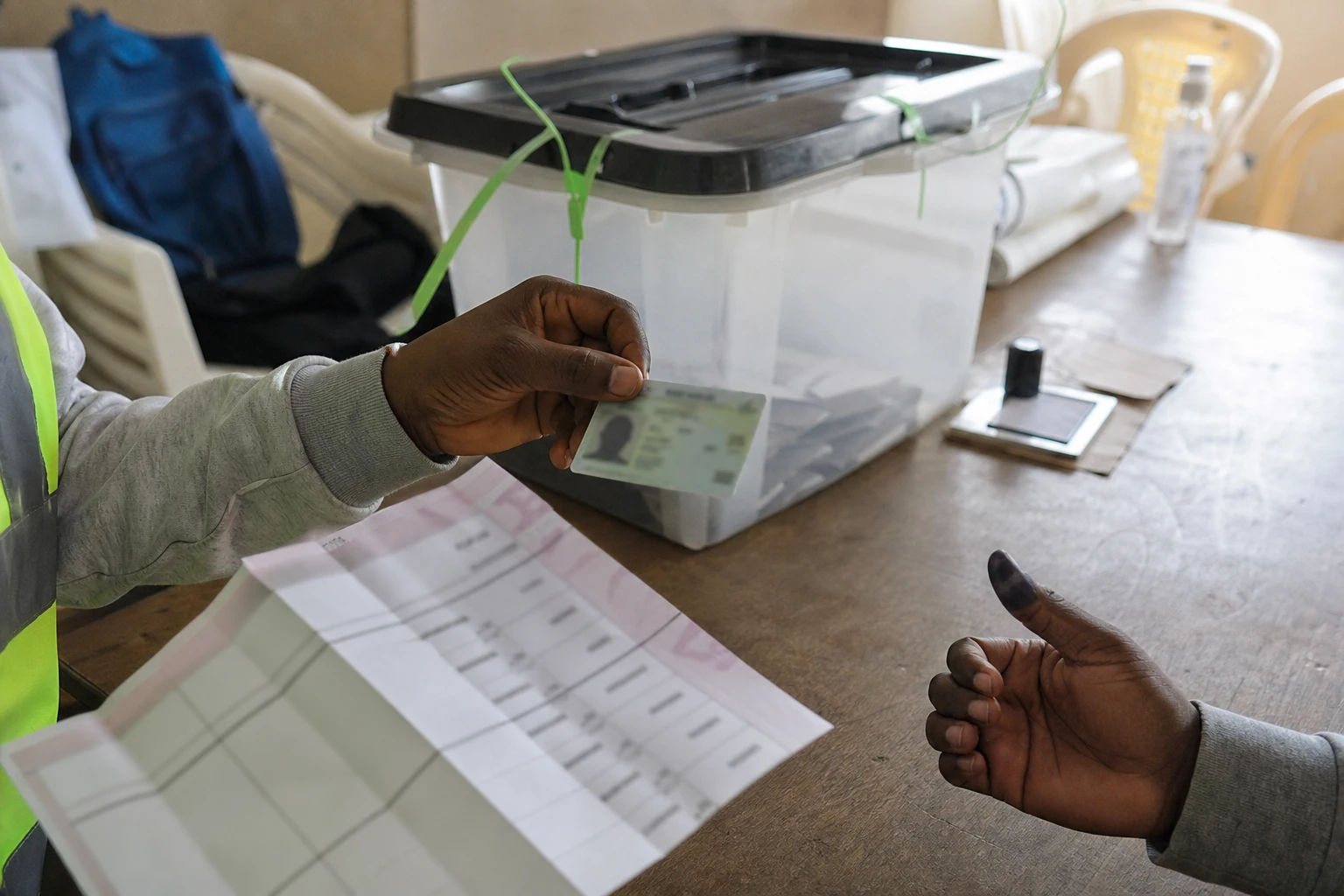
This shift in the political centre of gravity comes as Kenya is already looking towards the presidential election on 10 August 2027, a date included in the electoral commission’s preparations. It is also part of a broader reshaping of the opposition, accelerated by the death of Raila Odinga in October 2025, which left a considerable political and symbolic void.
Raila Odinga’s absence reshuffles the deck
For years, Kenyan politics revolved around major figures capable of bringing together broad coalitions, often at the cost of complex internal compromises. Raila Odinga occupied that singular position. His death opened a period of uncertainty, but also an opportunity for younger or more outspoken figures able to tap into the social anger sparked by the protests of 2024 and 2025. The human toll of these mobilisations was heavy, according to several news reports, and the protests left a lasting mark on relations between the executive and some of the urban youth.
Kenya remains East Africa’s largest economy, but growth and institutional stability have not been enough to ease social tensions. Complaints about the tax burden, corruption and the rising cost of living have fuelled distrust of William Ruto’s government. In this context, the opposition can no longer rely on its old instincts. It must offer a political platform that speaks to a young, sizeable and often precariously employed population. World Bank data also show that the country is undergoing a demographic transition in which young people have a significant stake in employment, education and political expectations.
Sifuna taps into anger, but his camp remains unstable
Edwin Sifuna has recognised this opening. The senator, long known as the ODM’s secretary-general, has moved closer to some of the young people who took part in the major anti-government protests. Supporters portray him as a leader able to defend the poorest, reduce the tax burden and put the cost of living back at the centre of the debate. His strengths lie in his direct style, strong media presence and base in Nairobi, the country’s political and economic capital.
But his rise remains incomplete. In 2026, his role in the ODM was weakened by internal tensions, to the point that his position as secretary-general was contested within the party. A Political Parties Disputes Tribunal was subsequently petitioned and upheld the disciplinary process that led to his removal, illustrating the depth of the battle over succession in the post-Raila era. This contest is about more than positions. It also concerns the opposition’s ideological direction, between a cautious coalition and a more combative line.
Sifuna has not yet formally declared his candidacy for the presidency. He is proceeding cautiously, speaking more about a manifesto, competence and merit than about an electoral timetable. This restraint has a logic. In Kenyan politics, announcing national ambitions too early can expose a candidate both to party rivalries and personal attacks. But it also leaves doubts about his ability to turn rally popularity into a strong electoral machine.
What Kenya’s youth are really changing
The real issue goes beyond Sifuna. Kenya’s “Gen Z” has shown it can set the agenda, force the withdrawal of a bill and oblige parties to discuss the practical economy rather than mere communal balances. This is a significant break in a country where alliances have long been built around ethno-regional dynamics. If this generation turns its presence in the streets into lasting organisation, it can influence nominations, platforms and candidate selection. Otherwise, its energy risks being absorbed by existing political machines.
For William Ruto, the challenge is clear. He must defend his economic record, contain social unrest and prevent the opposition from regrouping around a new face. For Sifuna, the challenge is the reverse: turning urban name recognition into a national coalition. He needs to speak to young people in cities, but also to voters in rural regions, middle-class people bearing the tax burden, and communities waiting for more reliable public services. That is where presidential credibility will be tested, far more than at a single enthusiastic rally.
Regionally, Kenya remains a political laboratory for East Africa and the East African Community. A more generational, urban opposition focused on purchasing power could inspire other countries where young people want influence without waiting for the old political bargains. There are therefore two developments to watch: the ODM’s internal stabilisation and the rise of alliances ahead of the 10 August 2027 election. This is where it will become clear whether the anger on Kenya’s streets does, or does not, become a lasting electoral force.