Algeria
 Egypt
 Libya
 Morocco
 Tunisia
 Benin
 Burkina Faso
 Cabo Verde
 Côte d'Ivoire
 Ghana
 Guinea
 Guinea-Bissau
 Liberia
 Mali
 Mauritania
 Niger
 Nigeria
 Senegal
 Sierra Leone
 The Gambia
 Togo
 Cameroon
 Central African Republic
 Chad
 DR Congo
 Equatorial Guinea
 Gabon
 Republic of the Congo
 São Tomé and Príncipe
 Burundi
 Comoros
 Djibouti
 Eritrea
 Ethiopia
 Kenya
 Madagascar
 Malawi
 Mauritius
 Mozambique
 Rwanda
 Seychelles
 Somalia
 South Sudan
 Tanzania
 Uganda
 Angola
 Botswana
 Eswatini
 Lesotho
 Namibia
 South Africa
 Zambia
 Zimbabwe
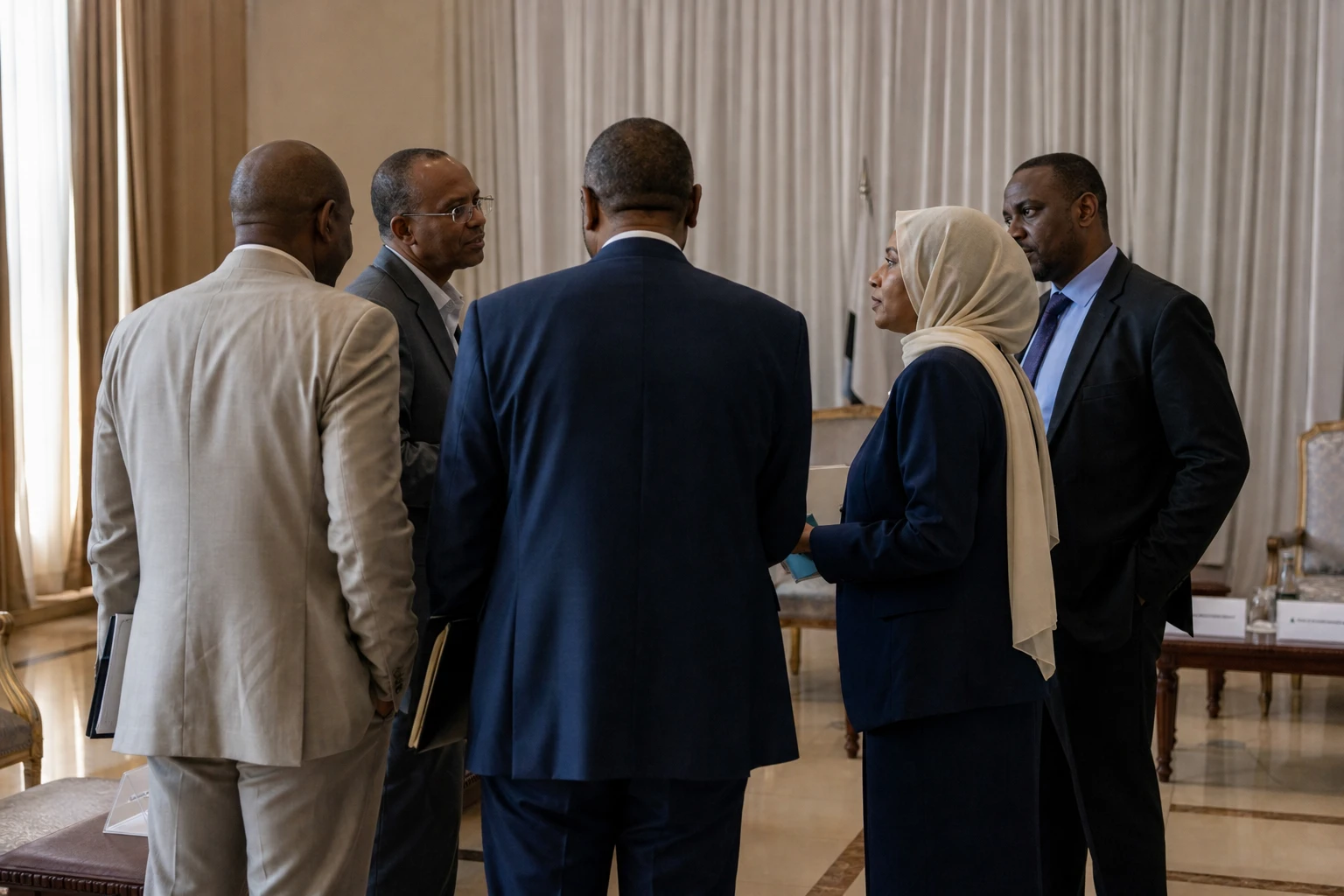
Khartoum, a strategic target in a war grinding on
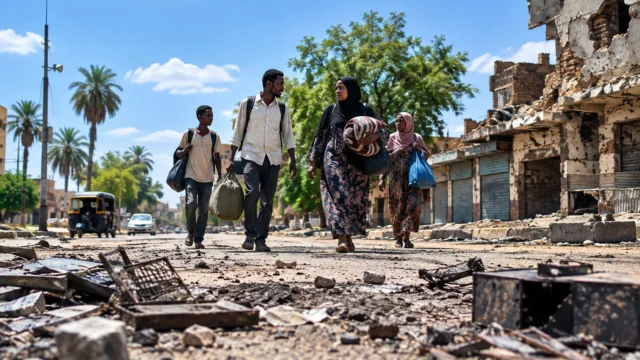
In Khartoum, the war is no longer fought only with artillery. It is also moving into the skies, with drones capable of striking quickly, at long range and without warning. For residents of the Sudanese capital, as well as Omdurman and Bahri, this means one simple thing: even areas supposedly held by the army remain exposed to sudden and unpredictable attacks.
Sudan has entered its third year of war since April 2023, in a conflict between the Sudanese Armed Forces and the Rapid Support Forces, a powerful paramilitary group. The army has controlled Khartoum since March 2025, but its return to the capital has not ended the strikes. On the contrary, the Khartoum region has once again become a sensitive front because it is home to the country’s institutions, electricity infrastructure and most symbolically important military bases.
Three days of escalation and a capital under pressure
On 10 September, the Sudanese Armed Forces said they had intercepted three drones targeting government buildings in Khartoum. Other aircraft attempted to reach the Wadi Sayidna military base in Omdurman, one of the main military positions in the capital area. According to the same reports, a drone that fell on a house in Karari, near Omdurman, killed four people and injured several others. These details are attributed to the army, which says it neutralised most of the aircraft before impact.
This sequence followed an escalation already under way on 8 and 9 September in North Kordofan. In Um Rawaba, a drone strike attributed to the Rapid Support Forces hit the city’s judicial complex. Local sources and medical groups reported at least 13 deaths and around 20 people injured, while witnesses described a crowded venue filled with civilians carrying out administrative and judicial procedures. On 9 September, the University of Science in El-Obeid was destroyed in another attack, and the institution’s guard was killed.
At the same time, the army has also used drones. Strikes targeted Rapid Support Forces positions and weapons depots in Nyala, the capital of South Darfur. Two civilians were killed there, according to available reports. This tit-for-tat strategy is now central to Sudan’s war: both sides use drones to bypass front lines and strike military targets, but also to put pressure on cities, public services and the morale of their adversary.
What drones reveal: a war extending beyond the battlefield
The growing use of drones is changing the nature of the conflict. It lowers the political cost of strikes, extends their reach and makes cities harder to defend. In Khartoum, an airbase, an electricity substation or a government building can be targeted without direct ground combat. In practice, this undermines the restoration of essential services, slows reconstruction and keeps constant pressure on populations already displaced.
The humanitarian figures show the scale of the shock. The UN had already said in 2025 that nearly 12 million people had been displaced by the war, within Sudan and across its borders. In 2026, the United Nations still describes Sudan as the world’s largest displacement crisis, with nearly nine million internally displaced people and ever-growing humanitarian needs. The country faces localised famine, a strained health system and infrastructure regularly hit by fighting.
The death toll from drone strikes is also high. In June 2026, the UN High Commissioner for Human Rights said that more than 1,000 civilians had been killed in drone strikes during the first five months of the year. A few weeks later, the United Nations fact-finding mission said external support, arms deliveries and supply networks had accelerated this air war, to the point where some attacks could amount to war crimes. This assessment is not coming only from outside the country: Sudanese civil society groups are also calling for the arms embargo to be extended to the whole country, rather than applying only to Darfur.
For the population, the impact is immediate. Civilians pay the price in neighbourhoods, markets, courts, universities and public services. For the warring parties, the stakes are military and political. Controlling Khartoum means controlling the symbolic centre of the state. Holding Nyala or El-Obeid means retaining regional footholds, supply routes and centres of influence. In a vast country, the war is thus fragmenting into several theatres, from the Nile to Darfur, with different consequences in each region.
The regional dimension is just as important. Sudan’s conflict is spilling over into Chad, South Sudan, Egypt, Ethiopia and the Red Sea, and is affecting the balance of power in the Horn of Africa. The African Union, IGAD and several international mediation efforts continue to seek a way out of the crisis, but military logic remains dominant. In the short term, attention will need to focus on the parties’ ability to hold the front lines around Khartoum, the course of fighting in Kordofan and diplomatic pressure surrounding UN investigations and the arms embargo.