Algeria
 Egypt
 Libya
 Morocco
 Sudan
 Tunisia
 Benin
 Burkina Faso
 Cabo Verde
 Côte d'Ivoire
 Ghana
 Guinea
 Guinea-Bissau
 Liberia
 Mali
 Mauritania
 Niger
 Nigeria
 Senegal
 Sierra Leone
 The Gambia
 Togo
 Cameroon
 Central African Republic
 Chad
 DR Congo
 Gabon
 Republic of the Congo
 São Tomé and Príncipe
 Burundi
 Comoros
 Djibouti
 Eritrea
 Ethiopia
 Kenya
 Madagascar
 Malawi
 Mauritius
 Mozambique
 Rwanda
 Seychelles
 Somalia
 South Sudan
 Tanzania
 Uganda
 Angola
 Botswana
 Eswatini
 Lesotho
 Namibia
 South Africa
 Zambia
 Zimbabwe
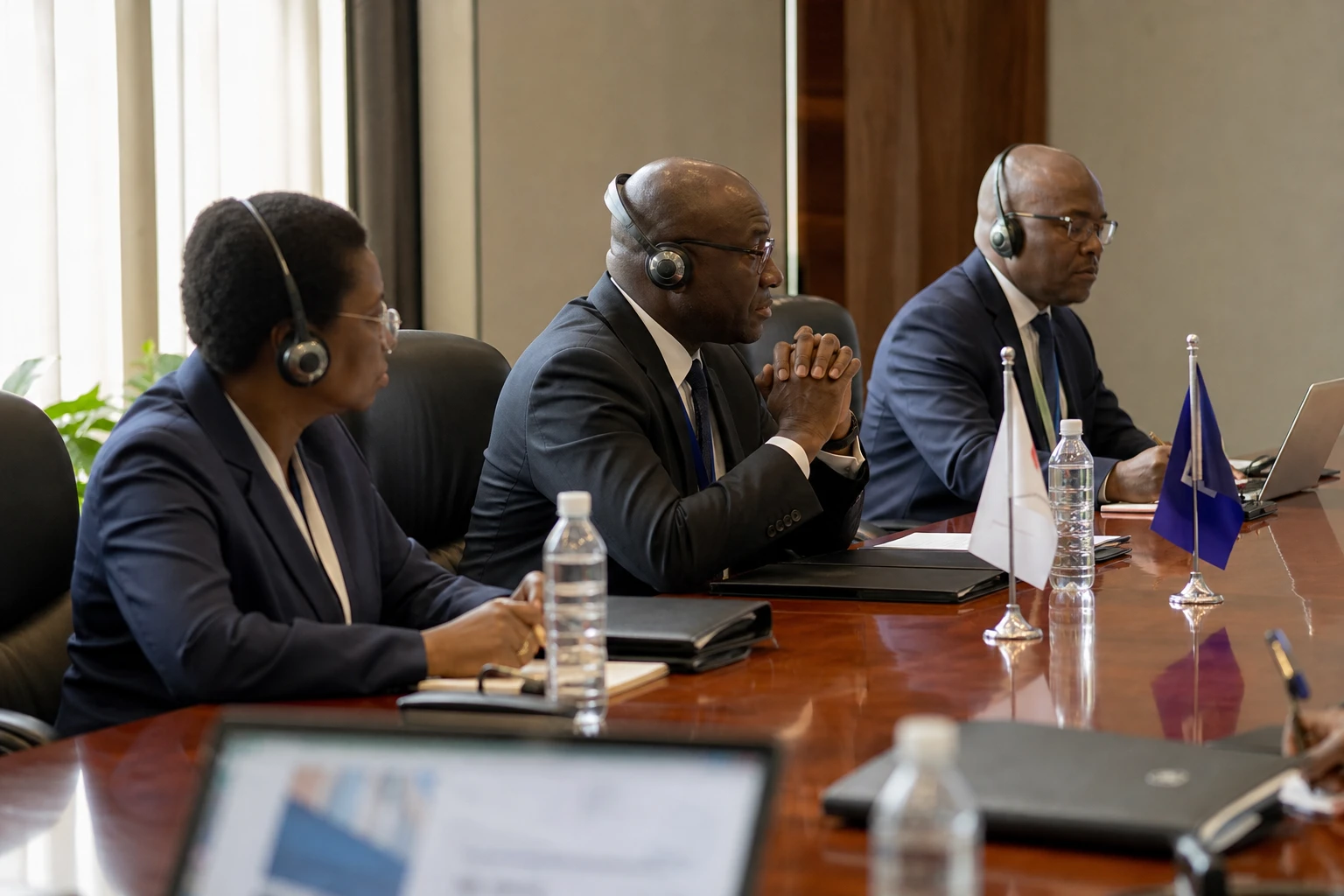
In Malabo, connectivity is no longer just a question of coverage. It is also a matter of regulatory sovereignty, taxation and market control. In Equatorial Guinea, Starlink’s arrival is forcing the state to decide who sells, who collects the money and who oversees the service.
In a country where demand for fast connections often outstrips the capacity of terrestrial networks, the challenge is not simply to open the door to a new operator. It is to bring a global satellite service into a clear national framework, with rules on licences, financial flows and technical obligations. That is precisely the course Malabo, Equatorial Guinea’s political and administrative capital, has chosen.
This development is part of a broader regional context. Equatorial Guinea belongs to CEMAC, the Economic and Monetary Community of Central Africa, where common rules already govern electronic communications, tariffs, consumer protection and universal service. In other words, the debate over Starlink is not playing out solely at national level. It also concerns Central Africa’s digital architecture.
What the Equatorial Guinean government seeks to control
Meeting in Malabo on Tuesday 8 September 2026, the Equatorial Guinean executive decided that Starlink’s commercialisation would fall under the Office for the Regulation of Telecommunications, ORTEL, supervised by the Secretary of State for Artificial Intelligence. The stated aim is to retain control over sales of the service, financial flows and the conditions under which the company operates in the country.
ORTEL is not a minor player. The body has its own legal personality and acts as the technical supervisory authority for the telecommunications sector in Equatorial Guinea. The government therefore intends to use the body already responsible for regulating the market, rather than allow the satellite operator to bypass conventional administrative channels.
According to negotiations that have been under way for several months, discussions have covered very practical issues: licence costs, taxation, technical requirements, security and the possible creation of a local entity, Starlink Guinea Ecuatorial. This is significant. In many African countries, authorisation for a service such as Starlink depends on more than the technology. It also depends on the company’s legal establishment, its local accountability and its contribution to the national market.
The government has yet to spell out the final licence conditions, the applicable tax regime or the precise arrangements for commercialisation. But its position is clear: the service will not be allowed to operate outside the regulatory framework. It will have to go through a supervised channel, including for commercial and financial matters.
A debate already playing out elsewhere in Africa
Equatorial Guinea’s case is not unique. Starlink is expanding across the continent, but at very different rates from one country to another. A pattern is emerging: where authorities have clarified the rules, the service is moving forward. Where requirements for local participation, approval or oversight are deemed not to have been adequately met, authorisations are stalling.
In Côte d’Ivoire, authorisation was granted in July 2026, with public statements highlighting access to high-speed internet across the country, particularly in rural and remote areas. In Namibia, by contrast, the regulator rejected the licence application, citing, among other things, the absence of local participation in the subsidiary that filed it. Two different paths, but a common thread: states want to prevent a global satellite service from escaping their domestic rules.
Starlink itself is expanding rapidly. In its 2026 financial documents, SpaceX says the service had around 10.3 million subscribers in 164 countries, territories and other markets as at 31 March 2026. Across Africa, however, the coverage announced by the company remains subject to national authorisations, explaining the variety of situations from one country to another.
For African authorities, the issue goes beyond the arrival of a new operator. It raises a fundamental question: how can a cross-border satellite provider be integrated into a telecoms market already structured by licences, taxes, local-presence requirements and security rules? This is as much a question of public authority as of technology.
What this means for users, operators and the state
For Equatorial Guinean households and small businesses, the stakes are clear: more ways to access the internet, especially in areas where fibre is scarce or expensive. In March 2026, the Equatorial Guinean Ministry had already presented Starlink as a potential tool in the national digital transformation plan, with particular attention to rural and hard-to-reach areas.
For established operators, the prospect is more challenging. A satellite service can expand the market, but it can also disrupt existing commercial balances. This is why the state is keen to preserve equal rules for all on licensing, taxation and operating conditions. In Central Africa, this vigilance is part of a regulatory culture already shaped by CEMAC, which has harmonised several aspects of electronic communications and universal service.
For public finances, financial flows matter as much as network coverage. By regulating commercialisation through ORTEL, the government wants to ensure that the value generated by the service does not flow outside national systems of taxation and oversight. In a country where public revenues still depend heavily on concentrated sectors, this is no secondary concern. It touches on the state’s ability to capture a share of the new digital economy.
The reference to the Secretary of State for Artificial Intelligence also points to a broader political choice. Malabo is not presenting Starlink as a simple imported product. The government links it to a digital modernisation strategy combining connectivity, regulation and data sovereignty. This framing matters because it places the decision within public policy rather than an opening without safeguards.
A development to watch across pan-African markets
At continental level, the Equatorial Guinean case illustrates a broader reality: the growth of satellite constellations is forcing African states to revise their regulatory tools. Regional organisations such as CEMAC have laid common foundations. But implementation remains national, and therefore varies. The next challenge lies there: making innovation, fair competition and protection of the public interest coexist.
For Equatorial Guinea, the immediate question is therefore not whether Starlink can enter, but in what form. Direct sales or through a local partner, a single licence or a specific framework, standard taxation or an adapted regime, technical supervision by ORTEL and political arbitration by the government: everything remains to be clarified. Malabo’s decision opens up a broader task: integrating global satellite services into African digital economies.