Algeria
 Egypt
 Libya
 Morocco
 Sudan
 Tunisia
 Benin
 Burkina Faso
 Cabo Verde
 Côte d'Ivoire
 Ghana
 Guinea
 Guinea-Bissau
 Liberia
 Mali
 Mauritania
 Niger
 Nigeria
 Senegal
 Sierra Leone
 The Gambia
 Togo
 Cameroon
 Central African Republic
 Chad
 DR Congo
 Equatorial Guinea
 Gabon
 Republic of the Congo
 São Tomé and Príncipe
 Burundi
 Comoros
 Djibouti
 Eritrea
 Ethiopia
 Kenya
 Madagascar
 Malawi
 Mauritius
 Mozambique
 Rwanda
 Seychelles
 Somalia
 South Sudan
 Tanzania
 Uganda
 Angola
 Botswana
 Eswatini
 Lesotho
 Namibia
 South Africa
 Zambia
 Zimbabwe
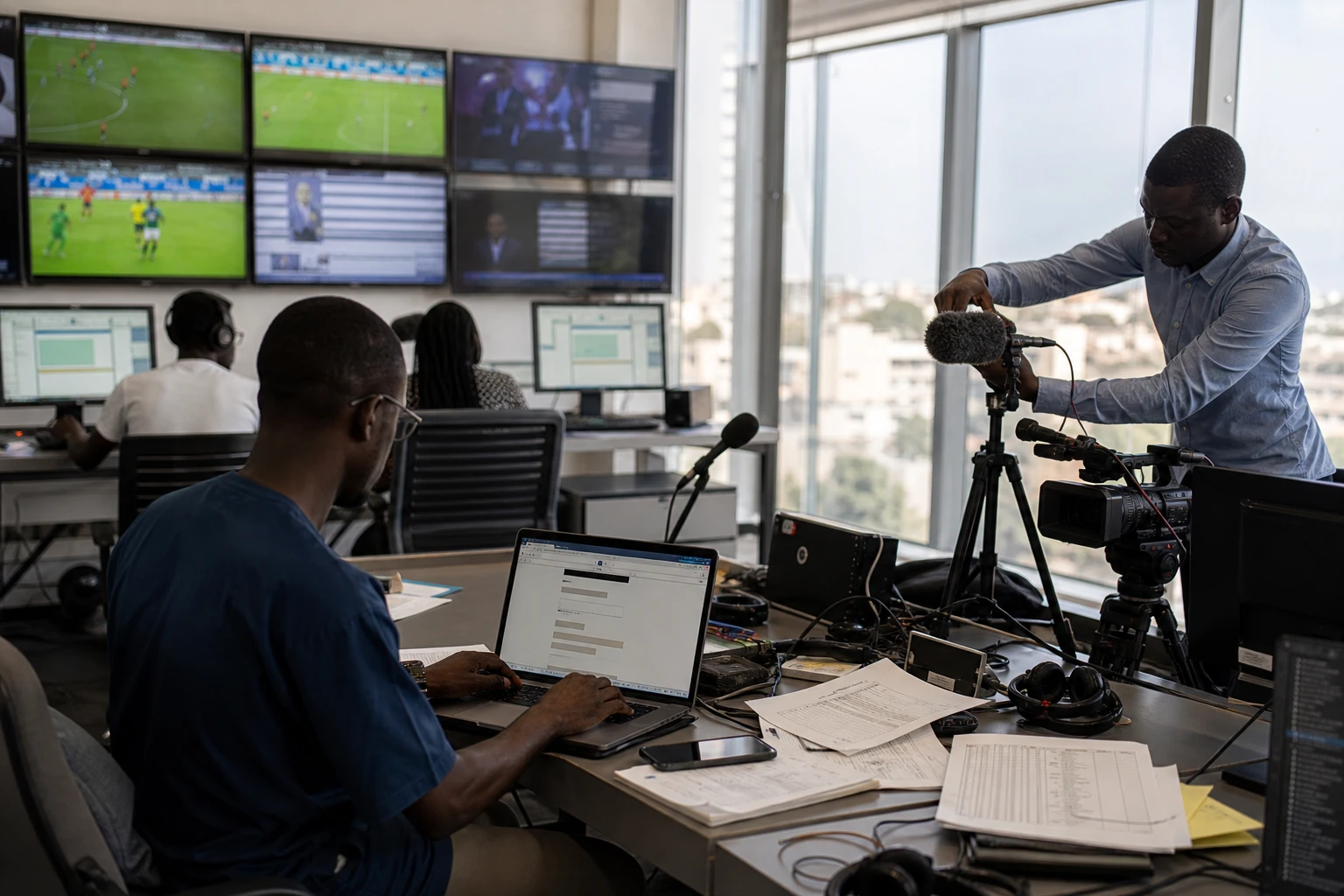
A global showcase, but also a test of representation
Each year, the Ballon d’Or says more than the name of a winner. It also measures who matters, who carries weight and who tells the story of world football. In the 2026 edition, Africa is not absent. Yet the continent remains sparsely represented in the main lists, even as several African players have delivered strong campaigns for their clubs and national teams.
The ceremony is scheduled for 26 October in London, the first time in the trophy’s history that it will be held outside France. The 2026 Ballon d’Or comes at the end of a 2025-2026 season already marked by the dominance of a handful of European football powerhouses, led by Paris.
The Paris-Morocco-Senegal axis in the men’s Ballon d’Or
In the men’s category, the African continent is represented by two names on the main list: Morocco’s Achraf Hakimi and Senegal’s Sadio Mané. The former is among the 30 nominees, and his case is bolstered by his recent titles with Paris Saint-Germain as well as his status as a leading figure for the Atlas Lions. CAF also named him African Player of the Year 2025 in Rabat, confirming his place at the summit of continental football.
Hakimi also embodies a wider reality: that of an African player who has become central to a leading European club, without being defined solely by his origins. Paris Saint-Germain, for its part, has nine players in the running for the men’s Ballon d’Or. That collective weight says something about the season’s balance of power: when a team dominates the major trophies, it also floods the individual shortlists.
Sadio Mané completes Africa’s representation in the men’s category. The Senegalese forward, now at Saudi Arabian club Al-Nassr, remains a leading figure. His nomination is a reminder that individual honours are determined not only by the league a player competes in, but also by the continuity of their standing, their international impact and the jurors’ memory.
Two African forwards in a fiercely contested women’s list
In the women’s category, Africa is represented by Barbra Banda and Temwa Chawinga. The Zambian plays for Orlando Pride in the NWSL, while the Malawian wears the colours of Kansas City Current. Both forwards appear on the official 2026 women’s Ballon d’Or shortlist.
Their presence carries particular significance. Banda embodies the rise of African players in major leagues outside the continent. Chawinga, meanwhile, shows how an individual career can shine beyond the club, while also representing a less high-profile national team. Their nominations are therefore more than a mere symbol. They reflect a sporting position earned, match by match and season by season.
At the same time, Aitana Bonmatí’s absence opens up the women’s race. The holder, who won the previous three editions according to the official record, does not appear on the 2026 list published by Ballon d’Or. The field is therefore more open, with Alexia Putellas, Ewa Pajor and Melchie Dumornay among the names highlighted by several official shortlists and rankings.
Goalkeepers and young players: Africa is present, but spread thinly
The continent also features in specialist categories. For the men’s Yashin Trophy, awarded to the best goalkeeper, Morocco’s Yassine Bounou, Senegal’s Édouard Mendy and Cape Verde’s Vozinha are among the nominees highlighted. Here, too, the picture is clear: Africa has players represented in several top-level niches, but is not heavily represented among the headline names.
The men’s Kopa Trophy, which recognises the best player under the age of 21, also includes African representatives: Côte d’Ivoire’s Yan Diomandé and Algeria’s Ibrahim Maza. Their nominations matter because they speak to the future as much as the present. They show that African talent is on the radar in Europe, even if the path to the most high-profile trophies remains narrow.
What this list says about African football
The Ballon d’Or is not a perfect barometer. It rewards performances, but also career trajectories, trophies, narratives and media visibility, which is highly uneven. That is precisely why Africa’s presence deserves to be viewed with nuance. A name’s significance is not determined solely by its place on a list. It also reflects the level reached, the context in which the player has competed and the impact they have had on their season.
For Morocco, Hakimi’s nomination extends a strong run. The country has established itself over several years as a force in continental football, through the profile of its clubs, the progress of its men’s national team and the growing visibility of its internationals in major leagues. For Senegal, Mané’s presence is a reminder that a generation can remain at the top level even after changing leagues.
For Zambia and Malawi, Banda and Chawinga’s nominations carry a different significance. They bring rare visibility to two countries that already have a presence in African women’s football, but have fewer media resources than the continent’s major sporting powers. This kind of international recognition also fuels local national teams, training centres and the ambitions of a new generation.
The next chapter will unfold in London on 26 October. Until then, the lists will continue to fuel debate about Africa’s real place in the major narratives of world football. The picture is already clear: the continent is very much present, but remains on the fringes of the largest concentrations of nominees, especially in the most high-profile categories.