Algeria
 Egypt
 Libya
 Morocco
 Sudan
 Tunisia
 Benin
 Burkina Faso
 Cabo Verde
 Côte d'Ivoire
 Ghana
 Guinea
 Guinea-Bissau
 Liberia
 Mali
 Mauritania
 Niger
 Nigeria
 Senegal
 Sierra Leone
 The Gambia
 Togo
 Cameroon
 Central African Republic
 Chad
 DR Congo
 Equatorial Guinea
 Gabon
 Republic of the Congo
 São Tomé and Príncipe
 Burundi
 Comoros
 Djibouti
 Eritrea
 Ethiopia
 Kenya
 Madagascar
 Malawi
 Mauritius
 Mozambique
 Rwanda
 Seychelles
 South Sudan
 Tanzania
 Uganda
 Angola
 Botswana
 Eswatini
 Lesotho
 Namibia
 South Africa
 Zambia
 Zimbabwe

A continental market, but first a national step
For a trader in Mogadishu, the issue is not a diplomatic slogan. It is the chance to sell further afield, under clearer rules, in a region where borders still weigh heavily on prices, delays and margins. Somalia, a country oriented towards the Indian Ocean and Gulf trade, is thus entering the continent’s trade architecture more clearly.
On 4 September 2026, in Addis Ababa, the Somali government deposited its instrument of ratification of the Agreement Establishing the African Continental Free Trade Area, or AfCFTA. The African Union confirmed that same day that the ratification brought Somalia closer to the continental market and Africa’s economic integration agenda. The AfCFTA Secretariat, for its part, described Somalia as the 50th State Party to the agreement.
What ratification changes for Mogadishu
The distinction between signing, ratifying and depositing the instrument of ratification matters. Signing marks political support. Ratification conveys domestic consent, following constitutional procedures. Depositing the instrument with the African Union Commission, the agreement’s depositary, gives effect to that consent at continental level. It is at this stage that Somalia becomes a State Party, with the corresponding rights and obligations.
This clarification is important for Somali businesses. Under the AfCFTA texts, preferential access alone is not enough. Rules of origin, customs procedures, certificates and administrations capable of keeping pace are also needed. The AfCFTA Secretariat says the aim is to facilitate intra-African trade, structure regional value chains and open up a continental market of about 1.4 billion people, described as the world’s largest free trade agreement by number of participating countries.
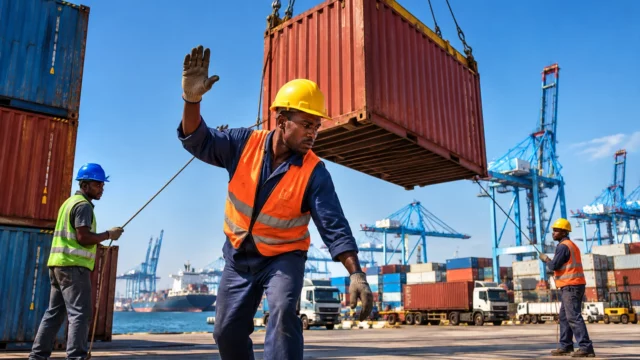
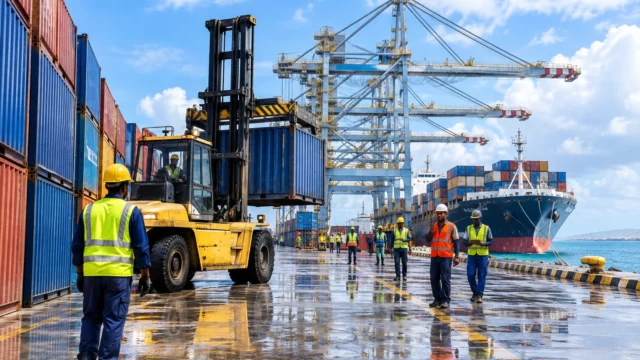
In Mogadishu, the issue is not limited to major exporters. It also affects small and medium-sized enterprises, port operators, freight forwarders, road hauliers and the informal trade that sustains a large part of Somalia’s cities. If rules become more predictable, agricultural products, fisheries, processed livestock, digital services and some logistics activities could move more easily to East Africa and beyond. If procedures remain cumbersome, the AfCFTA’s theoretical advantage will remain limited. Somali authorities have also advanced this view, speaking of trade, investment and economic integration.
Somalia between East Africa, IGAD and the East African Community
The significance of this decision extends beyond the trade agreement itself. Somalia is part of East Africa and operates in a dense regional landscape, shaped by IGAD, the intergovernmental organisation bringing together the Horn of Africa among others, and by the East African Community, whose institutional integration Mogadishu has officially begun. Its parliament ratified the treaty of accession to the East African Community in February 2024, a step that Somali state media then described as the end of the accession process.
In this context, the AfCFTA is not arriving as an isolated mechanism. It overlays frameworks already in motion. To the north and south of the Horn, corridors, ports, border posts and technical standards are becoming central issues. Somalia is seeking to join these flows while consolidating its trade and customs institutions. The federal administration is already working on domestic instruments, including draft rules of origin cited by Somali state media in September 2026.
The timeline also shows that this economic opening accompanies Somalia’s more visible return to continental forums. In February 2026, the country joined the African Peer Review Mechanism (APRM), the African Union’s governance tool. In July 2026, the African Union again highlighted the link between stabilisation, security and Somali responsibility. In other words, trade integration is advancing alongside political and security efforts.
An economic signal, but also a political one
Somalia’s ratification sends a clear signal to African and external partners. It says Mogadishu wants to play a greater role in continental trade, rather than simply depend on imports from outside the continent. It also says the country intends to use African frameworks to regularise trade, attract investment and diversify its markets. The African Union has also stressed Somalia’s historic trading potential and its long-standing commercial traditions.
But the real impact will depend on implementation. Somali ports, inland roads, the security of trade routes and administrative capacity will determine the pace of change. The benefits will not be the same for everyone. Large exporting companies will gain from the new frameworks more quickly. Small businesses, meanwhile, will chiefly need information, affordable financing and manageable formalities. The most remote areas will remain at risk of being overlooked if integration focuses only on ports and the capital, Mogadishu.
At the African level, Somalia’s ratification also matters because it strengthens the credibility of a project often presented as continental but whose implementation remains uneven. The agreement now covers a large share of the continent’s economies, but the issue is no longer just the number of signatures. The challenge is to make the market genuinely usable, particularly for countries in the Horn, where cross-border trade is already intense but remains too dependent on logistics costs and political tensions.
The next steps will therefore lie in secondary texts, tariff schedules, rules of origin and implementation capacity. For Somalia, joining the AfCFTA does not close a file: it opens several more. It leaves the country facing a simple and decisive question: how to turn ratification into real trade, and then into jobs, revenue and the smoother movement of goods and services across the Horn of Africa and the continent as a whole.