Algeria
 Egypt
 Libya
 Morocco
 Sudan
 Tunisia
 Benin
 Burkina Faso
 Cabo Verde
 Côte d'Ivoire
 Ghana
 Guinea
 Guinea-Bissau
 Liberia
 Mali
 Mauritania
 Niger
 Senegal
 Sierra Leone
 The Gambia
 Togo
 Cameroon
 Central African Republic
 Chad
 DR Congo
 Equatorial Guinea
 Gabon
 Republic of the Congo
 São Tomé and Príncipe
 Burundi
 Comoros
 Djibouti
 Eritrea
 Ethiopia
 Kenya
 Madagascar
 Malawi
 Mauritius
 Mozambique
 Rwanda
 Seychelles
 Somalia
 South Sudan
 Tanzania
 Uganda
 Angola
 Botswana
 Eswatini
 Lesotho
 Namibia
 South Africa
 Zambia
 Zimbabwe
When a refinery becomes a test for Lagos
In Nigeria, some announcements say more than a financial transaction. They tell the story of a country still seeking to convert its oil wealth into lasting industrial capital. The next step for the Dangote refinery falls into this category: it could open a new funding channel for very large infrastructure projects, while showing whether the Nigerian market is ready to absorb an offer of this size.
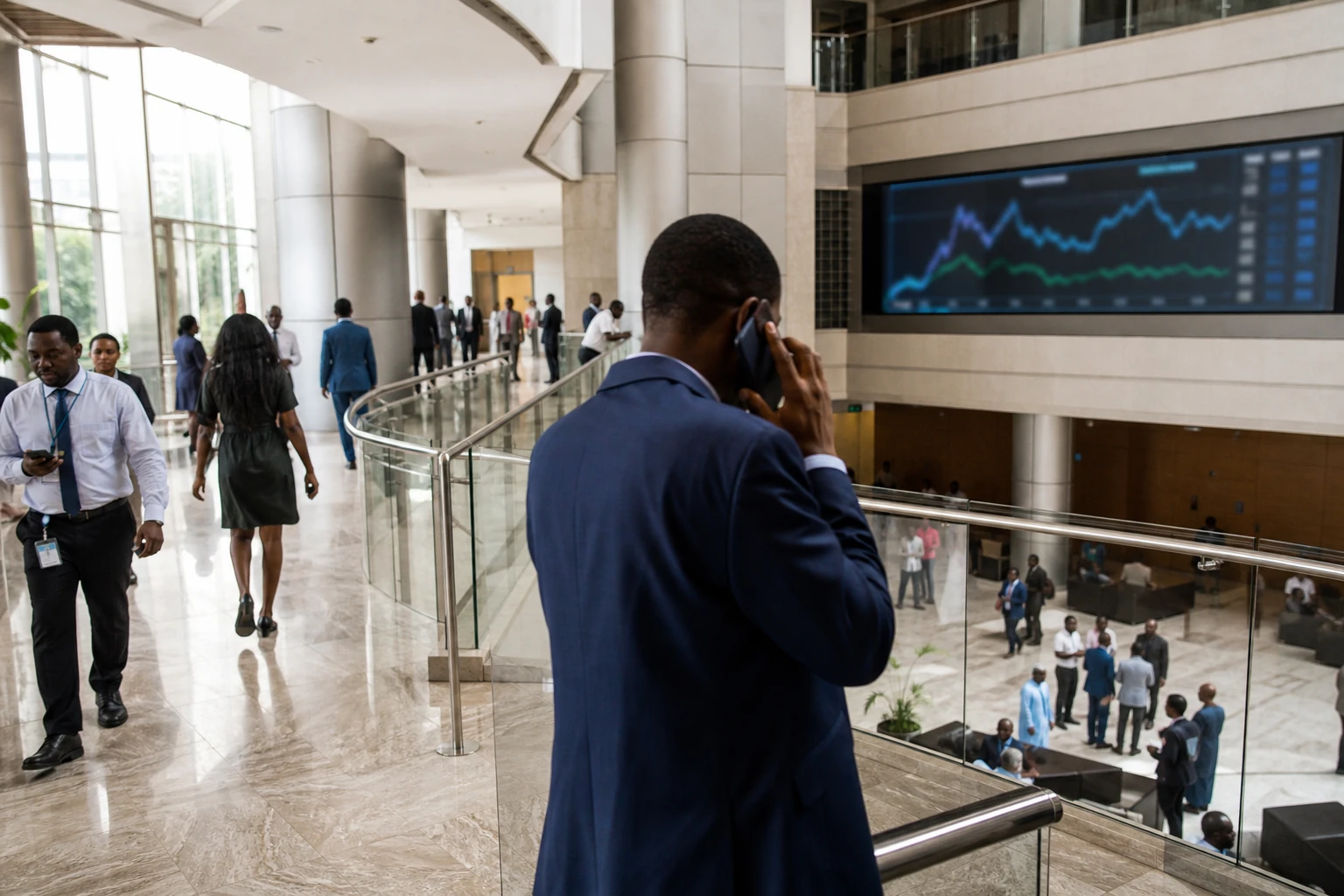
The deal also has regional significance. From Lagos, it speaks to all of West Africa, where stock exchanges are seeking to attract more local savings into industry, energy and major long-term projects. The Nigerian Stock Exchange also had a very strong year in 2026, with its index rising sharply and its market capitalisation growing, fuelling the idea that a major industrial asset can find buyers locally.
What is now on the table
Nigeria’s Securities and Exchange Commission approved the listing of Dangote’s refining and petrochemicals division on 4 September 2026. According to several sources cited by Reuters, the offering comprises 4.1 billion shares priced at around 525 naira each, or about $0.40, for potential proceeds of around $1.5 billion. The order book is due to open on 14 September.
This sequence contrasts with the regulator’s earlier warning. In June 2026, the SEC had cautioned that solicitations were circulating around an offer that had not yet been filed or approved. The contrast sheds light on the process: first market speculation, then regulatory approval. For a transaction of this size, the sequence matters as much as the announcement.
For the Dangote Group, the IPO is part of a timetable that has been in preparation for several months. In August, the company said it had completed a $1 billion guarantee programme ahead of the public offering. It also presented the listing as a way to fund the refinery’s expansion, with capacity ultimately set to reach 1.4 million barrels per day.
An industrial asset, not just a stock-market listing
The Lekki refinery in Lagos State is already a symbol of change. Commissioned in 2024, it started with capacity of 650,000 barrels per day, making it the world’s largest single-train refinery. Its significance extends beyond the Nigerian market. Since disruptions to the fuel trade in the Middle East, it has become a visible supplier of refined products to Africa and some European destinations, particularly jet fuel.
The expansion plan follows a simple logic: produce closer to the markets that consume. Nigeria remains a major crude producer, but for a long time it has depended on imports of refined products. In this context, the IPO is not just about raising funds. It is also intended to finance a more complete value chain, from crude oil to fuels, including petrochemicals and the industrial jobs that come with them.
The amount being sought puts the transaction in a rare category in Africa. Market sources cite potential proceeds of up to $1.5 billion, which would make this one of the largest offerings ever attempted on the continent. This is not just a question of prestige. It is also a test of the depth of private financing for major African industrial assets, in a market where large issues are still too often sovereign or bank-led.
What this means for Nigeria and the region
For Nigeria, the stakes are twofold. On the one hand, the transaction could broaden the investor base around an industrial flagship. On the other, it could serve as a test of confidence in regulation, transparency and the market’s ability to accommodate a major listing linked to a strategic asset. If the offering succeeds, it could encourage other Nigerian or West African companies to raise more finance through the market rather than relying solely on debt.
For households and local investors, the message is also tangible. For once, some Nigerian savings could be channelled into a visible industrial facility, based in Lagos and tied to an activity with which the country is intimately familiar. But success will depend on the final price, the subscription timetable, confidence in the project’s governance and the market’s ability to avoid excessive speculation. Recent events have also served as a reminder that the regulator’s vigilance remains essential.
At continental level, the deal goes beyond Dangote. It raises a fundamental question for the AfCFTA, the African Continental Free Trade Area: how can assets serving African value chains be financed on African markets? The answer does not depend on Nigeria alone. It also concerns the exchanges in Nairobi, Johannesburg, Casablanca, Abidjan and Kigali, all watching the flow of African capital into tangible projects.
The next steps will be closely watched until 14 September, the announced date for the opening of the order book. That is when the market will say whether major African industry can raise the funds it needs for its own expansion at home. In a context where Nigeria is still seeking to consolidate its economic transformation, this listing looks less like a formality than a vote of confidence.