Algeria
 Egypt
 Libya
 Morocco
 Sudan
 Tunisia
 Benin
 Burkina Faso
 Cabo Verde
 Côte d'Ivoire
 Ghana
 Guinea
 Guinea-Bissau
 Liberia
 Mali
 Mauritania
 Niger
 Nigeria
 Senegal
 Sierra Leone
 The Gambia
 Togo
 Cameroon
 Central African Republic
 Chad
 DR Congo
 Equatorial Guinea
 Gabon
 Republic of the Congo
 São Tomé and Príncipe
 Comoros
 Djibouti
 Eritrea
 Ethiopia
 Kenya
 Madagascar
 Malawi
 Mauritius
 Mozambique
 Rwanda
 Seychelles
 Somalia
 South Sudan
 Tanzania
 Uganda
 Angola
 Botswana
 Eswatini
 Lesotho
 Namibia
 South Africa
 Zambia
 Zimbabwe
Announced peace is first put to the test on the ground
In the east of the Democratic Republic of the Congo, agreements signed far from the hills of South Kivu are worth little unless they hold up against the terrain, blocked roads and local mistrust. That is the challenge facing the deployment of the ceasefire verification mechanism around Minembwe, where the first field mission took place on 24 August 2026.
This episode also points to something broader: peace in the Congo is no longer being negotiated along a single track. It runs through Doha, Washington, the International Conference on the Great Lakes Region, the African Union and neighbouring capitals that still have a say in regional security. The Security Council has also asked MONUSCO to support the implementation of a permanent ceasefire, including through the expanded ICGLR verification mechanism.
A regional tour to secure a fragile mechanism
In late August 2026, the head of MONUSCO, James Swan, and the UN Special Envoy for the Great Lakes region, Huang Xia, held a series of discussions with the authorities in Burundi, followed by Rwanda. In Gitega on 26 August, Burundian President Évariste Ndayishimiye received the two UN officials. Talks focused on the security and humanitarian situation in eastern DR Congo, as well as peace efforts in the Great Lakes region.
The UN’s message is clear: without regional co-operation, the monitoring mechanism cannot work. Burundi said it supported initiatives to stabilise eastern Congo and protect civilians. The meeting in Kigali in early September followed the same diplomatic logic, amid calls for regional capitals to facilitate the movement of teams, the security of sites and political acceptance of the mechanism.
The tour comes as mediation efforts move forward in parallel. The Doha framework covers negotiations between Kinshasa and AFC/M23. The Washington process concerns easing tensions between Kinshasa and Kigali. The Security Council is now calling for greater convergence between these formats, to prevent one agreement from undermining another or either side from sheltering behind delays in the other process.
Minembwe, the mechanism’s first practical test
On 24 August 2026, a first verification mission reached Minembwe, in the highlands of South Kivu. Doha presented the step as a first practical move towards fully operationalising the ceasefire monitoring and verification mechanism. Qatar also welcomed logistical support from MONUSCO, as well as contributions from the ICGLR, Switzerland, the United States, the African Union and Togo, the AU mediator.
On paper, the mechanism is advancing. On the ground, it remains vulnerable. MONUSCO’s mandate authorises it to provide political, technical and logistical support, but not to impose peace by force. In other words, the mission can record violations, support verification and help link the various diplomatic frameworks. It cannot replace the parties’ willingness or silence the guns on its own.
That is where the issue becomes tangible for Congolese people. If teams can move around, people in conflict zones gain some visibility and humanitarian alerts can be raised more quickly. If the teams are prevented from moving, local communities are left alone to face fighting, forced displacement and the fragmentation of public authority. Burundi’s foreign ministry has also pointed out that instability is holding back development projects across the region.
What the mechanism changes, and what it does not
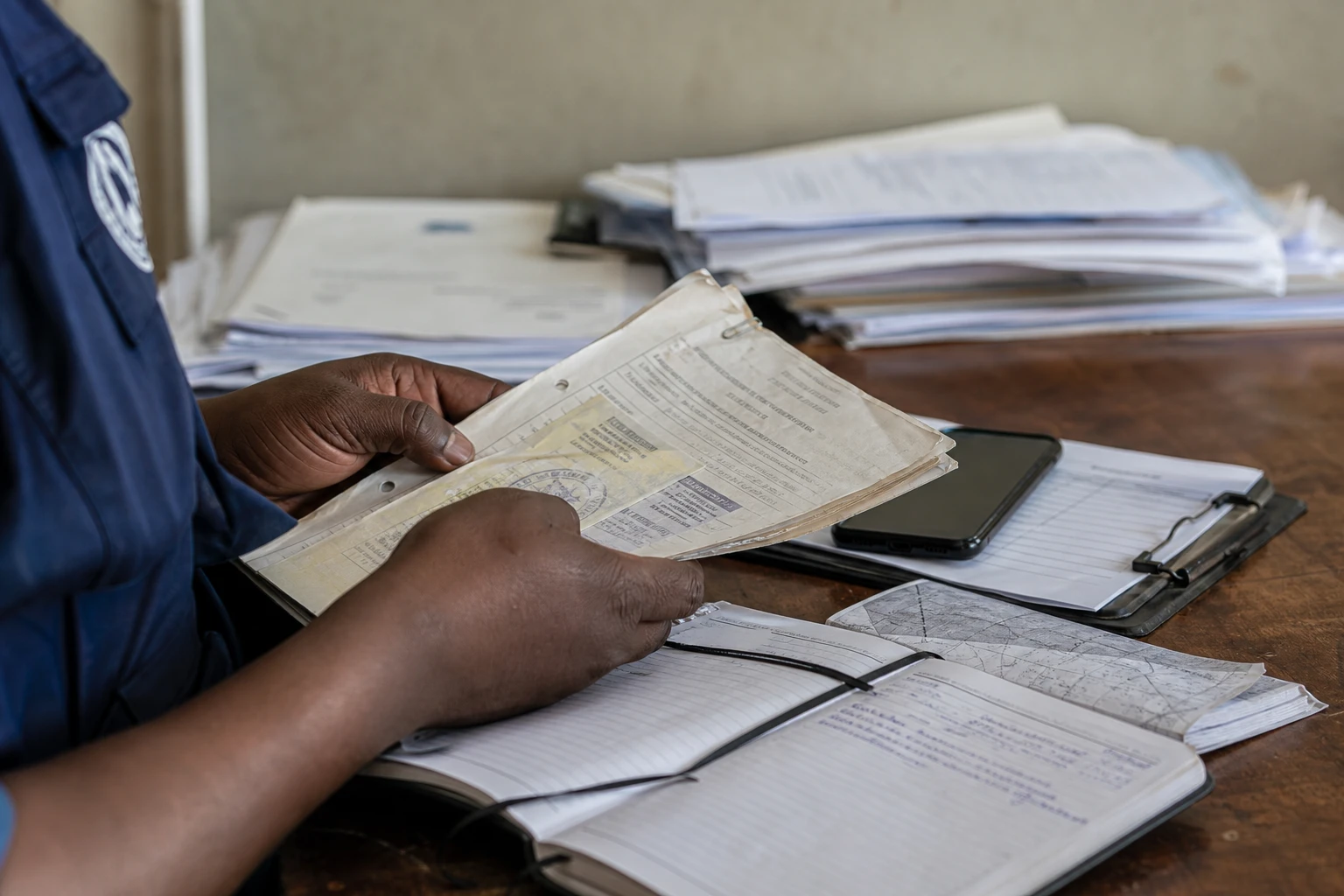
The new mechanism will not end the war on its own. It creates a means of tracking events. Who moved, when, where, with what resources and under what conditions of access: these details matter as much as political statements. In eastern DR Congo, where front lines shift quickly and rumours spread even faster, verification becomes a tool of diplomatic pressure.
The core problem, however, remains the same: a ceasefire is credible only if the parties respect it at the same time. UN reports from 2025 and 2026 note that violence, abuses against civilians and attacks by other armed groups continue to undermine stabilisation. Withdrawal or disengagement can happen only if security genuinely improves on several fronts at once.
The issue of the FDLR, a Rwandan armed group long established in eastern Congo, also remains a sensitive sticking point. The Washington process includes a component on disarmament and the return of combatants, but the issue remains closely tied to reciprocal accusations between Kinshasa and Kigali. Until this part of the process advances, mistrust will continue to weigh on the mechanism as a whole.
Regional significance extends beyond DR Congo
The events in Minembwe show that the Congolese crisis has become a test of co-ordination for Central Africa and the Great Lakes. The ICGLR is taking on an operational role. The African Union is seeking to retain political leadership. And neighbouring countries know that instability in eastern DR Congo quickly spills across borders, into trade corridors and refugee flows, and into bilateral relations.
For Kinshasa, the challenge is twofold. It must restore state authority in the areas concerned. It must also ensure that peace is not seen as an arrangement dictated solely from outside. For the people of Goma, Bukavu, Minembwe and neighbouring territories, the priorities are more straightforward: less violence, reopened roads, safer travel and the return of public services.
The next phase will unfold on two timetables. One belongs to diplomats, with the next meetings in the Doha process and the mechanisms associated with Washington. The other belongs to the ground, where each verification mission will have to prove it can arrive, observe and leave without obstruction. If this chain works, DR Congo will have another tool to stabilise the east. If it breaks down, it will add another layer to a conflict already saturated with unkept promises.