Algeria
 Egypt
 Libya
 Morocco
 Sudan
 Tunisia
 Benin
 Burkina Faso
 Cabo Verde
 Côte d'Ivoire
 Ghana
 Guinea
 Guinea-Bissau
 Liberia
 Mali
 Mauritania
 Niger
 Nigeria
 Senegal
 Sierra Leone
 The Gambia
 Togo
 Cameroon
 Central African Republic
 Chad
 DR Congo
 Equatorial Guinea
 Gabon
 Republic of the Congo
 São Tomé and Príncipe
 Burundi
 Comoros
 Djibouti
 Eritrea
 Ethiopia
 Madagascar
 Malawi
 Mauritius
 Mozambique
 Rwanda
 Seychelles
 Somalia
 South Sudan
 Tanzania
 Uganda
 Angola
 Botswana
 Eswatini
 Lesotho
 Namibia
 South Africa
 Zambia
 Zimbabwe
Rain is expected, but the real test is nationwide preparedness
In Kenya, the question is not simply whether there will be more rain between October and December. The real dividing line lies elsewhere: who will be warned in time, which roads will remain passable, and which neighbourhoods will still have access to water, healthcare and transport when the ground becomes saturated.
Against this backdrop, Nairobi has stepped up preventive measures in response to the risk of El Niño. Kenya is preparing for the so-called “short rains”, a crucial season for agriculture, travel and supplies to major cities and rural areas alike. In the Horn of Africa, this kind of climate pattern is far from marginal. It directly affects harvests, markets and infrastructure.
Regional signals point in the same direction. The IGAD Climate Prediction and Applications Centre, the climate centre of the regional organisation for East Africa and the Horn of Africa, is forecasting wetter-than-normal conditions in parts of the region in 2026, with a marked risk for several areas of Kenya, particularly the centre, west and Lake Victoria basin. The Kenya Meteorological Department, for its part, says its seasonal outlook is specifically intended to guide preparations in exposed sectors, from agriculture to disaster management.
Seven measures to reduce people’s exposure
The Kenyan government has activated a national emergency plan to deal with rains associated with the El Niño phenomenon. According to a statement issued by the relevant ministry on Tuesday 1 September 2026, authorities are anticipating above-average rainfall across much of the country between October and December 2026.
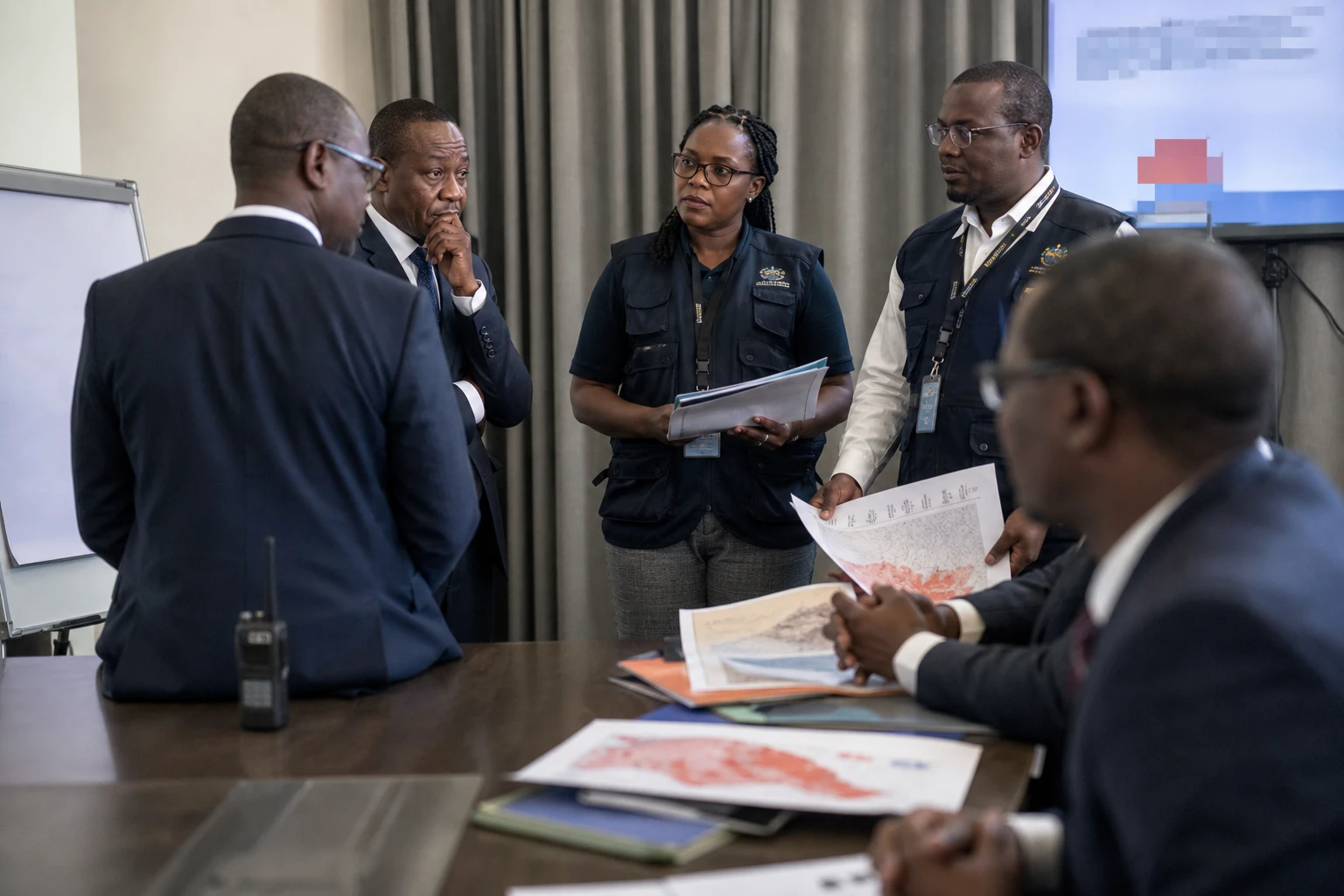
The plan is built around seven pillars. It first provides for mapping at-risk areas to identify communities most exposed to floods, landslides and loss of access. It also includes preparations to evacuate vulnerable populations, strengthening community-level early warning systems and putting rapid-response teams on alert.
This approach to preparedness is not theoretical. Kenyan climate services say seasonal forecasts are intended to guide government agencies, counties, farmers and essential service providers. The Kenya Meteorological Department also publishes seasonal bulletins to inform decisions on water, health, energy, transport and risk management.
Mapping and community alerts are important in a country where exposure to risk varies considerably from one area to another. Dense urban areas such as Nairobi face different vulnerabilities from rural counties, where secondary roads, makeshift bridges and drainage systems are often more fragile. In the west and around Lake Victoria, floods can also cut major economic routes and slow the informal activity on which a large part of the population depends.
Why the stakes go beyond the weather
El Niño does not simply mean heavy rain. It is a phase of the ENSO climate system, which affects Pacific sea-surface temperatures and alters rainfall patterns at a distance. In East Africa, this signal matters because it can intensify the October-to-December rainy season, which accounts for a substantial share of annual rainfall in several parts of Kenya.
The recent precedent remains fresh in people’s minds. In 2023, Kenya experienced a sequence of heavy rains, floods and infrastructure damage across several counties. The national climate report published by the Kenyan meteorological service notes that heavy rainfall at the end of that year had significant effects on valleys, low-lying areas and transport networks.
This time, the difference will lie in the speed of response. The sooner authorities identify flood-prone areas, the more they can protect markets, schools, health centres and logistics corridors. For households, this can mean the difference between a preventive evacuation and the loss of possessions. For farmers, it can also limit damage to planting and harvests, especially in counties where the short rains shape the agricultural calendar.
The plan therefore has a very practical dimension. It protects major national roads, but also the less visible infrastructure that supports the everyday economy: small bridges, rural tracks, local markets, grain stores, water networks and health outposts. In a country where economic life depends heavily on the rapid movement of goods and people, a poorly anticipated period of heavy rain can quickly become a social shock.
A regional test for East Africa
Kenya is not acting in isolation. Like its East African neighbours, it relies on regional bulletins from IGAD and national meteorological services to tailor its response. Climate does not stop at administrative borders. A poor season in western Kenya can affect trade with Uganda and Tanzania, while disruptions in the Horn of Africa affect trade routes, food prices and regional mobility.
This period also highlights the growing role of African forecasting institutions in risk management. ICPAC, based in Kigali, and national meteorological services have become central to seasonal warnings. Their value is highly political: they help states act before water spills over, rather than counting the damage afterwards in villages, cities and economic corridors.
For Kenya, the challenge in the coming weeks will therefore be twofold. On the one hand, authorities will need to check whether forecasts are borne out locally, county by county. On the other, they will need to assess whether the national emergency plan leads to targeted evacuations, safer roads and alerts reaching even the most remote communities. In a region where seasons can reshape the economy in a matter of days, the quality of preparation matters as much as the rain itself.