Algeria
 Egypt
 Libya
 Morocco
 Sudan
 Tunisia
 Benin
 Burkina Faso
 Cabo Verde
 Côte d'Ivoire
 Ghana
 Guinea
 Guinea-Bissau
 Liberia
 Mali
 Mauritania
 Niger
 Nigeria
 Senegal
 Sierra Leone
 The Gambia
 Togo
 Cameroon
 Central African Republic
 Chad
 DR Congo
 Equatorial Guinea
 Gabon
 Republic of the Congo
 São Tomé and Príncipe
 Burundi
 Comoros
 Djibouti
 Eritrea
 Ethiopia
 Kenya
 Madagascar
 Malawi
 Mauritius
 Mozambique
 Rwanda
 Seychelles
 Somalia
 South Sudan
 Tanzania
 Uganda
 Angola
 Botswana
 Eswatini
 Lesotho
 Namibia
 South Africa
 Zimbabwe
Lusaka, the stage for a closely watched political victory
In Lusaka, the scene had all the makings of a test of institutional resilience. On one side, a re-elected president. On the other, an opposition weakened by arrests, treason accusations and an election dispute that remains unresolved. In Zambia, a southern African country often presented as a model of democratic stability, Hakainde Hichilema’s second term is therefore beginning in an atmosphere more tense than triumphant.
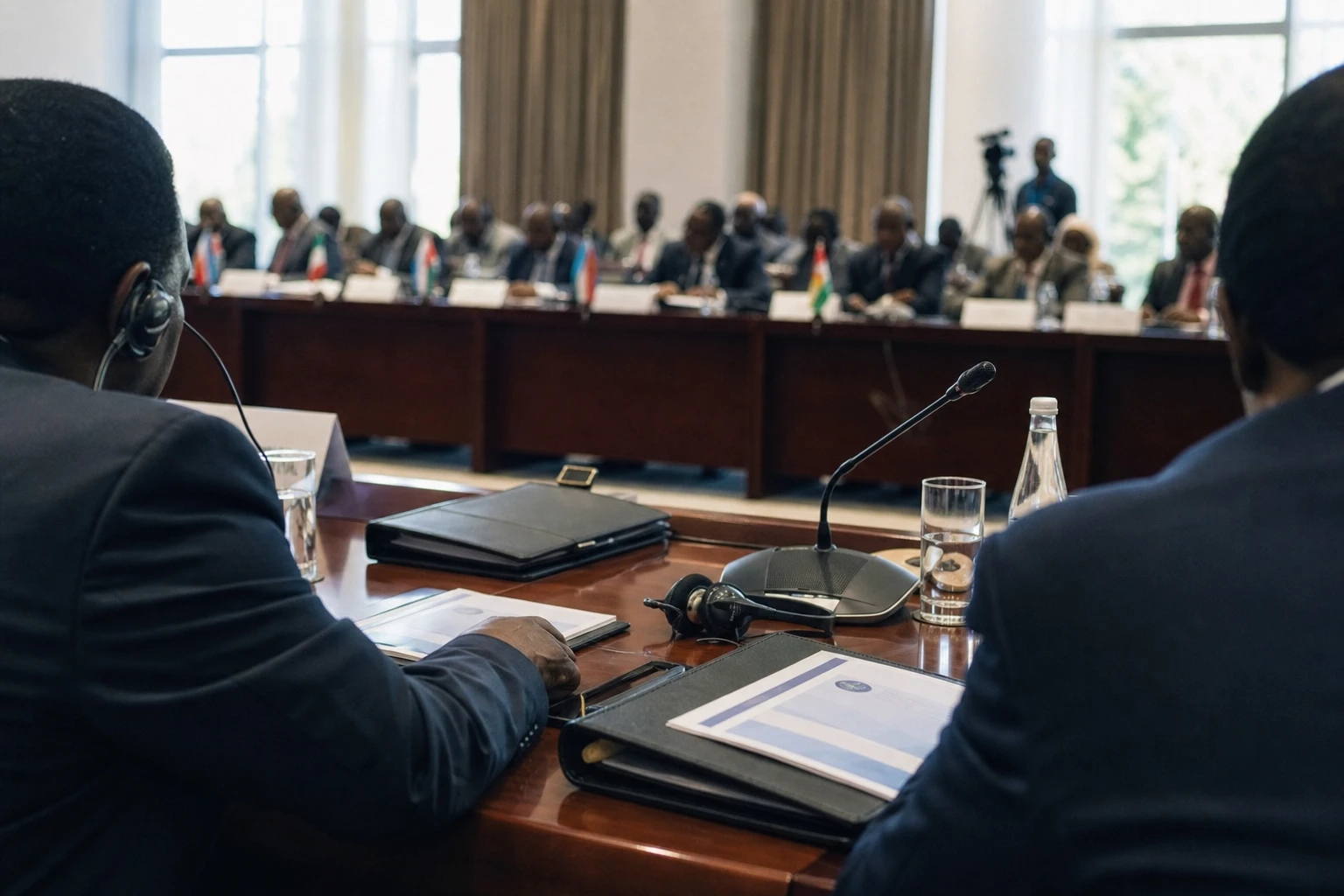
The regional backdrop matters as much as the constitutional ceremony. Zambia is a member of SADC, the Southern African Development Community, which deployed an observation mission for the 13 August 2026 election and called on all sides to exercise restraint during the count. The African Union and COMESA also observed the vote. These arrangements make one thing clear: the country was not the only one under scrutiny, and the handling of the dispute now weighs on the democratic image of the entire sub-region.
Hichilema, 64, was sworn in on 1 September 2026 in Lusaka for a second term, after being declared the winner of the 13 August presidential election. Official results gave him about 60% of the vote, against 38% for Brian Mundubile, his main rival, allowing him to avoid a run-off. The ceremony took place at National Heroes Stadium, before a crowd dressed in the colours of the UPND, his party, and in the presence of a small number of African leaders.
But the vote did not simply deliver a political verdict. It also left behind a series of troubling signs. The count was briefly suspended after violence at polling stations. Opposition officials were arrested during a security operation. Then the main challenger, Brian Mundubile, and his running mate Makebi Zulu eventually turned themselves in to police before being charged with treason, according to their lawyers and reports carried by several media outlets. The authorities, for their part, say they acted in response to a threat to national security.
The institutional context adds another layer of tension. According to APA, the period for filing an appeal expired without an official petition being properly lodged, while the chief justice acknowledged receiving a challenge document via private email, an unusual procedure. At the same time, regional and continental observers called for grievances to be pursued through the prescribed legal channels. In other words, the battle is being fought not only on the streets or on social media: it is also a test of the Zambian judicial system’s ability to absorb the conflict without coming apart.
What Hichilema’s second term means for Zambia and the region
Hichilema’s first term was praised for the economic recovery launched after the debt crisis. The country regained a clearer path with its creditors, while economic activity held up in 2025 despite drought and power cuts, according to the IMF and the World Bank. But the room for manoeuvre remains narrow. Copper accounts for a large share of Zambia’s economy, making up more than 70% of exports, and the slightest political shock can unsettle investment, public revenue and employment.
For Zambians, the stakes are very tangible. In cities, particularly Lusaka and the Copperbelt, expectations centre on the cost of living, electricity and jobs linked to the mining sector. In rural areas, the questions are even more immediate: access to agricultural inputs, food prices, the flow of income and the quality of public services. The government’s economic message promises continuity. The vote, however, shows that a significant share of the electorate wants more tangible results, and wants them faster.
The political message is just as clear. The opposition says the campaign and the aftermath of the vote were marked by intimidation and restrictions. The government, by contrast, invokes national security. Between these two accounts, the issue is not just Mundubile himself. It is the space allowed for political dissent in a democracy that considers itself mature. If criminal proceedings take precedence over ordinary judicial arbitration, the risk is that an electoral dispute will turn into a lasting crisis of confidence.
Across the continent, Zambia is sending a broader signal. SADC has stressed the importance of peaceful elections and the legal handling of grievances. Through its observation mission, the African Union has recalled the shared framework of the ACDEG, the African Charter on Democracy, Elections and Governance. In a region where political transitions are often closely watched for their potential ripple effects, Lusaka is becoming a test case: a country that has re-elected its head of state, while showing whether its system can accept dissent without sliding towards closure.
What happens next will depend on two timelines. First, that of any appeals and proceedings still under way, if any genuinely remain. Then there is the timeline of economic expectations, with mining output, energy and investment under scrutiny. If Hichilema wants to turn this re-election into a consolidated mandate, he will have to show that political stability is not confined to a stadium full of supporters, but is also grounded in institutions capable of withstanding the strains of the vote.