Algeria
 Egypt
 Libya
 Morocco
 Sudan
 Tunisia
 Benin
 Burkina Faso
 Cabo Verde
 Côte d'Ivoire
 Ghana
 Guinea
 Guinea-Bissau
 Liberia
 Mali
 Mauritania
 Niger
 Nigeria
 Senegal
 Sierra Leone
 The Gambia
 Togo
 Cameroon
 Central African Republic
 Chad
 DR Congo
 Equatorial Guinea
 Gabon
 Republic of the Congo
 São Tomé and Príncipe
 Burundi
 Comoros
 Djibouti
 Eritrea
 Ethiopia
 Kenya
 Madagascar
 Malawi
 Mauritius
 Mozambique
 Rwanda
 Seychelles
 Somalia
 South Sudan
 Tanzania
 Uganda
 Angola
 Botswana
 Eswatini
 Lesotho
 Namibia
 Zambia
 Zimbabwe
When return becomes a protection strategy
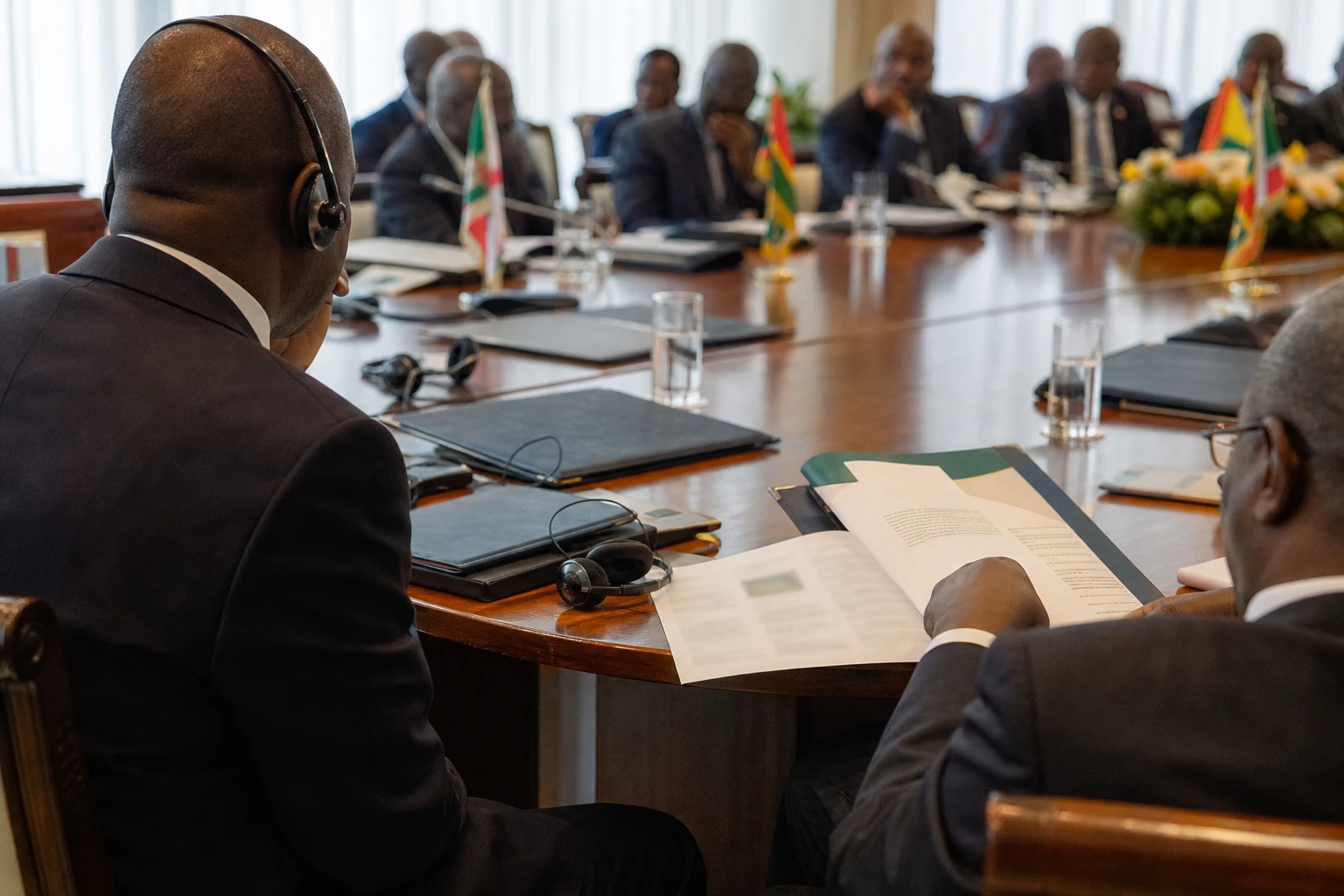
For many Togolese living in South Africa, the question is no longer just one of work or residency. It has become a matter of immediate safety, the right to stay and, sometimes, simply being able to choose to return without putting themselves in danger. Against this backdrop, the arrival in Lomé on Sunday 30 August 2026 of around 20 Togolese nationals carries significance beyond the administrative act itself.
The organised departure reflects a wider reality: tensions over migrants in South Africa have intensified over the past few months. The United Nations Committee on the Elimination of Racial Discrimination recently warned of a rise in xenophobic violence, while South African media have reported mass departures by migrants and repatriation or voluntary return operations. This is not an isolated issue. It affects several African communities at once.
Lomé treats the case as a matter of consular protection
In Lomé, the operation was presented as a voluntary return fully funded by the Togolese state. The nationals concerned were welcomed at Gnassingbé Eyadéma International Airport by officials from the ministry responsible for foreign affairs and Togolese citizens abroad. The political message is clear: Togo wants to show that it will not leave its nationals alone in an increasingly uncertain situation.
This decision also forms part of a broader national course. Since 18 May 2026, Togo has exempted all African nationals from visa requirements, in a bid to promote openness and continental integration. This policy, set out by the Togolese authorities, puts Lomé among the capitals defending African mobility as a tangible achievement, not a slogan. It also lends particular coherence to welcoming compatriots facing difficulties abroad. The country shows that it champions mobility, but also wants to protect its citizens when that mobility turns against them.
This approach is not new. In 2025 and early 2026, Togo had already organised voluntary returns from Mauritania and Libya, with the support of international partners. The Togolese state has therefore begun to build a system for managing returns, against a backdrop in which West African migration often passes through host countries that are fragile and exposed to economic crises, administrative constraints and political tensions.
In South Africa, xenophobia is also fuelled by administrative limbo
The South African case is not limited to street violence. Obstacles involving residence permits, visas and administrative renewals are making life more precarious for many migrants. When a document expires, the risk extends beyond border enforcement. It affects employment, housing, basic services and the ability to support a family. In an economy where a significant proportion of Africans from elsewhere on the continent work in the informal sector or in small-scale trading, even the slightest administrative uncertainty can turn everything upside down.
South African authorities say they are tackling these abuses. President Cyril Ramaphosa has said that security forces are investigating violence against foreigners and that those responsible will be prosecuted. But accounts documented by several sources point to a harsher reality. A UN publication and several media outlets have reported that at least four migrants have been killed and tens of thousands displaced since the start of 2026. Estimates cited by the South African press put the number of migrants who have passed through repatriation centres or left under pressure at more than 50,000, a sign of the increasingly hostile climate facing foreign communities.
In this context, the Togolese are not an isolated case. Nigerians, Ghanaians, Malawians, Zimbabweans and Mozambicans have also headed home or received assistance with departure procedures. This reveals a familiar regional dynamic: when social pressure rises in a host country, African migrants do not all have the same means of protection. Those with resources retain some negotiating power. Others leave quickly, sometimes without capital, sometimes without a plan, and sometimes with debts.
What this return says about mobility and dignity
For Togo, the return of these 20 or so nationals raises a simple question: how can it protect citizens who remain in South Africa while welcoming those who come back? The answer depends on more than diplomacy. It also involves consular support, listening to communities established in Johannesburg, Durban or Pretoria, and the state’s ability to help returnees find work at home.
At home, the challenge is a practical one. A voluntary return does not automatically lead to successful reintegration. People need housing and administrative support, and sometimes training or start-up capital for small traders or craftspeople. Without this, return becomes little more than a pause before another migration. Togo has already shown, through other recent repatriations, that it can organise arrivals. The next step is to turn return into a lasting resettlement process.
The implications are regional, too. Within ECOWAS, the free movement of people remains a core principle. But that principle faces very different national realities. South Africa is not part of this West African bloc, yet it remains one of the continent’s main economic destinations. Its migration crisis therefore reaches far beyond its borders. It requires African states to talk more about consular protection, regularisation, diplomatic coordination and voluntary return mechanisms. Above all, it is a reminder that African mobility without legal security often ends up being forced mobility.
In this case, Lomé is sending a measured signal: the return of an African national should never be treated as a source of shame or as an individual failure. It is often the result of an unfavourable balance of power, an obstructive administration or a host society that is closing its doors. The challenge for the Togolese authorities now is to protect those who stay while offering those who return more than a formal welcome: a genuine second chance.