Algeria
 Egypt
 Libya
 Morocco
 Sudan
 Tunisia
 Benin
 Burkina Faso
 Cabo Verde
 Côte d'Ivoire
 Ghana
 Guinea
 Guinea-Bissau
 Liberia
 Mali
 Mauritania
 Niger
 Nigeria
 Senegal
 Sierra Leone
 The Gambia
 Togo
 Cameroon
 Central African Republic
 Chad
 DR Congo
 Equatorial Guinea
 Gabon
 Republic of the Congo
 São Tomé and Príncipe
 Burundi
 Comoros
 Djibouti
 Eritrea
 Ethiopia
 Kenya
 Madagascar
 Malawi
 Mauritius
 Mozambique
 Rwanda
 Seychelles
 Somalia
 South Sudan
 Tanzania
 Uganda
 Angola
 Botswana
 Eswatini
 Lesotho
 Namibia
 South Africa
 Zimbabwe
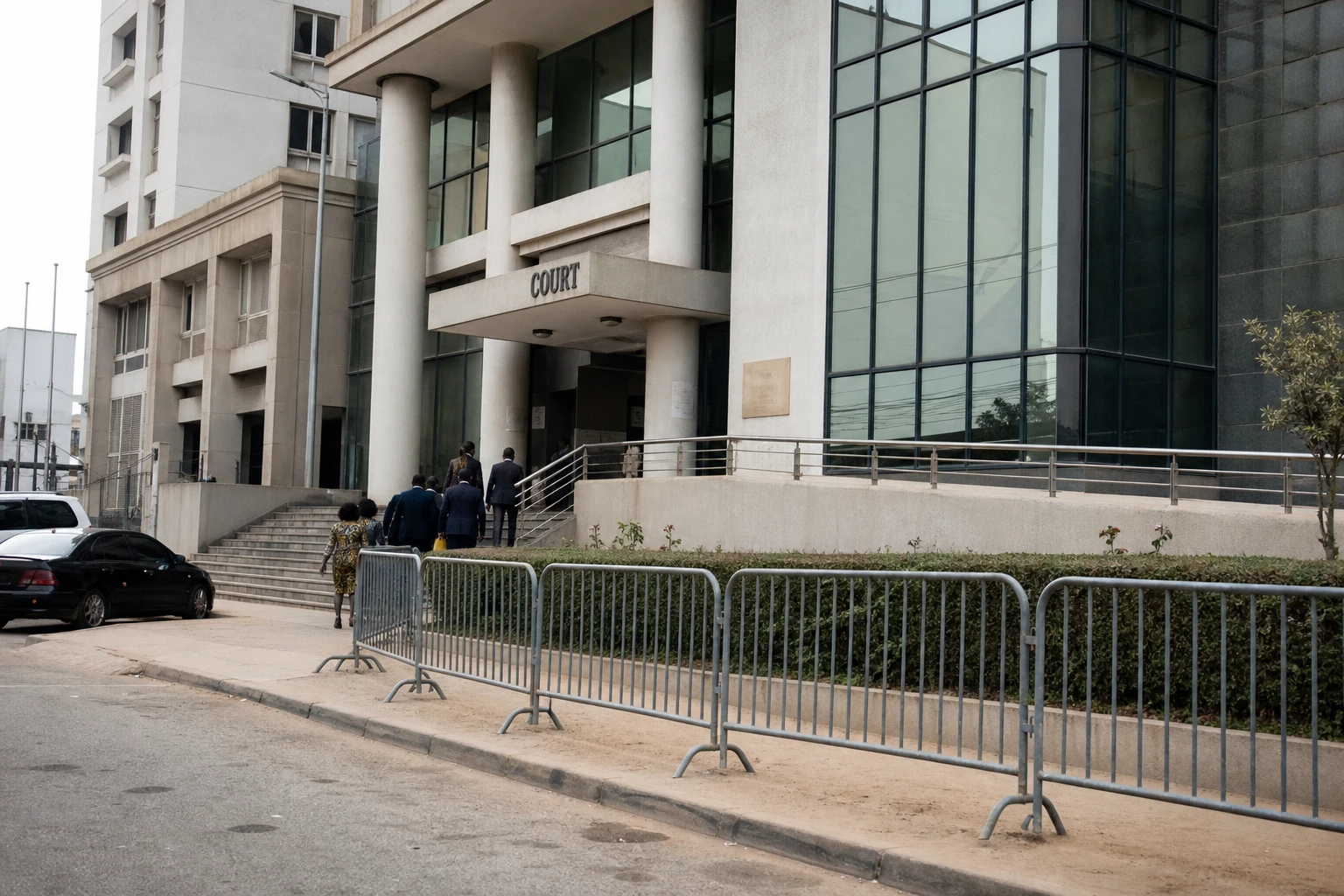
In Lusaka, the election battle has moved from the ballot box to police stations
In Zambia, an election does not necessarily end when the votes are counted. It can spill over into the streets of Lusaka, the corridors of the courts and then police stations. Since the 13 August 2026 poll, the southern African country has been navigating this delicate transition from political competition to a show of institutional force.
This is a sensitive moment for Zambians. President Hakainde Hichilema was declared the winner by the Electoral Commission, with about 60% of the vote, while his main challenger, Brian Mundubile, secured nearly 38%. His second term is due to begin on 1 September, after the deadline for appeals expired without a petition being filed, according to the Cabinet Office.
What the facts say, and what they reveal about the state of the country
On Saturday 30 August, Brian Mundubile and 17 other opposition figures were charged with treason, according to their lawyer, who confirmed the news the following day. They had been arrested after presenting themselves to police on 27 August, following more than two weeks on the run. His running mate, Makebi Zulu, was charged with the same offences. Both remain in custody at Lusaka Central Police Station, in the Zambian capital.
The authorities say they acted after a security operation on 14 August at a property in Kabulonga, a Lusaka neighbourhood linked to Mundubile’s campaign. They say they found weapons, including rifles, and suspect a plot that threatened national security. The accused deny any armed insurrection and describe the case as a fabrication by the authorities. Amnesty International, for its part, has condemned arbitrary arrests among opposition ranks.
The crisis has also come at a human cost. Amnesty International reports that Mutotwe Kafwaya, an opposition member and former minister, was fatally shot on 14 August during the operation in Lusaka. The organisation has called for an independent and transparent investigation. Human Rights Watch, meanwhile, says the sudden closure of the courts on 24 August prevented the filing of electoral appeals within the time limits set by the Constitution.
A political reading that goes beyond a criminal case
Treason is one of the most serious charges under Zambian criminal law. Its use in a post-election context sends a signal that extends far beyond those accused. It says something about the relationship between the executive, police, judiciary and opposition. It also speaks to the fragility of the transition out of an electoral crisis in a country long regarded as one of the region’s most stable.
President Hichilema governs a country still seeking to consolidate its economic recovery after the debt crisis and the restructuring launched in 2021. Political stability therefore remains a strategic asset, particularly for a mining state whose copper attracts major trading partners and investors. But stability cannot rest on public order alone. It also depends on credible elections, effective access to the courts and the opposition’s ability to challenge results without being criminalised.
In the capital, the consequences are immediate for the families of those arrested, their lawyers and activists who had planned to file appeals. In the provinces, the episode strengthens a more diffuse sense that electoral competition can quickly give way to fear. This affects rallies, the circulation of political messages and confidence in public arbitration. The population is left with a simple question: will the next political disagreement be settled through the law, or through coercion?
The case also matters for southern Africa
Zambia is a founding member of the Southern African Development Community, or SADC, whose mission includes peace, security and good governance. The region observed the 13 August poll through an electoral mission. In other words, what is unfolding in Lusaka is not just a domestic matter. It is also a test of the regional democratic standards that SADC champions.
The regional context adds further pressure. Zambia’s neighbours and partners are closely watching a country that needs to remain predictable for trade, commercial corridors and institutional stability. If the post-election standoff drags on, it could undermine confidence in regional mediation mechanisms. If it is resolved through clear and public legal proceedings, it could instead strengthen the idea that a disputed transfer of power or re-election should be dealt with through the law, not intimidation.
For now, the most important date is 1 September, when Hakainde Hichilema is due to be sworn in. Until then, the question is no longer simply who won the election. It is how much room remains in Zambia to challenge an election without risking the transformation of a political disagreement into a national security case.