
 Algeria
 Egypt
 Libya
 Morocco
 Sudan
 Tunisia
 Benin
 Burkina Faso
 Cabo Verde
 Côte d'Ivoire
 Ghana
 Guinea
 Guinea-Bissau
 Liberia
 Mali
 Mauritania
 Niger
 Senegal
 Sierra Leone
 The Gambia
 Togo
 Cameroon
 Central African Republic
 Chad
 DR Congo
 Equatorial Guinea
 Gabon
 Republic of the Congo
 São Tomé and Príncipe
 Burundi
 Comoros
 Djibouti
 Eritrea
 Ethiopia
 Kenya
 Madagascar
 Malawi
 Mauritius
 Mozambique
 Rwanda
 Seychelles
 Somalia
 South Sudan
 Tanzania
 Uganda
 Angola
 Botswana
 Eswatini
 Lesotho
 Namibia
 South Africa
 Zambia
 Zimbabwe
When the cold chain becomes a matter of health sovereignty
In north-eastern Nigeria, a vaccine lost to the heat protects neither a herd, an income nor a meal. This is where part of the country’s food security is decided in very practical terms.
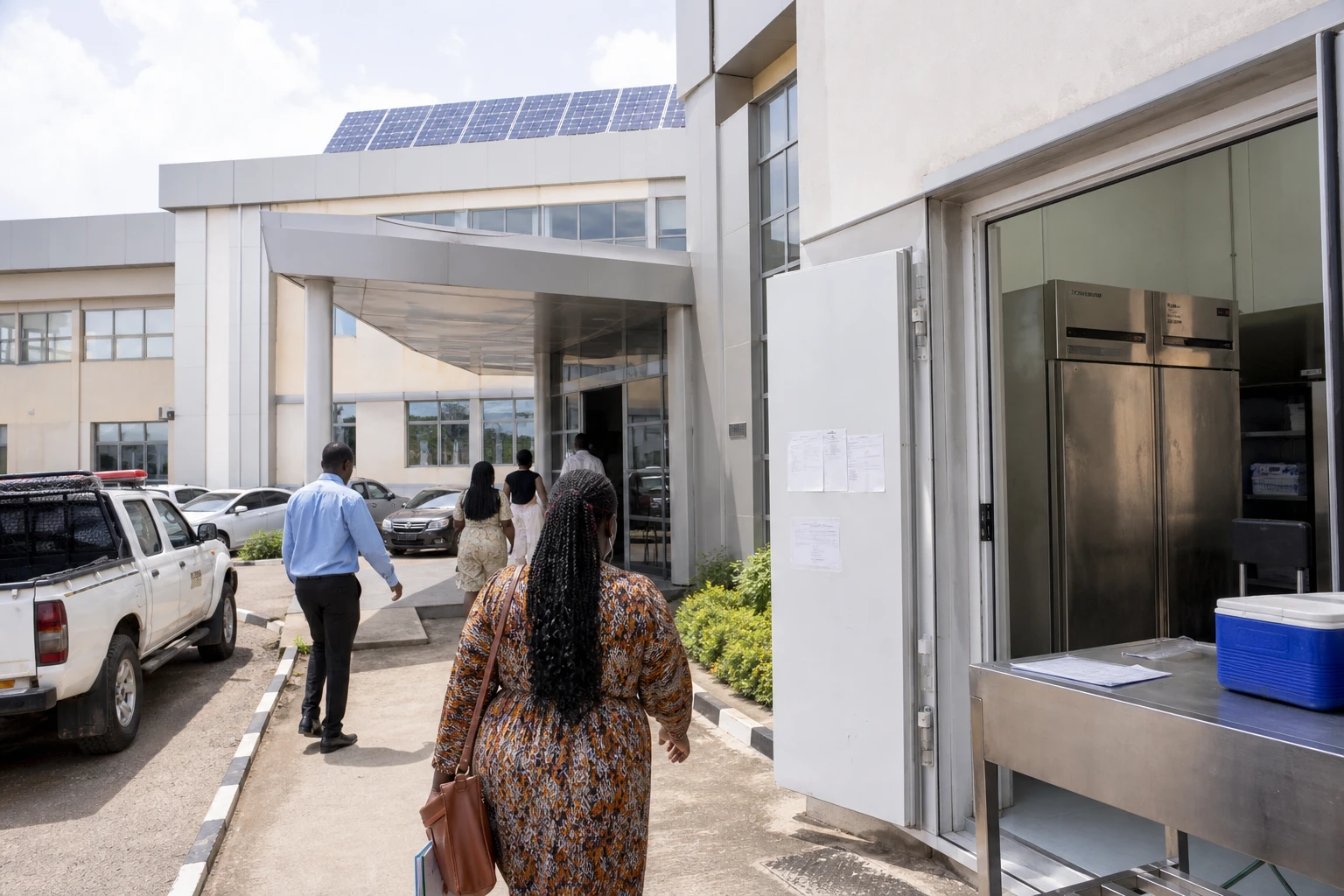
The Nigerian government has commissioned a solar-powered refrigeration facility in Jimeta, Adamawa State, capable of storing up to 40 million doses of veterinary vaccines. The facility operates off-grid. Its purpose is simple: to reduce reliance on power cuts and keep products at the right temperature until they are distributed.
This infrastructure is not a standalone measure. It is part of the Livestock Productivity and Resilience Support Project, or L-PRES, a programme backed by the World Bank and led by the federal ministry responsible for livestock. The project aims to strengthen productivity, resilience and livestock services across Nigeria.
A country bolstering its veterinary services
Since 2026, Nigeria has embarked on a broader reorganisation of its veterinary policy. In Abuja, the ministry approved a national roadmap for veterinary services covering 2026-2036. The document focuses on disease surveillance, laboratories, vaccination and livestock traceability. At the same time, the authorities say they intend to roll out similar infrastructure in several parts of the country, following facilities already installed in Abuja, Sokoto, Edo, Lagos and Anambra.
Adamawa was not chosen by chance. This north-eastern state is a hub for livestock, transhumance and trade with neighbouring states. In this part of Nigeria, livestock farmers rely heavily on public services that can act quickly, reach remote areas and operate reliably. A cold room isolated in the federal capital is not enough. Vaccines must arrive intact where the herds are.
Minister Idi Maiha presented the facility as a storage and distribution hub for the north-east. The aim is to prevent losses, plan vaccination campaigns more effectively and reduce the time between the arrival of doses and their use in the field. In a country as vast as Nigeria, logistics matter as much as science.
Animal diseases underscore the urgency
This expansion comes as the health of the livestock population remains fragile. In June 2026, the ministry reported several outbreaks of avian influenza in Kebbi, Kano, Katsina, Plateau and Bauchi states. That same year, the World Organisation for Animal Health also received a notification from Nigeria concerning an outbreak of anthrax in Zamfara State. Anthrax is a zoonotic disease, meaning it can be transmitted from animals to humans, and controlling it depends on vaccination, surveillance and the proper disposal of carcasses.
The threats are not limited to these recent episodes. The country’s technical documents point to the continued spread of longstanding but costly diseases: contagious bovine pleuropneumonia, foot-and-mouth disease, bovine tuberculosis, peste des petits ruminants, Newcastle disease, Gumboro disease and fowl cholera. In other words, Nigeria is not fighting a one-off crisis. It is managing a structural disease burden that weighs on livestock farmers, markets, abattoirs and food value chains.
In this context, proper vaccine storage is an economic concern as well as a veterinary one. A poorly stored dose is a lost dose. A poorly organised campaign costs more than it delivers. And an inadequately contained animal disease outbreak often means animal losses, reduced supply in markets and greater pressure on rural incomes.
What a solar cold room means for livestock farmers
The Jimeta facility addresses a very specific problem: the fragility of the cold chain. In many areas, veterinary vaccines move between urban centres, regional depots and rural areas exposed to power cuts, poor roads or excessive administrative delays. By powering the facility with solar energy, the authorities aim to safeguard vaccine storage and make the system less vulnerable to disruptions in the electricity grid.
For large farms and small-scale livestock keepers alike, the expected impact is tangible. Better vaccine availability can reduce mortality, limit emergency treatments and protect the market value of animals. For women and young people involved in collection, sales or processing, the stakes are commercial too: healthier livestock supports more stable incomes.
Nationally, this upgrading of veterinary services supports a broader ambition. Nigeria wants to modernise livestock farming, improve animal identification, organise markets and reduce its reliance on imports of animal products. The federal finance ministry and technical partners are now talking about value chains, resilience and competitiveness. The message is simple: animal health is no longer a peripheral sector. It affects food, domestic trade and confidence in the country’s products.
Impact beyond Adamawa
The signal sent from Jimeta extends beyond Adamawa State. In the Economic Community of West African States, livestock movements and the spread of disease do not stop at borders. A more reliable vaccination strategy in Nigeria could therefore have indirect effects on neighbouring countries, particularly in areas of transhumance and cross-border trade.
Nigeria is also moving towards a more continental approach. As the African Union and international health institutions promote the “One Health” approach, linking human, animal and environmental health, storage infrastructure is becoming essential building block. It makes it possible to move from rhetoric to real response capacity. It also shows that a country can invest in technical solutions suited to its constraints without waiting for ready-made imported models.
The next stage will depend on implementation. The 2026-2036 roadmap will need funding, monitoring and application across the federated states. Outbreaks of avian influenza, anthrax and other transboundary diseases will soon show whether the logistics system delivers on its promises. In Abuja, people talk of transformation. In Jimeta, it often begins with a solar power socket, a reliable thermometer and a properly stored dose.



